⚡ 30-Second Brief
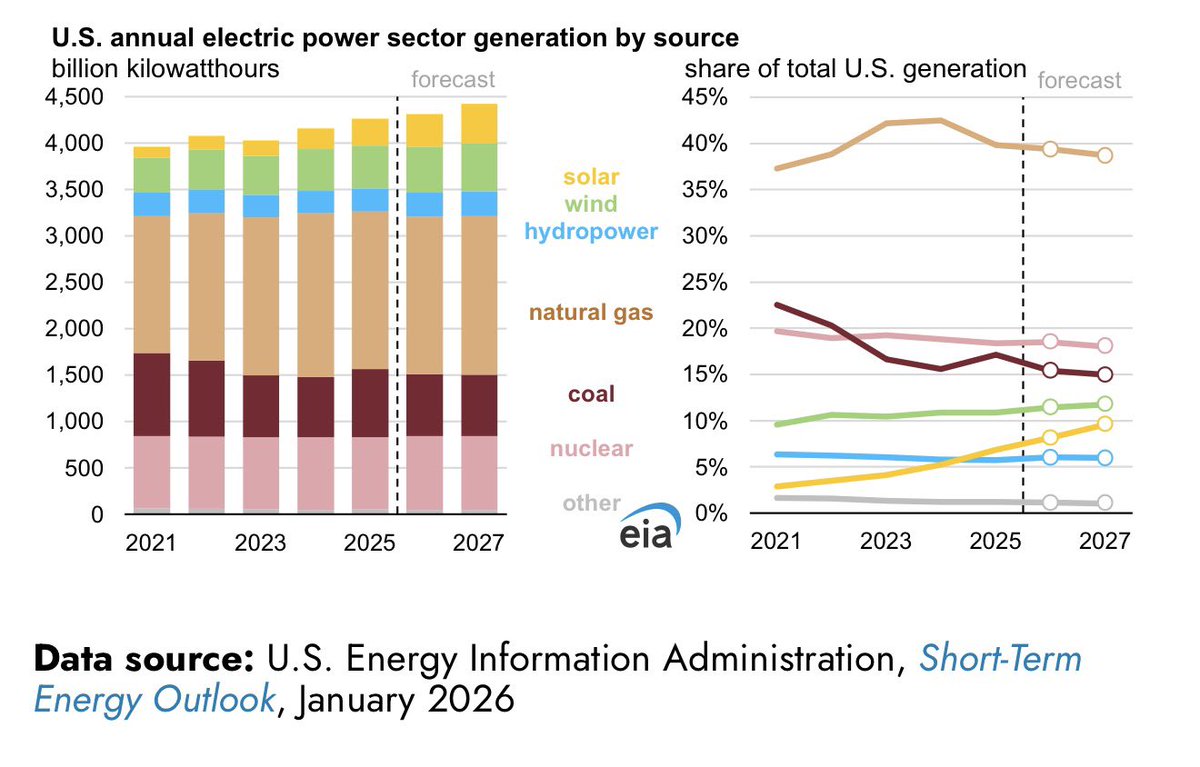
The News: Elon Musk declared that solar power will "utterly dominate future electricity production," reaffirming Tesla's long-term sustainable energy strategy.
Why It Matters: Tesla is scaling solar manufacturing to 100 GW/year in the U.S. within three years, driven by AI data center demand. This signals accelerated growth for Solar Roof and Megapack deployments — infrastructure that powers your Tesla and stabilizes the grid.
Source: @elonmusk on X
📊 Key Figures
| Metric | Value | Context |
|---|---|---|
| Tesla/SpaceX Solar Target | 100 GW/year | U.S. manufacturing capacity within 3 years (announced Jan 2026) |
| 2024 Energy Storage Deployment | 31.4 GWh | 214% increase vs 2023 (Megapack + Powerwall) |
| Energy Segment Profit Margin | 26.2% | 2024 gross margin, up from previous years |
| Solar Roof Installations | 3,000 systems | As of May 2024 |
| Megapack Lathrop Factory Capacity | 40 GWh/year | 10,000 units annually |
| Shanghai Megapack Factory | 40 GWh/year | Trial production began late 2024 |
| Global Solar Capacity 2030 | 7,203 GW | Projected, up from 1,419 GW in 2023 |

🔭 The BASENOR Take
Timeline: Short to Medium Term (1-5 years)
Impact Level: High — Infrastructure scaling affects vehicle charging costs and grid stability
Confidence: Very High — Tesla has concrete manufacturing targets and proven product lines
Musk's statement isn't aspirational — it's operational. Tesla and SpaceX teams are actively building toward 100 GW per year of U.S. solar manufacturing capacity within three years, according to announcements made at the World Economic Forum in January 2026. This initiative is driven by the explosive energy demands of AI data centers, which require massive, reliable power supplies that fossil fuels can't cost-effectively deliver at scale.
For Tesla owners, this matters because solar + storage infrastructure directly impacts your charging costs and grid resilience. As utility-scale solar projects become cheaper (prices have dropped over 90% in recent years), electricity rates stabilize. Megapack deployments — which grew 214% year-over-year in 2024 — smooth out grid volatility, reducing peak-hour rate spikes that affect home charging.
The math backs Musk's vision. He has consistently stated that just 100 square miles of solar panels in Texas or New Mexico, coupled with battery storage, could power the entire United States. Global solar capacity is projected to reach 7,203 GW by 2030, up from 1,419 GW in 2023 — a 5x increase in seven years. The International Energy Agency confirms that solar PV will contribute approximately 80% of global renewable capacity growth through 2030.
Tesla's energy segment is no longer a side project. In 2024, the division generated $10.1 billion in revenue with a 26.2% gross margin, up from $6 billion and lower margins in 2023. Megapack order books are filling up years in advance, with demand consistently exceeding supply. The new Shanghai Megapack factory, which began trial production in late 2024, will add another 40 GWh of annual capacity, matching the Lathrop facility's output.
What This Means for Your Tesla
Cheaper Charging: As solar becomes the dominant electricity source, utility rates are expected to stabilize or decrease. In 2024, solar and storage technologies accounted for 85% of new U.S. capacity additions. More solar on the grid means less reliance on volatile fossil fuel pricing.
Grid Stability: Megapack installations operate in over 65 countries, smoothing out renewable intermittency. For Tesla owners with Powerwall systems, this means fewer outages and more predictable home energy costs. Each Megapack stores 3.9 MWh — enough to power hundreds of homes during peak demand.
Solar Roof Economics: While the average Tesla Solar Roof costs approximately $106,000 before incentives (as of 2025), the 30% federal tax credit brings the effective cost down significantly. With electricity prices expected to stabilize as solar scales, payback periods become more predictable. The 25-year warranty on both roofing and energy production materials provides long-term value security.
AI-Driven Energy Demand: The 100 GW manufacturing target is explicitly tied to AI data center expansion. This confirms that Tesla sees energy infrastructure as critical to the broader tech ecosystem — including autonomous driving compute, which directly benefits FSD development and deployment timelines.
📰 Deep Dive
The timing of Musk's statement is significant. It comes as Tesla's energy business is hitting profitability milestones that rival the automotive segment's early growth curve. The 214% year-over-year increase in storage deployments demonstrates that utility and commercial customers are no longer experimenting — they're committing to multi-gigawatt-hour installations. When Megapack order books fill up years in advance, it signals genuine market transformation, not speculative hype.
The 100 GW/year manufacturing target represents a 10x scale-up from current U.S. solar production levels. To put this in perspective, the entire U.S. had 262 GW of installed solar capacity nationwide in 2024. Tesla and SpaceX are aiming to produce nearly half that amount every year within three years. This isn't incremental improvement — it's industrial transformation on the scale of the automotive Gigafactories.
For Tesla owners, the convergence of vehicle, energy, and AI infrastructure creates a unique ecosystem advantage. As solar scales, charging costs decrease. As Megapack deployments increase, grid reliability improves. As AI compute demands drive energy innovation, FSD development accelerates. These aren't separate business units — they're integrated components of a sustainable energy economy where your Tesla becomes more valuable over time, not less.
The global renewable capacity doubling by 2030, with solar contributing 80% of that growth, validates Musk's "utter dominance" prediction. The physics and economics align: solar is the most abundant energy source available, storage costs are plummeting, and fossil fuel alternatives can't compete on either price or scalability for data center and grid applications. Tesla's integrated approach — manufacturing solar cells, deploying Megapacks, and selling vehicles that run on that electricity — positions the company to capture value across the entire energy value chain.
This isn't a 2050 vision. It's a 2029 operational target with measurable milestones, proven products, and accelerating demand. For Tesla owners, the question isn't whether solar will dominate — it's how quickly you'll benefit from the transition.
Related Gear
Gear up your Tesla with tested, custom-fit BASENOR accessories — shop Tesla accessories →
Sources & reporting notes
The links below identify the material source records used for this report.
- @elonmusk on X (2026-02-14T06:00:51.000Z) — Direct source
Source links are preserved as published or accessed. See our editorial standards and corrections policy.
The BASENOR Editorial Desk covers Tesla, SpaceX, and related technology, curating reporting from primary sources — official accounts, regulatory filings, and software release data. Every article passes source-record and fact-checking review before publication. About the newsroom.
This report was curated by the BASENOR Editorial Desk from the sources listed above. Read our editorial standards or email editorial@basenor.com to report an error.