The News: Whole Mars Catalog highlights how Elon Musk's decade-old vision — training an end-to-end neural network to drive a car — laid the foundation for what Tesla FSD is becoming today.
Why It Matters: Understanding the origin of Tesla's autonomous driving philosophy helps owners appreciate why FSD works the way it does — and how close the system is to delivering on its original promise.
Source: @wholemars on X
Elon Musk's 10-Year Bet on Neural Networks Is the Reason Tesla FSD Exists
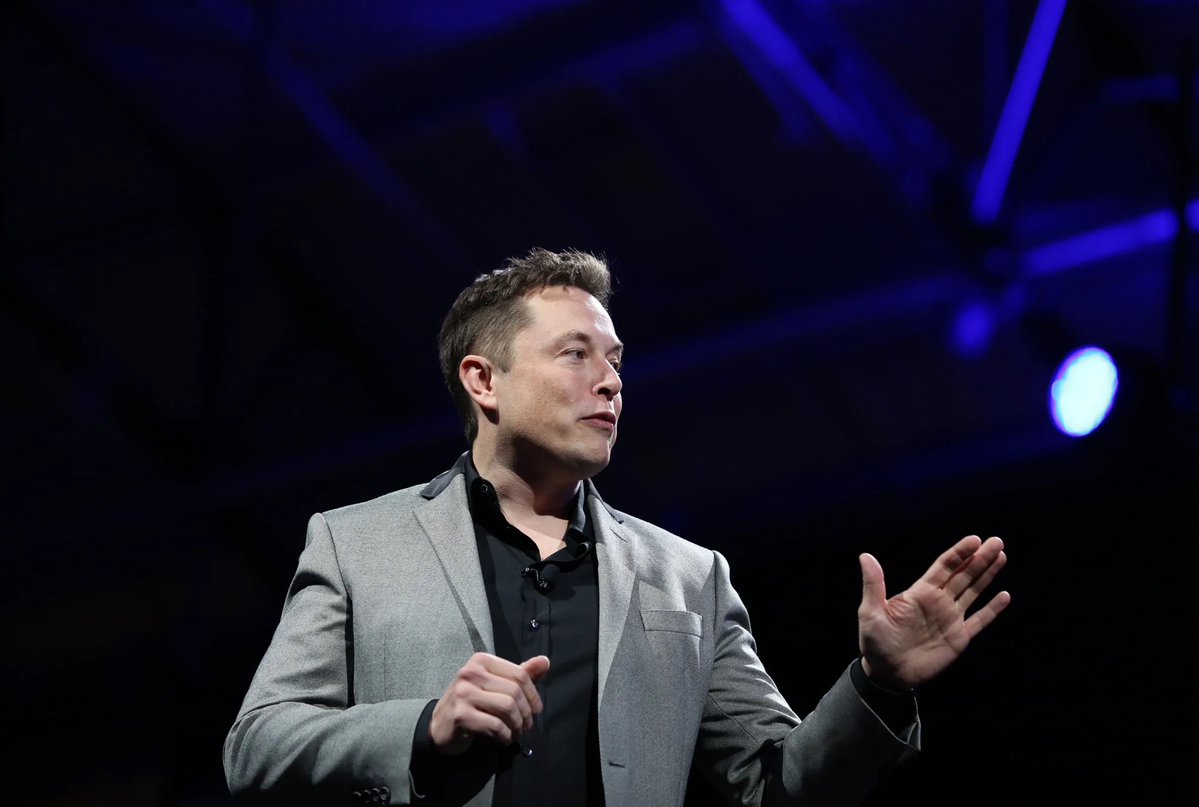
A decade ago, before Nvidia's massive GPU clusters were a standard tool in the AI industry, Elon Musk had an idea that most engineers would have dismissed as premature: train a single end-to-end neural network to handle the entire task of driving a car. No hand-coded rules. No sensor fusion patchwork. Just raw vision data in, driving decisions out.
That bet — unconventional, underpowered by the hardware of the era, and widely doubted — is the direct ancestor of every mile Tesla's Full Self-Driving system drives today.

📊 Key Figures
| Metric | Value | Context |
|---|---|---|
| Cumulative FSD Miles | ~10 billion | Approaching milestone as of April 2026 |
| FSD Miles in Jan 2025 | 3 billion | Up from 1B in April 2024 |
| AI Training Compute Growth | +400% | Tesla's increase in 2024 alone |
| FSD v14.3 Reaction Time Gain | 20% faster | Via rewritten MLIR AI compiler, rolled out April 8, 2026 |
| FSD v15 Model Size | ~10x parameters | vs. current widely deployed model, per Musk (April 9, 2026) |
| FSD Subscription Price (U.S.) | $99/mo or $999/yr | One-time purchase eliminated Feb 14, 2026 |
| First European FSD Approval | Netherlands (RDW) | Granted April 10, 2026 under UN Regulation 171 |
The Idea That Wasn't Supposed to Work Yet
When Musk first pushed Tesla toward a vision-only, end-to-end neural network approach, the AI industry hadn't yet standardized the massive compute infrastructure that makes training such models tractable. The giant Nvidia GPU clusters that are now table stakes for frontier AI labs simply didn't exist at the scale required. The conventional wisdom was to build autonomous driving systems layer by layer — perception, prediction, planning — each a separate module, each hand-tuned by engineers.
Musk rejected that architecture. His argument, essentially: the human brain doesn't run separate modules for seeing and deciding. A sufficiently trained neural network, fed enough real-world data from cameras, should be able to learn the full task end-to-end. The car's cameras become its eyes. The network becomes its judgment.
That philosophy is why Tesla's FSD looks and behaves differently from every other autonomous driving program. Competitors built elaborate sensor arrays — lidar, radar, HD maps — to compensate for what their models couldn't learn. Tesla bet that cameras plus compute plus data would eventually win. The data flywheel — millions of Teslas collecting real-world edge cases every day — is the moat that bet created.
Where That Bet Stands in April 2026
The numbers tell a compelling story. Tesla's fleet has now driven nearly 10 billion cumulative miles on FSD (Supervised) — up from just 1 billion in April 2024 and 3 billion by January 2025. That's an extraordinary acceleration in real-world training data, and it directly feeds the neural network's ability to handle increasingly rare and complex scenarios.
The most recent software milestone reinforces the trajectory. FSD version 14.3 (firmware 2026.2.9.6), which began rolling out to non-employee owners on April 8, 2026, introduces a rewritten AI compiler built on MLIR — delivering a 20% improvement in reaction time. That's not a UI tweak. That's a fundamental improvement in how quickly the network translates perception into action. For owners, it means the system responds to the unexpected faster than it did a week ago.
But the more significant signal came from Musk himself on April 9, 2026. FSD version 15, currently in development, will run on a "large model" architecture with roughly 10 times the parameters of the model most owners are using today. Musk described it as capable of exceeding human safety levels "even in completely unsupervised and complex situations." That's a direct line from the original vision — a single neural network that can drive — to what is now a credible near-term engineering target.
Internationally, the vision is gaining regulatory traction too. On April 10, 2026, the Dutch vehicle authority RDW granted Tesla the first European type approval for FSD (Supervised) under UN Regulation 171 — using firmware version 2026.3.6. The Netherlands becomes the first European country to authorize the system for customer use on public roads, with Tesla targeting EU-wide recognition by summer 2026. For owners in Europe, that's the clearest sign yet that the decade-long bet is crossing borders. You can follow our FSD coverage for the latest on international rollouts.
🔭 The BASENOR Take
Timeline: Vision established ~2015 → End-to-end architecture adopted → FSD Beta launched 2020 → 10B miles approaching 2026 → v15 large model incoming
Impact Level: 🔴 High — This is the foundational architecture decision that determines what every Tesla owner's car can eventually do
Confidence: ⬛⬛⬛⬛⬜ High — Trajectory is backed by verifiable milestones and recent regulatory approvals
The reason this moment matters isn't nostalgia. It's that the original architectural decision — end-to-end neural network, vision-first, data-driven — is now proving itself in ways that were genuinely uncertain a decade ago. Every improvement in FSD since then has been an iteration on that same core bet, not a pivot away from it.
The transition to subscription-only pricing (as of February 14, 2026, at $99/month or $999/year in the U.S.) signals that Tesla views FSD as a continuously improving service, not a finished product. Musk has confirmed the price will increase as the system approaches unsupervised capability. That's a direct consequence of the original vision: a model that keeps learning, keeps improving, and eventually reaches a capability threshold that justifies a fundamentally different price point.
For owners sitting on the fence about FSD today, the relevant question isn't whether the current version is worth it — it's whether you believe the trajectory. The data, the regulatory approvals, and the upcoming v15 architecture suggest the original bet is closer to paying off than at any point in the last decade.
📋 Tracking Tesla software? See every firmware, FSD and app version in one place in our Tesla Software Update Tracker.
Related Gear
Gear up your Tesla with tested, custom-fit BASENOR accessories — shop Tesla accessories →
Sources & reporting notes
The links below identify the material source records used for this report.
- @wholemars on X (2026-04-12T23:00:21.000Z) — Direct source
Source links are preserved as published or accessed. See our editorial standards and corrections policy.
The BASENOR Editorial Desk covers Tesla, SpaceX, and related technology, curating reporting from primary sources — official accounts, regulatory filings, and software release data. Every article passes source-record and fact-checking review before publication. About the newsroom.
This report was curated by the BASENOR Editorial Desk from the sources listed above. Read our editorial standards or email editorial@basenor.com to report an error.