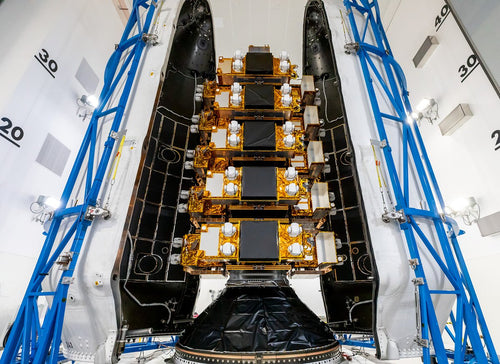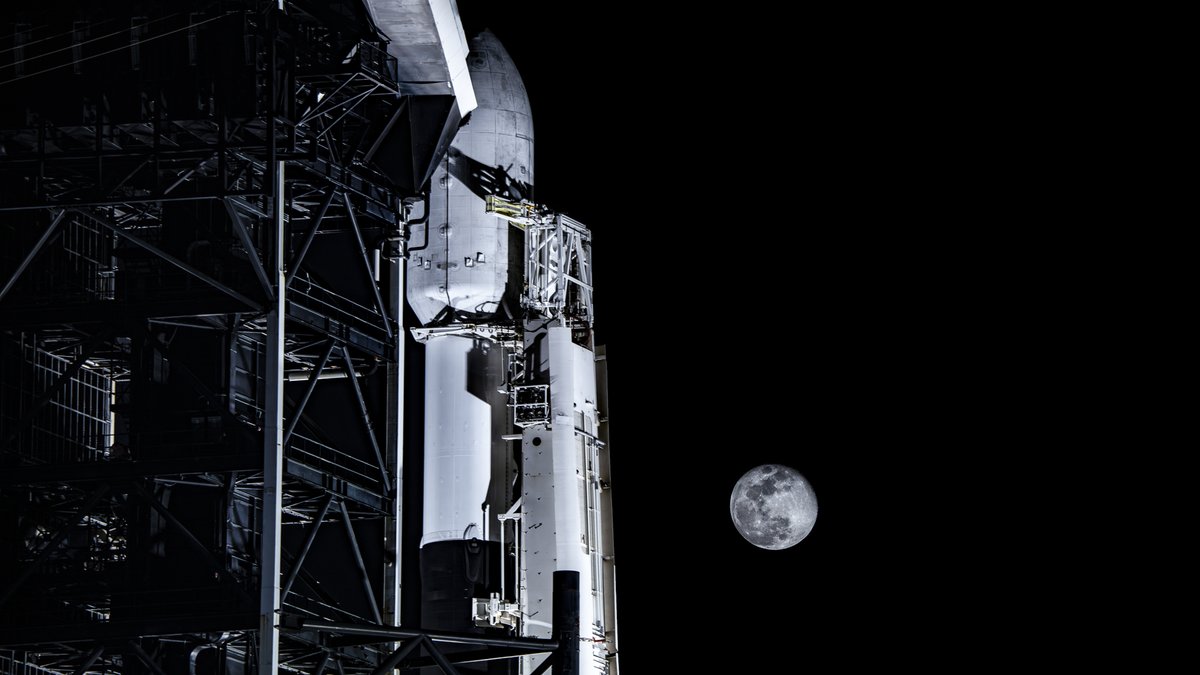
On January 15, 2025, a single Falcon 9 rocket lifted off from Pad 39A at Kennedy Space Center and sent two separate lunar landers — Firefly Aerospace's Blue Ghost Mission 1 and ispace's RESILIENCE — on their way to the Moon. SpaceX revisited the mission in an August 2026 post that shed light on one of the less-discussed aspects of the flight: what happens to the second stage after payload separation. Here are the five details that define why this launch stands out.

1. Two Lunar Landers, One Rocket
Rideshare launches are routine in low-Earth orbit, but sending two separate lunar-bound payloads on a single Falcon 9 is a different logistical challenge entirely. Trajectories to the Moon leave almost no margin for error, and each lander had its own mission profile and operator. Flying them together required precise sequencing of deployment and careful mass management — a meaningful operational milestone for commercial lunar access.
2. Liftoff Was at 1:11 a.m. ET from LC-39A
The rocket launched from Launch Complex 39A at Kennedy Space Center — the same pad that hosted Apollo 11 and numerous Shuttle missions — at 1:11 a.m. ET (06:11:39 UTC), according to verified mission records. The overnight window was driven by the specific translunar injection geometry required to reach the Moon efficiently. LC-39A has become SpaceX's workhorse pad for high-energy missions.
3. The Booster Was a Veteran — and It Landed
The Falcon 9 first stage flying this mission was on its fifth flight, according to mission records. After delivering both payloads, the booster executed a controlled landing on the Just Read the Instructions droneship in the Atlantic Ocean. That recovery keeps the booster in the fleet for future missions, a routine that SpaceX has normalized but that still represents a significant cost advantage over expendable launch vehicles competing for lunar contracts.
4. The Second Stage Disposal Is the Untold Part
SpaceX's August 2026 post began to address what happens to the Falcon 9 upper stage after a translunar mission — a question that rarely gets attention. For most missions, SpaceX plans a controlled deorbit of the second stage so it re-enters safely. Lunar trajectories complicate that: the stage reaches escape-level velocities that make a standard deorbit burn impractical. The post was cut off before the full explanation, but the fact that SpaceX is publicly discussing second-stage disposal on deep-space missions reflects growing scrutiny of orbital debris practices industry-wide.
5. Blue Ghost and RESILIENCE Represent Two Different Commercial Lunar Models
Firefly Aerospace's Blue Ghost is a NASA CLPS (Commercial Lunar Payload Services) mission, carrying science instruments to the lunar surface under a government contract. ispace's RESILIENCE, by contrast, is a privately funded Japanese venture targeting a soft landing and eventual resource prospecting. Flying both on the same rocket illustrates how the commercial lunar economy is maturing — government-backed and fully private missions now share rides, splitting costs and compressing launch schedules for an industry that once waited years between Moon missions. For more on SpaceX's broader launch cadence, see our SpaceX coverage.
Sources & reporting notes
The links below identify the material source records used for this report.
- @SpaceX on X (2026-08-05T21:52:27.000Z) — Direct source
Source links are preserved as published or accessed. See our editorial standards and corrections policy.
The BASENOR Editorial Desk covers Tesla, SpaceX, and related technology, curating reporting from primary sources — official accounts, regulatory filings, and software release data. Every article passes source-record and fact-checking review before publication. About the newsroom.
This report was curated by the BASENOR Editorial Desk from the sources listed above. Read our editorial standards or email editorial@basenor.com to report an error.