📌 UPDATE — August 31, 2026
The Falcon Heavy launch has successfully completed. SpaceX confirmed both side boosters executed a synchronized landing at Landing Zones 2 and 40 at Cape Canaveral, marking another textbook dual-booster recovery. SpaceX shared additional imagery and footage from the mission on X, showcasing the launch and the iconic simultaneous touchdown.


📸 Via @SpaceX — Aug 31, 2026
📌 UPDATE — August 30, 2026
Falcon Heavy has successfully launched NASA's Nancy Grace Roman Space Telescope from Pad 39A in Florida. The telescope is now en route to its destination, with a journey of more than three months ahead before it begins capturing what SpaceX describes as "never-before-seen photos of the universe." The launch was confirmed by SpaceX via official channels shortly after liftoff.
@SpaceX · Aug 30, 2026"Falcon Heavy launches @NASA's Nancy Grace Roman Space Telescope from pad 39A in Florida, beginning its more than three-month journey to its destination where it will generate never-before-seen photos of the universe"

📌 UPDATE — August 30, 2026
SpaceX has confirmed successful deployment of NASA's Roman Space Telescope following today's Falcon Heavy launch from pad 39A. The telescope is now en route to the second Sun-Earth Lagrange point (L2), roughly one million miles from Earth — about four times farther than the Moon. At L2, the combined gravitational pull of the Sun and Earth will provide Roman with a stable orbit and an unobstructed view of the cosmos. The mission is proceeding nominally.
@SpaceX · Aug 30, 2026
Deployment of Roman confirmed

5,628 likes · 799 retweets · View on X
📌 UPDATE — August 30, 2026
The Falcon Heavy lifted off from pad 39A at 11:25 UTC today, successfully launching NASA's Nancy Grace Roman Space Telescope. Both side boosters executed flawless Return to Launch Site (RTLS) landings at Kennedy Space Center. At 11:57 UTC, Jonathan McDowell confirmed successful trans-Lagrange insertion and spacecraft separation from the upper stage — Roman is now on its way to the Earth-Sun L2 point.
@NASASpaceflight
Both side boosters RTLS landings. 🎉
@jeff_foust
Liftoff of NASA's Roman Space Telescope on a Falcon Heavy, as seen from the KSC Press Site.
📌 UPDATE — August 30, 2026
SpaceX's Falcon Heavy has successfully launched NASA's Nancy Grace Roman Space Telescope from Pad 39A at Kennedy Space Center this morning. Liftoff was targeted for 7:26 a.m. ET, with weather sitting at 50% favorable heading into the window. Both SpaceX and NASASpaceflight confirmed the launch is underway, marking a major milestone for the Roman mission.
@SpaceX · Aug 30, 2026
Less than two hours until today's Falcon Heavy launch of @NASA's Nancy Grace Roman Space Telescope from pad 39A in Florida. Liftoff is targeted for 7:26 a.m. ET, and weather is 50% favorable.

📌 UPDATE — August 29, 2026
SpaceX has raised Falcon Heavy to vertical at Launch Complex 39A in Florida, confirming the vehicle is in final launch preparations ahead of Sunday's liftoff with NASA's Nancy Grace Roman Space Telescope. The rocket and its payload — designed to probe dark energy, exoplanets, and broad astrophysics questions — are now standing at the historic pad with less than 24 hours to go. SpaceX shared pad photos and video of the stacked vehicle on X Friday evening, offering the clearest look yet at the mission hardware ready for flight.

📸 @SpaceX via X — Falcon Heavy vertical at LC-39A, August 29, 2026
📌 UPDATE — August 29, 2026
Falcon Heavy is now vertical on Pad 39A at Kennedy Space Center, confirming the vehicle is on track for tomorrow's launch of the Nancy Grace Roman Space Telescope. The rollout milestone, spotted this morning, signals SpaceX and NASA are proceeding toward the August 30 liftoff window. No delays have been announced as of this update.

📷 @LabPadre — Aug 29, 2026
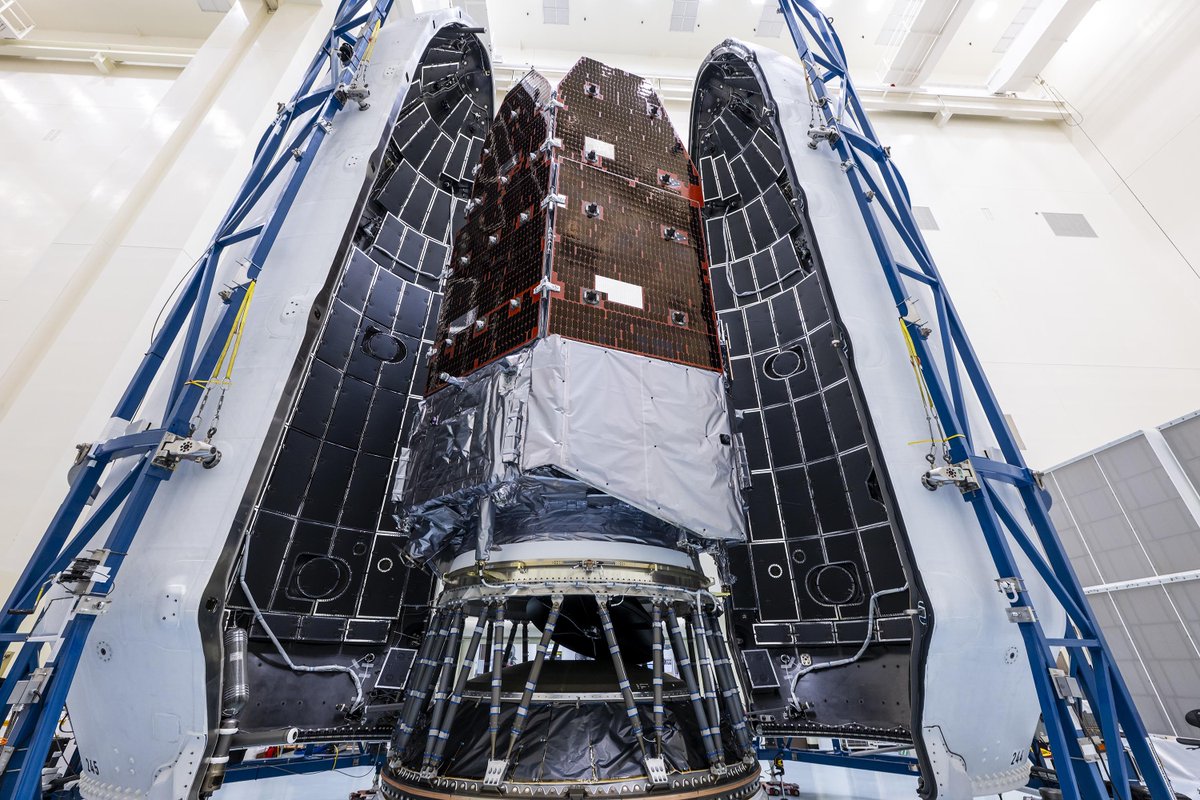
NASA's Nancy Grace Roman Space Telescope is officially on the pad — or nearly so. SpaceX confirmed this week that the observatory has been encapsulated inside Falcon Heavy's payload fairing, with liftoff targeted for Sunday, August 30, from Launch Complex-39A at Kennedy Space Center in Florida. It's the culmination of years of development on one of the most ambitious astronomy missions NASA has ever attempted, and it's arriving nine months ahead of schedule.


A Mission That Beat Its Own Deadline
The Roman Space Telescope was previously committed to a launch-readiness date of May 2027. The August 30 target puts the mission nine months ahead of that schedule — a rare outcome for a flagship NASA science mission of this scale. According to NASA, mission managers, SpaceX, and Roman program officials completed a Flight Readiness Review on August 21, formally clearing the observatory for final launch preparations. A full dress rehearsal of launch-day procedures was conducted the day before, on August 20.
The telescope was loaded with 290 gallons (roughly 1,100 liters) of hydrazine propellant back on July 25 — a key milestone that marked the transition from assembly to launch-ready status. As of August 24, the fairing-enclosed observatory is being transported to SpaceX's hangar at LC-39A for mating to the Falcon Heavy stack before the rocket rolls out to the pad.
The Numbers Behind the Mission
Mission at a Glance
| Launch Date | August 30, 2026 — 7:26 a.m. EDT |
| Backup Window | August 31, 2026 — 7:22 a.m. EDT |
| Launch Site | LC-39A, Kennedy Space Center, Florida |
| Launch Vehicle | SpaceX Falcon Heavy |
| Mission Lifecycle Cost | ~$4.3 billion |
| Launch Services Contract | ~$255 million (awarded 2022) |
| Primary Mission Duration | 5 years (with 5-year extension option) |
| Schedule vs. Prior Commitment | 9 months ahead of May 2027 target |
Why Falcon Heavy for This Mission
The Roman Space Telescope is a wide-field infrared observatory designed to investigate dark energy, dark matter, and exoplanet populations across the galaxy. Its science ambitions require a destination well beyond low Earth orbit — the telescope is headed to the Sun-Earth L2 Lagrange point, roughly 1.5 million kilometers from Earth, the same gravitational parking spot occupied by the James Webb Space Telescope. Getting there demands the kind of lift capacity that Falcon Heavy, with its three-core first stage configuration, is uniquely positioned to provide among currently operational rockets.
SpaceX was awarded the launch services contract in 2022, according to publicly available NASA procurement records. At approximately $255 million, it represents a significant but relatively contained slice of the mission's $4.3 billion total lifecycle cost.
What Could Still Change
The August 30 date is an official target, not a guarantee. Launch windows for missions of this complexity remain subject to weather conditions at the Cape, rocket readiness, and any late-breaking technical findings. A backup opportunity exists the following morning, August 31, at 7:22 a.m. EDT. If both windows are missed, NASA and SpaceX would assess options from there.
The Flight Readiness Review clearance on August 21 significantly reduces the probability of a technical hold, but weather — particularly during Florida's late-summer storm season — remains the most common last-minute variable for launches from LC-39A.
For a mission that has been in development for over a decade and carries a $4.3 billion price tag, Sunday morning's liftoff will be one of the more consequential Falcon Heavy flights to date. The telescope's five-year primary mission, with a potential five-year extension, means its science return will be measured in decades. The countdown is on. You can follow our SpaceX coverage for any updates before launch day.
Sources & reporting notes
The links below identify the material source records used for this report.
- @SpaceX on X (2026-08-24T18:59:17.000Z) — Direct source
Source links are preserved as published or accessed. See our editorial standards and corrections policy.
The BASENOR Editorial Desk covers Tesla, SpaceX, and related technology, curating reporting from primary sources — official accounts, regulatory filings, and software release data. Every article passes source-record and fact-checking review before publication. About the newsroom.
This report was curated by the BASENOR Editorial Desk from the sources listed above. Read our editorial standards or email editorial@basenor.com to report an error.