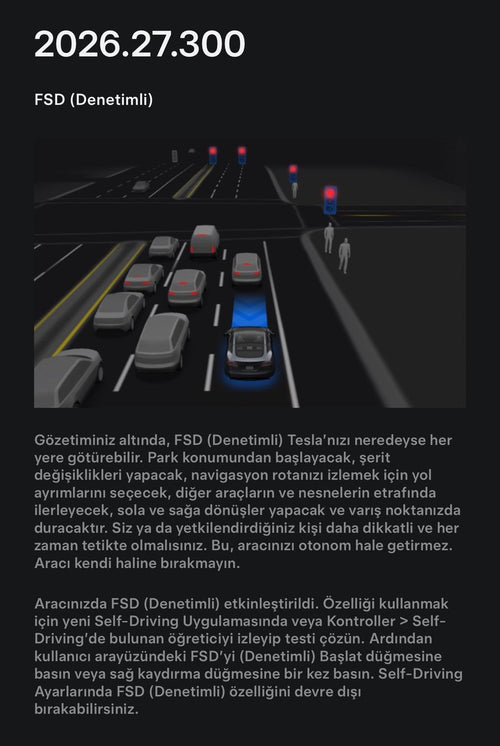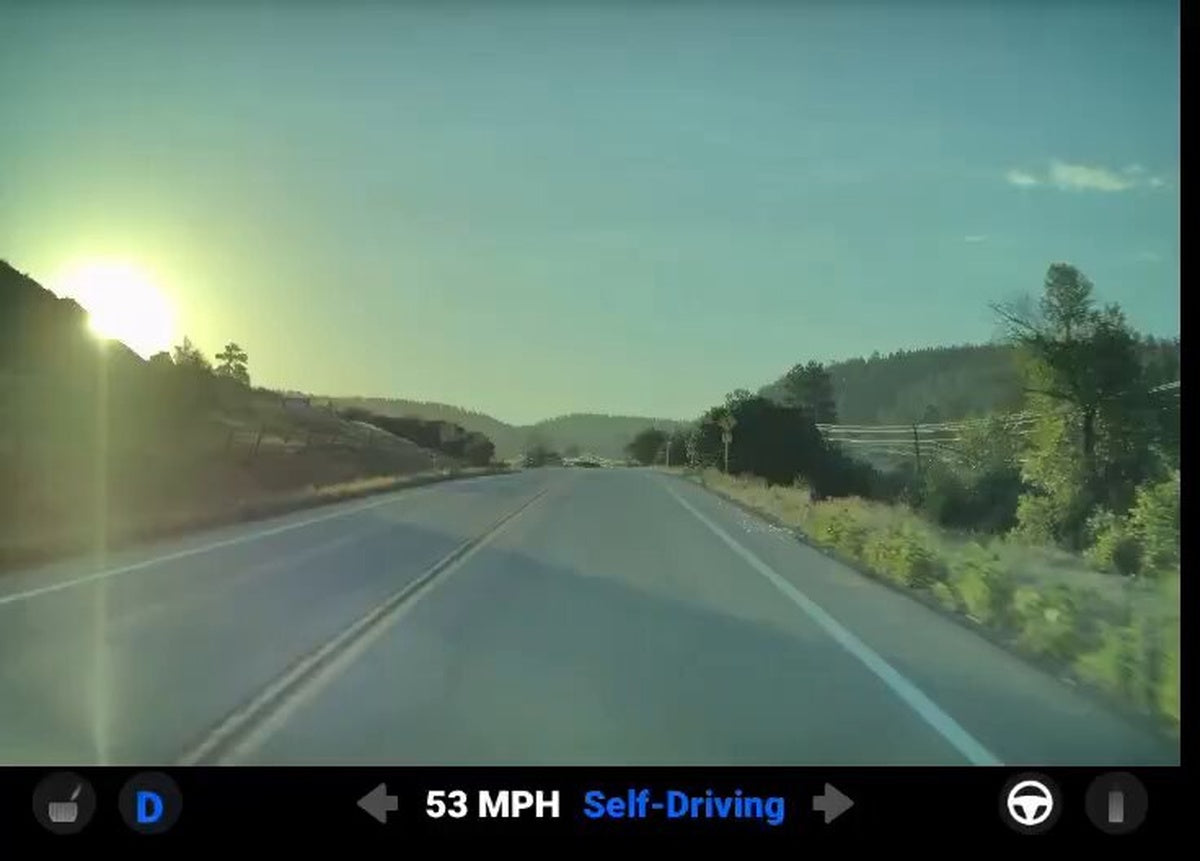
Tesla's official account just shared a video of FSD Supervised doing something that catches most drivers off guard — spotting a deer in direct sunlight and braking before the driver even registers the hazard. It's a brief clip, but it illustrates a capability that matters every time you're driving into a low sun on a rural road.

Why Sunlight Is a Genuine Hazard for Both Humans and Cameras
Direct sunlight washing out a forward view is one of the most common causes of driver inattention on rural roads — and historically, camera-based systems struggled with the same problem. When a bright light source saturates the sensor, contrast drops and objects in the foreground can effectively disappear.
What the video demonstrates is that FSD Supervised's perception stack can still resolve a deer-sized object even under those conditions. Tesla's system processes multiple camera feeds and applies neural-network-based scene understanding rather than relying on raw pixel contrast alone, which is what allows it to act when a human eye — or a simpler vision system — would be overwhelmed.
This isn't the first time FSD has shown strong wildlife detection. According to previous reporting, FSD v14.3 (released in April 2026) included a reported 20% faster reaction time and improved detection of smaller animals. Tesla CEO Elon Musk has stated publicly that preventing collisions with animals is a development priority. Earlier documented incidents include a Cybertruck on FSD braking for four deer on a pitch-dark road, and a separate case at highway speed in Calgary, Canada — both of which Tesla officially highlighted.
What FSD Owners Should Do Right Now
If you're running FSD Supervised, a few practical steps will help you get the most out of the system's wildlife detection capability — and keep you covered in the moments it needs your backup.
- Confirm you're on the latest software. Navigate to Controls → Software and check for pending updates. The wildlife detection improvements introduced in v14.3 require the corresponding software version to be installed. If an update is available, connect to Wi-Fi and let it install overnight.
- Don't disengage FSD on sunrise or sunset runs. The instinct to take manual control when the sun is directly ahead is understandable, but the video evidence suggests FSD's cameras may actually handle glare better than your naked eye in some scenarios. Stay engaged and monitor — that's exactly what Supervised mode is designed for.
- Keep Autopilot/FSD sensitivity settings at default. Some owners reduce automatic emergency braking aggressiveness to cut down on phantom braking. For wildlife-heavy routes, leave it at the standard setting so the system has full authority to brake hard when it needs to.
- Stay attentive — this is still Supervised. FSD Supervised requires the driver to remain ready to intervene at any moment. The deer avoidance clip shows the system working correctly, but no automated system is infallible. Keep your hands near the wheel and eyes on the road, especially at dawn and dusk when deer are most active.
- Report edge cases via the in-car feedback button. If FSD misses an animal or brakes unexpectedly for a false positive, tap the thumbs-down icon on the touchscreen immediately after the event. This sends a video clip to Tesla's training team and directly contributes to future model improvements.
The Bigger Picture
Wildlife collisions are not a minor statistical footnote. Deer strikes alone account for roughly 1.5 million vehicle collisions per year in the United States, with the highest risk concentrated in the low-light windows around dawn and dusk — the same conditions where human reaction time is most compromised. A system that can reliably detect and brake for a deer in direct sunlight represents a meaningful real-world safety gain, not just a demo reel moment.
Tesla's decision to post this clip officially signals that sunlight robustness is a capability the company is confident enough to put on record. As our FSD coverage has tracked over recent months, each successive version has pushed the perception envelope further — and wildlife avoidance appears to be one of the cleaner proof points for how far the system has come.
Related Gear
Gear up your Tesla with tested, custom-fit BASENOR accessories — shop Tesla accessories →
📋 Tracking Tesla software? See every firmware, FSD and app version in one place in our Tesla Software Update Tracker.
Sources & reporting notes
The links below identify the material source records used for this report.
- @Tesla on X (2026-07-12T21:59:22.000Z) — Direct source
Source links are preserved as published or accessed. See our editorial standards and corrections policy.
The BASENOR Editorial Desk covers Tesla, SpaceX, and related technology, curating reporting from primary sources — official accounts, regulatory filings, and software release data. Every article passes source-record and fact-checking review before publication. About the newsroom.
This report was curated by the BASENOR Editorial Desk from the sources listed above. Read our editorial standards or email editorial@basenor.com to report an error.