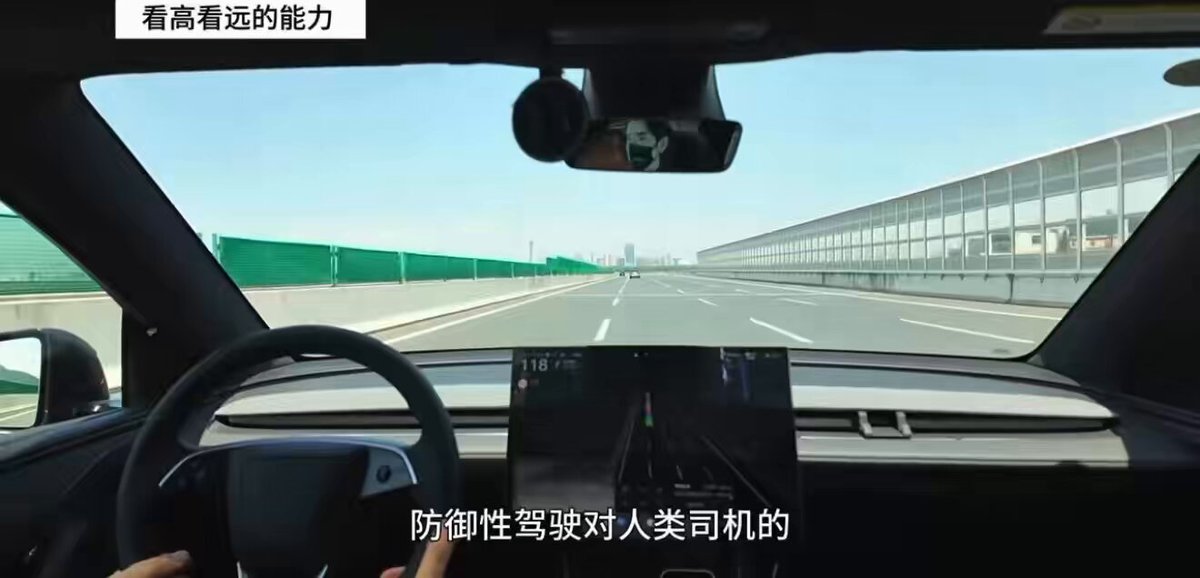
An independent reviewer in China who has tested most of the country's leading intelligent-driving systems — including Huawei ADS 5.0 and NIO Cedar 1.5.5 — recently put them head-to-head against Tesla's FSD v14. The finding that stood out most: a meaningful gap in detection and response distance. Here's what we know, and what it means for the broader competition.

Who ran this test, and why does it matter?
The tester is an independent reviewer in China who has systematically evaluated most of the major intelligent-driving systems currently available in the Chinese market — not just one or two. That breadth matters. When someone has direct, hands-on experience with Huawei ADS 5.0, NIO Cedar 1.5.5, and FSD v14 under comparable conditions, the comparison carries more weight than a spec-sheet reading. China is arguably the most competitive intelligent-driving market in the world right now, so a credible local tester's verdict is worth paying attention to.
What was the main difference observed?
According to the tester, as reported by @ray4tesla, the standout gap was in detection and response distance — how far ahead the system identifies a hazard and how quickly it acts on that information. FSD v14 reportedly identified obstacles and initiated responses at greater distances than both Huawei ADS 5.0 and NIO Cedar 1.5.5. That kind of lead time is not a minor comfort metric; it directly translates to how much margin the system has to execute a smooth, safe maneuver rather than a last-second intervention.
How does FSD v14's response time hold up technically?
According to previous reporting, FSD v14 is built around a 20ms response time — roughly 25 to 50 times faster than a human driver's reaction. That underlying architecture is likely a contributing factor to the detection-distance advantage the tester observed. A system that processes and acts on sensor data faster can, in principle, flag a hazard earlier in the decision loop. It's worth noting the tester's observations are real-world impressions, not controlled laboratory measurements, but they align with what Tesla has claimed about the platform's reflexes.
Is FSD v14 even available in China yet?
Yes — Tesla received approval for the supervised version of FSD in China on May 21, 2026, according to official announcements. FSD v14.3.x has been rolling out to Hardware 4 vehicles through August 2026. So the tester had access to a live, current build of the system rather than an older version. The China approval was a significant regulatory milestone, and this kind of independent real-world testing is exactly the kind of evidence that tends to shape how local consumers and competitors perceive the technology.
How do Huawei ADS 5.0 and NIO Cedar 1.5.5 fit into the competitive picture?
Huawei ADS 5.0 launched officially on April 23, 2026, and is considered one of the most capable domestic intelligent-driving stacks in China. NIO Cedar 1.5.5 represents NIO's current-generation system. Both are serious, well-funded efforts with strong local infrastructure advantages. Notably, NIO's own CEO Li Bin publicly acknowledged Tesla's intelligent driving system as a top industry performer as recently as June 2026 — a rare concession from a direct competitor that adds credibility to the independent tester's findings.
What should Tesla owners take away from this?
If you're running FSD v14 on a Hardware 4 vehicle, this test is a data point suggesting the system's detection architecture is competitive at a global level — not just against North American benchmarks. For owners still on Hardware 3 waiting for FSD v14 Lite, the underlying capability being validated here is what that update is working toward. The China market is where intelligent-driving competition is most intense right now, and FSD holding its own — or leading — in that environment is a meaningful signal about where the technology stands.
The full video from the tester is available via @ray4tesla's post on X. As FSD v14 continues its rollout and more independent reviewers in China publish their findings, the detection-distance gap will either hold up under scrutiny or narrow — either way, it's the right metric to watch. For more on our FSD coverage, including v14 rollout updates, check the linked tag.
Related Gear
Gear up your Tesla with tested, custom-fit BASENOR accessories — shop Tesla accessories →
Sources & reporting notes
The links below identify the material source records used for this report.
- @ray4tesla on X (2026-09-06T04:02:04.000Z) — Direct source
Source links are preserved as published or accessed. See our editorial standards and corrections policy.
The BASENOR Editorial Desk covers Tesla, SpaceX, and related technology, curating reporting from primary sources — official accounts, regulatory filings, and software release data. Every article passes source-record and fact-checking review before publication. About the newsroom.
This report was curated by the BASENOR Editorial Desk from the sources listed above. Read our editorial standards or email editorial@basenor.com to report an error.