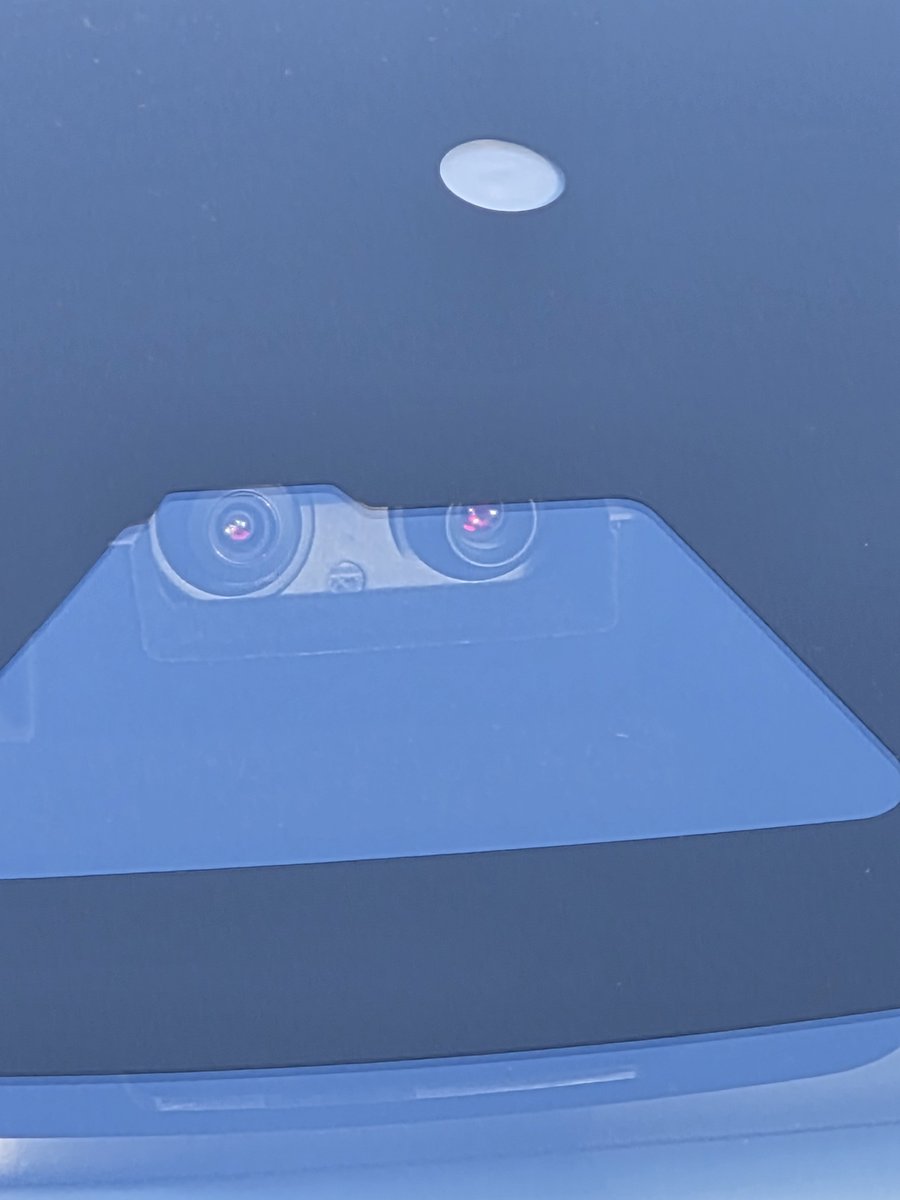
Two stories dropped within minutes of each other early Saturday morning that together paint a clearer picture of where Tesla's Cybercab actually stands. First, close-up images revealed the dual front-facing cameras mounted behind the Cybercab's windshield. Then, a rider who spent the weekend in Austin Cybercabs before switching to Waymo after the 10 PM cutoff had a blunt verdict: Tesla wasn't even close to being matched. Here's what we know.
What do the new Cybercab camera images actually show?
X user @DirtyTesLa posted close-up photos of the two forward-facing cameras positioned behind the Cybercab's windshield glass. The dual-camera arrangement is visible from inside the cabin and represents part of the sensor suite Tesla relies on for its vision-only autonomous driving approach — no lidar, no radar.

Why does a dual front camera setup matter?
Tesla's vision-based system processes depth and spatial information by comparing input from two cameras at slightly different positions — a stereo-vision approach. For a purpose-built robotaxi with no steering wheel and no human fallback, the reliability of that forward perception is critical. These images are the first close look at how that hardware is physically integrated into the Cybercab's cabin design.
How did the Cybercab actually perform against Waymo in Austin?
@Whole Mars Catalog rode Cybercabs throughout the weekend following the paid public launch on September 4, then switched to Waymo after Tesla Robotaxi's 10 PM service cutoff. His assessment was direct: Tesla's system was substantially better — smoother, more confident, and more natural in its driving behavior. The gap, in his words, wasn't marginal.
Is that comparison fair to Waymo?
Partly, and @wholemars acknowledged it. Austin is described as Tesla's strongest Robotaxi market — the city's road layout, weather conditions, and the density of Tesla's training data there all favor the system. Waymo, by contrast, has built its operational depth in San Francisco and Phoenix. A head-to-head in either of those cities would likely look different. That context matters before drawing sweeping conclusions about the broader autonomous vehicle race.
When did paid Cybercab rides open to the public?
Tesla held an invitation-only debut on September 3, 2026, in Austin. Paid public rides launched the following day, September 4, through the Tesla Robotaxi app (version 25.8.10), in limited areas of the city. The service currently operates with a 10 PM cutoff, which is what pushed @wholemars to Waymo for a late-night comparison ride in the first place.
What should prospective Cybercab riders in Austin expect?
Based on early rider reports, the experience is meaningfully different from a traditional rideshare. The hardware — including the dual front cameras now visible in these images — feeds a system that riders are describing as smooth and decisive rather than hesitant. Service hours are currently limited, availability is geofenced to specific Austin zones, and access requires the dedicated Robotaxi app. Expansion beyond Austin has not been officially scheduled yet, but the Austin rollout is clearly functioning as Tesla's proving ground for scaling the service further.
🚕 Following the Robotaxi rollout? See every operating city, launch date and announced market in our Tesla Robotaxi Tracker.
Related Gear
Gear up your Tesla with tested, custom-fit BASENOR accessories — shop Tesla accessories →
Sources & reporting notes
The links below identify the material source records used for this report.
- @DirtyTesLa on X (2026-09-06T04:37:22.000Z) — Direct source
- @wholemars on X (2026-09-06T04:42:07.000Z) — Direct source
Source links are preserved as published or accessed. See our editorial standards and corrections policy.
The BASENOR Editorial Desk covers Tesla, SpaceX, and related technology, curating reporting from primary sources — official accounts, regulatory filings, and software release data. Every article passes source-record and fact-checking review before publication. About the newsroom.
This report was curated by the BASENOR Editorial Desk from the sources listed above. Read our editorial standards or email editorial@basenor.com to report an error.