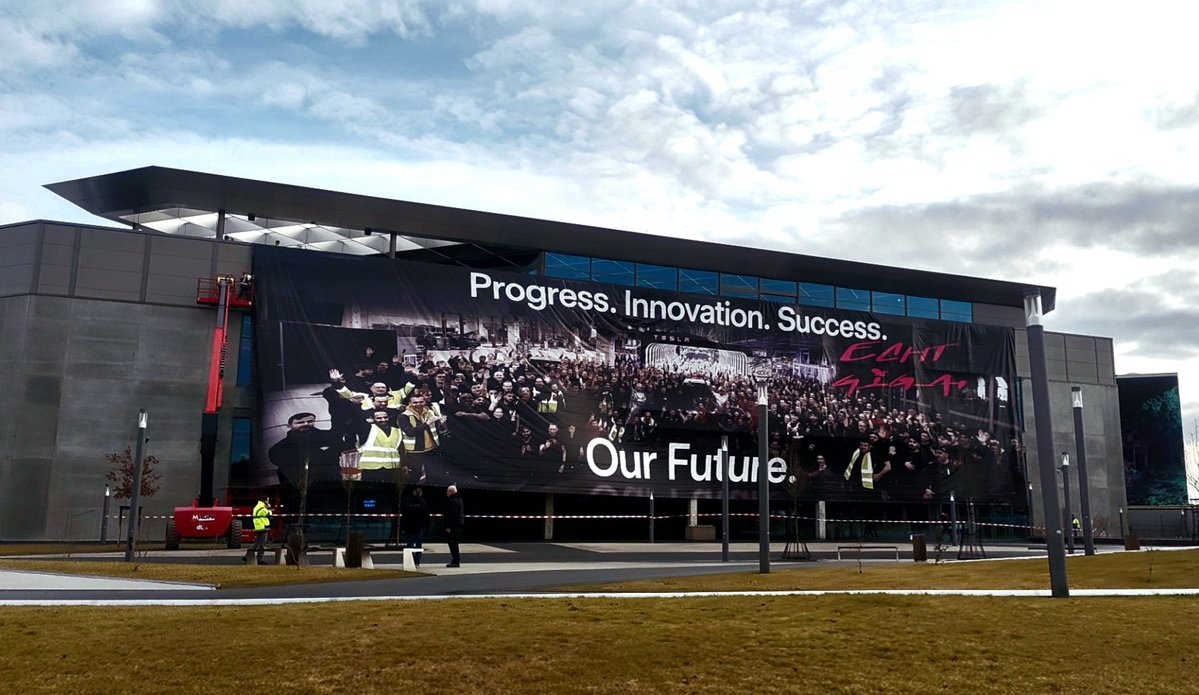
Giga Berlin is in full expansion mode. The Brandenburg factory has launched a new recruitment drive to support a production ramp from 5,000 to 6,200 Model Y vehicles per week — and that's only the first step. According to multiple verified sources, Tesla has its sights set on 7,500 units per week by October 2026, making this one of the most aggressive output pushes in the plant's history.

1. The first 1,000 new hires are already on board
The initial cohort of 1,000 employees needed for the 5,000-to-6,200 ramp has already been hired and onboarded. This wasn't announced as a future plan — it's done. That means the production increase to 6,200 vehicles per week isn't a target on a whiteboard; the workforce infrastructure to support it is already in place. Recruitment for the next 1,000 workers begins in September, keeping the hiring pipeline moving in parallel with output increases.
2. September kicks off the second hiring wave
Tesla isn't waiting to see how the first ramp performs before recruiting again. The September hiring round is designed to support the next leg of the expansion — toward the 7,500 vehicles per week target planned for October 2026. Staggering recruitment this way gives the plant time to absorb new workers, train them, and integrate them into production lines before the next output jump is required. It's a deliberate, phased approach rather than a single mass hire.
3. The real target is 7,500 vehicles per week by October
The 6,200 figure is a waypoint, not the destination. According to Giga Berlin plant manufacturing director Andre Thierig — who announced the target publicly on LinkedIn and X — the factory is aiming for 7,500 Model Ys per week from October 2026. That would represent a 50% increase over Q1 2026's baseline of roughly 5,000 units per week, all within a single calendar year. If achieved, it would make Giga Berlin one of Tesla's highest-output single-model plants globally.
4. Battery cell production is coming — and it needs its own workforce
The vehicle production ramp is only part of the story. Tesla separately announced plans in May 2026 to recruit over 1,500 additional employees specifically for battery cell production in Germany. That operation — targeting 18 GWh of 4680 cell capacity — is scheduled to begin in the first half of 2027. The cell production workforce is being built in parallel with the vehicle side, meaning Giga Berlin's total employment footprint is growing substantially faster than the vehicle numbers alone suggest.
5. The total job creation picture is around 3,500 new positions
Add it all up — the phased vehicle production hires, the battery cell workforce, and the conversion of approximately 500 temporary workers to permanent positions announced earlier in 2026 — and Giga Berlin is looking at roughly 3,500 new jobs across car and battery work at the Brandenburg site. That's a significant commitment to the facility at a time when manufacturing investment decisions in Europe carry real political and economic weight. For Tesla, it also signals confidence that European Model Y demand justifies the capacity expansion rather than redirecting production elsewhere.
The pace of Giga Berlin's expansion is worth watching closely. Going from 5,000 to a targeted 7,500 vehicles per week in under a year — while simultaneously building out a domestic battery cell operation — is an ambitious operational bet. Whether the October 7,500 target lands on schedule will be one of the clearest indicators of how well Tesla's European manufacturing engine is running heading into 2027.
Related Gear
Gear up your Model Y with tested, custom-fit BASENOR accessories — shop Model Y accessories →
Sources & reporting notes
The links below identify the material source records used for this report.
- @Gf4Tesla on X (2026-08-01T11:13:17.000Z) — Direct source
Source links are preserved as published or accessed. See our editorial standards and corrections policy.
The BASENOR Editorial Desk covers Tesla, SpaceX, and related technology, curating reporting from primary sources — official accounts, regulatory filings, and software release data. Every article passes source-record and fact-checking review before publication. About the newsroom.
This report was curated by the BASENOR Editorial Desk from the sources listed above. Read our editorial standards or email editorial@basenor.com to report an error.