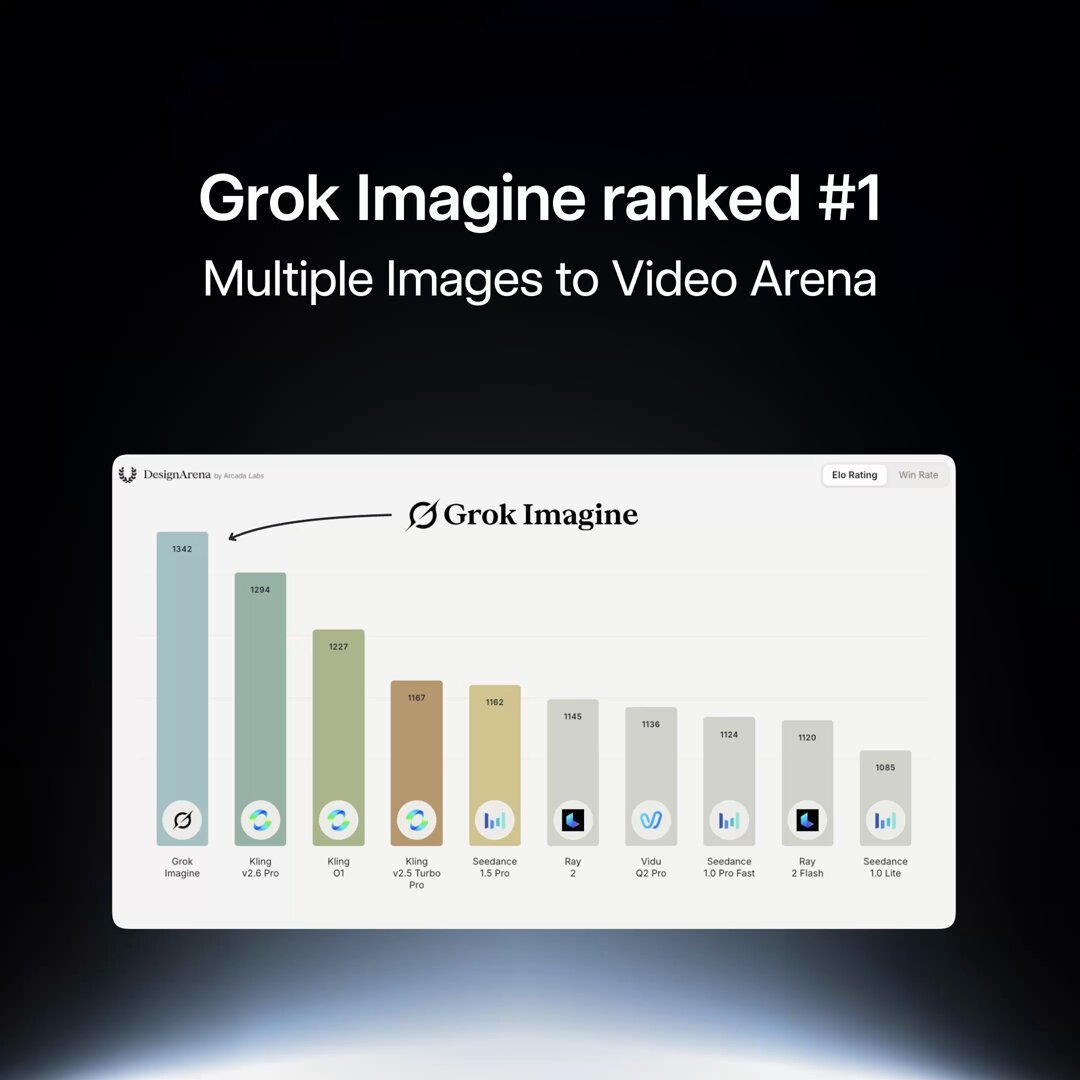
30-Second Brief
The News: Grok Imagine's multi-image to video and video extension features are now live on the API, letting developers generate videos from up to 7 images or extend existing clips by 10 seconds.
Why It Matters: Tesla owners and xAI ecosystem users building on the Grok API now have access to serious video generation tools — powered by xAI's Aurora engine — without waiting for a consumer-facing rollout.
Source: @grok on X
Grok API Now Supports Multi-Image Video Creation and 10-Second Video Extension
xAI has quietly shipped two significant upgrades to the Grok Imagine API: the ability to stitch up to seven images into a single generated video, and a video extension tool that adds up to 10 seconds onto an existing clip. Both features are live now for API developers.

📊 What Changed
| Feature | Before | Now |
|---|---|---|
| Multi-Image Input | Not available on API | Up to 7 images → single video |
| Video Extension | Not available on API | Extend existing clips by 10 seconds |
| Output Resolution | 720p (prior API) | 720p with audio (unchanged) |
| API Pricing | $0.05/sec (720p) | $0.05/sec — same rate applies |
| Underlying Engine | Aurora (image gen) | Aurora — now handling multi-image video workflows |
How These Features Actually Work
Multi-Image to Video
The new multi-image input pipeline lets you feed up to seven separate images into a single API call and receive a cohesive video output. Think of it as giving the Aurora engine a storyboard — it interprets the visual sequence and generates motion between frames. Output is 720p with synchronized audio, billed at $0.05 per second. The feature is powered by xAI's Aurora engine running on 110,000 NVIDIA GB200 GPUs, which gives it the raw compute to handle complex multi-source video synthesis.
This is a meaningful step up from single-image-to-video workflows. Developers building recap tools, highlight reels, or narrative content can now pass a structured image set and let the model handle the transitions — rather than stitching clips manually in post.
Video Extension
The extension feature — which xAI calls "Extend from Frame" in the consumer product — is now accessible via API. It adds up to 10 seconds onto an existing video clip. According to xAI's documentation, extensions are produced in 6–10 second increments, and clips can be chained to reach longer total durations. This means developers can programmatically build out longer video sequences by iterating extension calls rather than regenerating from scratch.
📊 API Specs at a Glance
| Max image inputs | 7 images per call |
| Extension length | Up to 10 seconds per call |
| Output resolution | 720p with audio |
| Pricing | $0.05 per second |
| Engine | xAI Aurora (110K NVIDIA GB200 GPUs) |
🚦 Owner's Action Plan
Verdict: Informational for most owners — Actionable for developers
If you're a developer building on the Grok API:
- Head to the xAI API docs and review the updated Grok Imagine endpoints for multi-image video and video extension.
- Prepare image sets of up to 7 images in your desired narrative sequence — the model will interpret order, so sequence matters.
- For video extension workflows, start with a base clip and chain extension calls iteratively to build longer sequences.
- Budget at $0.05/sec for 720p output — factor this into any production pipeline cost estimates.
- Note that the Batch API now also supports video generation, which can reduce costs for high-volume workflows.
If you're an X Premium subscriber (consumer access):
- Multi-image to video and video extension are available on iOS, Android, and web — no API key required.
- Open Grok Imagine, select the video generation option, and upload up to 7 images to generate a clip.
- Use the "Extend from Frame" option on any generated video to add up to 10 more seconds.
📰 Deep Dive
The timing of this API release matters. xAI has been methodically expanding the Grok Imagine API since its launch on January 28, 2026 — first adding image editing and generation to the Batch API, then pushing video capabilities to developers. Today's update brings the API to feature parity with the consumer product on two of the most-requested video tools.
The multi-image to video capability is particularly significant for developers. Most AI video APIs today are single-prompt or single-image affairs. Being able to pass a structured set of up to seven images and receive a coherent video output opens up use cases that previously required significant post-processing work: product showcases, event recaps, automated social content, and narrative storytelling at scale. At $0.05 per second, the economics are competitive for production-grade workflows.
The video extension feature addresses one of the core limitations of AI-generated video — short clip length. By enabling chained extensions of 6–10 seconds per call, xAI is giving developers a practical path to longer-form content without regenerating from scratch. This is a smarter architectural choice than simply raising a hard duration cap, since it lets the model maintain coherence across each extension step rather than trying to predict far into the future from a single prompt.
For the broader xAI ecosystem, these API additions signal that Aurora is maturing fast. Running on 110,000 NVIDIA GB200 GPUs, it now has the infrastructure to serve both consumer and developer workloads simultaneously — and with Grok 4.20 Beta and Grok 4.1 Fast also available in the Enterprise API as of this month, xAI is clearly positioning itself as a full-stack AI platform, not just a chatbot.
Sources & reporting notes
The links below identify the material source records used for this report.
- @grok on X (2026-03-24T20:00:04.000Z) — Direct source
Source links are preserved as published or accessed. See our editorial standards and corrections policy.
The BASENOR Editorial Desk covers Tesla, SpaceX, and related technology, curating reporting from primary sources — official accounts, regulatory filings, and software release data. Every article passes source-record and fact-checking review before publication. About the newsroom.
This report was curated by the BASENOR Editorial Desk from the sources listed above. Read our editorial standards or email editorial@basenor.com to report an error.