xAI has switched on Build Mode inside Grok, opening up single-prompt app creation to its top-tier SuperGrok Heavy subscribers across web, iOS and Android. Announced by the official @grok account on July 28, 2026, the feature turns a text idea into a working, publishable product — complete with its own domain — without requiring users to install a toolchain or write code manually.
The rollout stitches together several xAI capabilities that had been shipping separately over the last few months: the Grok Build coding agent, the Imagine generation tools, and browser-use tooling. What's new is that they're now packaged inside the consumer Grok apps as a guided build experience, not just a developer CLI.

What Build Mode Actually Does
The pitch from xAI is that a single prompt can produce a live, hosted application. According to xAI's own documentation of the launch, supported output categories include landing pages, portfolios, business sites, productivity tools such as planners and calculators, arcade and 3D games, and interactive dashboards that can pull in external data.
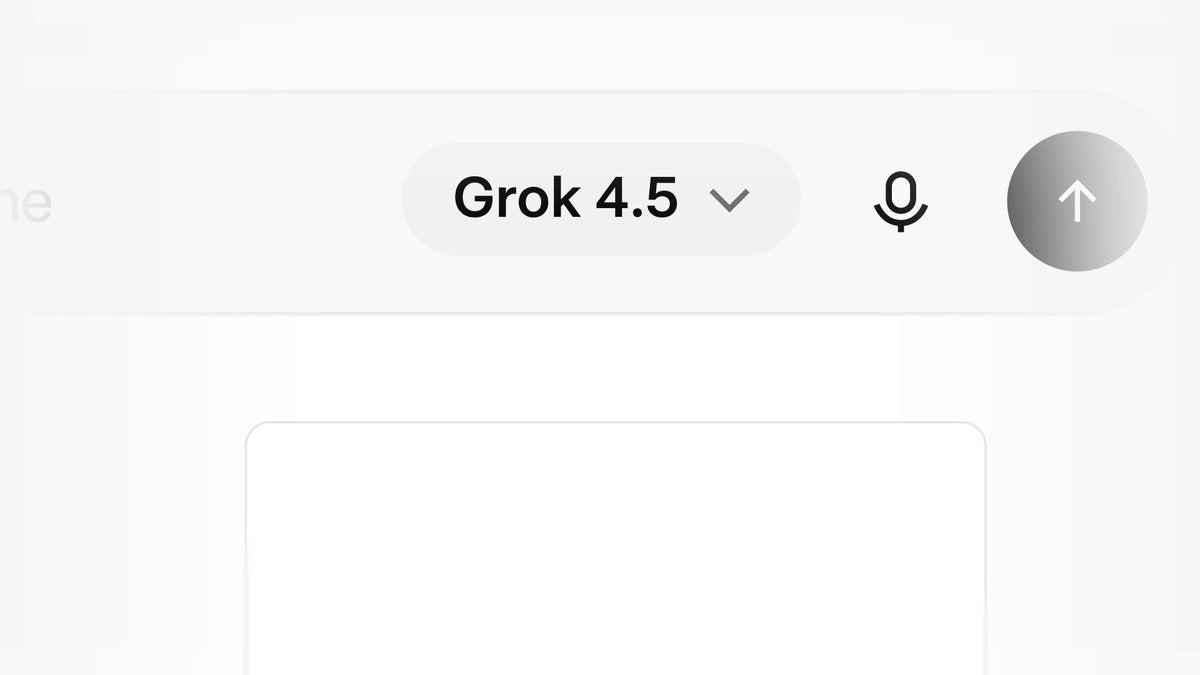
Under the hood, Build Mode runs on Grok's full coding agent — internally referenced as grok-build-0.1 (also known as grok-code-fast-1) — which carries a 256,000-token context window, according to xAI's model documentation. For heavier reasoning tasks, the agent can escalate to the larger Grok 4.5 model. The agent also uses browser tooling to fetch live information and the Imagine generator for on-the-fly visual assets.

One detail worth flagging for anyone comparing this to prior no-code tools: Grok's coding agent is designed around a plan → review → approve workflow, showing proposed changes as clean diffs rather than silently rewriting the project. According to xAI, the agent can also fan out up to eight sub-agents in parallel inside isolated Git worktrees, which is closer to how professional dev teams structure work than how a typical “AI website builder” behaves.
Publishing, Domains, and GitHub Export
Where Build Mode diverges most clearly from a sandbox demo is on the publishing side. Finished apps can be pushed to a grok.me subdomain, or attached to a custom domain the user already owns. For anyone who wants to keep iterating outside Grok, the source code can be exported to GitHub — which effectively turns Build Mode into a starter generator rather than a walled garden.

That last point matters. xAI open-sourced the underlying Grok Build project on July 15, 2026, publishing it to xai-org/grok-build under Apache 2.0, according to xAI. The company framed that move as a response to user concerns about code repository syncing and privacy. Build Mode in the consumer app is the friendly front-end; the engine beneath it is inspectable code.
Key Figures
| Detail | Value |
|---|---|
| Launch date | July 28, 2026 (Early Beta) |
| Availability | SuperGrok Heavy subscribers only |
| Platforms | Web (grok.com), iOS, Android |
| Coding model | grok-build-0.1 (grok-code-fast-1), 256K context |
| Parallel sub-agents | Up to 8, isolated Git worktrees |
| Subscription price | $300/month (SuperGrok Heavy) |
| API pricing | $1.00 / 1M input tokens, $2.00 / 1M output tokens |
| Publishing options | grok.me subdomain, custom domain, GitHub export |
How We Got Here
Build Mode is the visible tip of a much longer runway. According to xAI's release history, the original Grok Build was rolled out as an agentic coding CLI in early beta on May 14, 2026, aimed squarely at professional software engineers working from a terminal. On June 22, 2026, xAI added /goal mode, an autonomous execution path for multi-step coding and implementation tasks. Then came the open-source drop on July 15, 2026, and now the consumer-facing Build Mode on July 28.
Read in sequence, the pattern is clear: xAI built the engine for developers first, hardened it in the open, and only then wrapped it in a one-prompt experience for the mass Grok userbase. That's the opposite of how most AI “app builder” products have shipped — flashy demo first, real engineering later.

To showcase the range, the Grok team pointed to three demo apps built inside the tool: a driving simulator, a beat machine, and a physics playground. The choice of examples is telling — they lean into interactive, visual output rather than the “another to-do list app” genre that dominates most AI code demos.
Why This Matters
For the broader xAI story, Build Mode is a business-model statement. SuperGrok Heavy sits at $300/month, and until now the biggest justification for that tier has been priority access to Grok 4.5 and higher usage limits. Bundling in a full-fat app builder — with publishing and GitHub export — turns the subscription into something closer to a developer platform seat than a chatbot upgrade.
It also puts xAI in more direct competition with a growing class of AI-native builders and code assistants. The differentiator xAI is emphasizing is depth of tooling: a 256K-context coding model, parallel sub-agents, browser use, and image generation working from inside the same session. Whether Build Mode is genuinely faster or more reliable than existing options will be settled by users in the coming weeks, not by launch-day copy.
What to Watch Next
- Tier expansion. Build Mode is Early Beta and limited to SuperGrok Heavy. Whether xAI opens it to the standard SuperGrok tier — and on what usage caps — will define its reach.
- Real-world app quality. The team demos look strong, but the honest test is what non-technical users ship in the first month and how those apps hold up when hit with actual traffic.
-
Domain and hosting policy. Custom domains and GitHub export are in place at launch; watch for clarity on hosting limits, uptime commitments, and what happens to a published
grok.meapp if a subscription lapses. - Enterprise angle. With the underlying Grok Build engine open-source under Apache 2.0, expect xAI to eventually package a team or enterprise variant that layers on collaboration, permissions, and private deployment.
Build Mode's success won't be measured by launch-day screenshots. It'll be measured by whether SuperGrok Heavy subscribers keep the tab open a month from now — and whether the apps they publish are ones other people actually use.
Sources & reporting notes
The links below identify the material source records used for this report.
- @grok on X (2026-07-28T16:00:21.000Z) — Direct source
- @grok on X (2026-07-28T16:00:22.000Z) — Direct source
- @grok on X (2026-07-28T16:00:22.000Z) — Direct source
- @grok on X (2026-07-28T16:00:22.000Z) — Direct source
Source links are preserved as published or accessed. See our editorial standards and corrections policy.
The BASENOR Editorial Desk covers Tesla, SpaceX, and related technology, curating reporting from primary sources — official accounts, regulatory filings, and software release data. Every article passes source-record and fact-checking review before publication. About the newsroom.
This report was curated by the BASENOR Editorial Desk from the sources listed above. Read our editorial standards or email editorial@basenor.com to report an error.