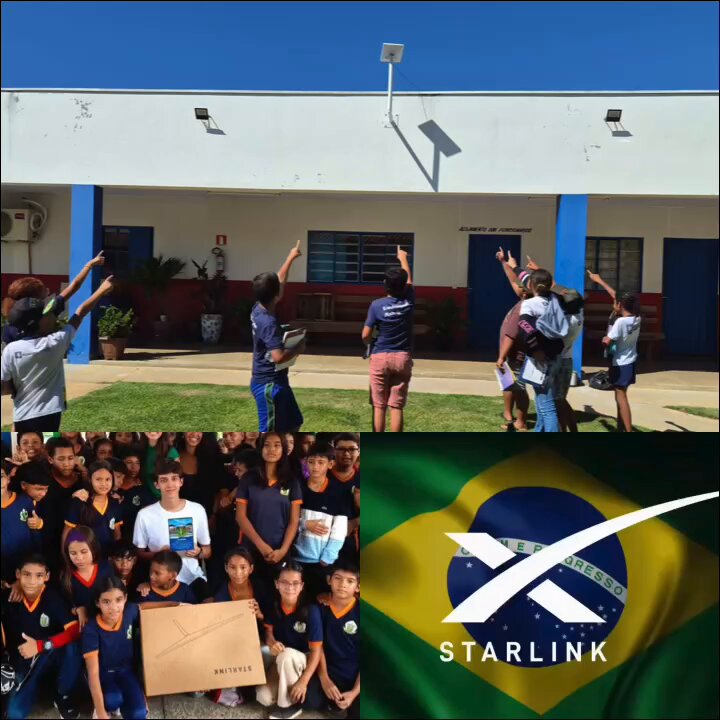
Elon Musk shared a video on Sunday highlighting Starlink's growing role in rural education — a brief post that points to a much larger story playing out across three continents. From a $21.9 million agreement with Argentina to a Kenya deployment that doubled students' digital task completion in a single month, SpaceX's satellite internet service is quietly becoming one of the more consequential infrastructure plays in global education.

The Numbers Behind the Claim
Musk's post is short on detail, but the verified record behind it is not. According to Starlink's own reporting, the service connected more than 6 million students worldwide in 2025 through partnerships with individuals, companies, and educational organizations — giving remote learners access to online resources that fiber and cellular infrastructure simply don't reach.
Three specific programs illustrate how that scale is being built, deal by deal:
| Program | Scale | Value / Status |
|---|---|---|
| Argentina — 6,000 rural schools | 6,000 satellite kits, 5 TB/month per site, 24 months priority service | ~US$21.9M total; Starlink contribution ~US$9.98M; approved by ENACOM Sept 7, 2026 |
| Kenya — 30 schools, 30 districts | 32,000+ students, ~1,000 teachers | Partnership with Grow X Education and CEMASTEA; devices handed over Feb 2, 2026 |
| South Africa — 5,000+ rural schools | Est. 2.4 million learners annually | ~R500M (~US$27–29M) proposed; offer submitted 2025, stalled pending operating approval as of Oct 2026 |
Kenya's Results Are the Most Telling
Raw connectivity numbers are easy to announce. Outcome data is harder to come by — which is why the Kenya deployment stands out. According to Grow X Education and CEMASTEA, within one month of Starlink installation across 30 remote Kenyan districts, the share of teachers using digital tools in the classroom jumped from 57% to 82%. More strikingly, the proportion of students completing digital tasks doubled — from 18% to 36%.
That's a meaningful behavioral shift in four weeks. It doesn't prove long-term learning outcomes, but it does suggest that the bottleneck in these schools wasn't teacher willingness or student engagement — it was connectivity. Remove that barrier and adoption follows quickly.
Argentina: The Largest Confirmed Deal
The Argentina agreement, formalized with the country's National Communications Agency (ENACOM) and published in the Official Gazette on September 7, 2026, is currently the largest single-country education deployment on record. President Javier Milei first announced the initiative on July 27, 2026. Starlink's portion of the deal — approximately US$9.98 million — covers hardware kits and two years of high-capacity priority service at up to 5 TB of data per month per school site. The total program value sits at roughly US$21.9 million.
For context, 6,000 schools represents a substantial fraction of Argentina's rural school infrastructure. The priority service tier matters too: standard Starlink residential plans can experience congestion in dense areas, but priority data allocations are designed to maintain performance even during peak hours — a practical consideration for classrooms trying to run video lessons simultaneously.
South Africa: A Deal in Limbo
The most ambitious proposal — free high-speed internet for more than 5,000 South African rural schools, potentially reaching 2.4 million learners annually — remains stalled. SpaceX submitted the offer in 2025 as part of its bid to secure operating approval in the country, but as of October 2026 the regulatory situation has not resolved. The proposed investment of approximately R500 million (roughly US$27–29 million) would represent Starlink's largest single education commitment to date, if it clears.
The South Africa situation illustrates a recurring pattern in Starlink's international expansion: the technology is ready, the demand is documented, but regulatory approval timelines in individual markets can stretch the gap between announcement and delivery by years.
The Broader Picture
Starlink's education push is one part of a wider strategy to demonstrate societal value in markets where it's seeking or defending operating licenses. That's a legitimate business motive, and it doesn't diminish the real-world impact on students who previously had no reliable internet access. The 6 million student figure from 2025 will almost certainly grow in 2026 as the Argentina deployment comes online and new partnerships are announced.
What the data doesn't yet answer is whether connectivity alone translates to sustained improvements in learning outcomes over years rather than months. The Kenya one-month numbers are promising, but the education research community will want to see longitudinal results before drawing stronger conclusions. That follow-up data — if and when it's published — will be the real test of whether Starlink's rural education story holds up at scale. For more on SpaceX's expanding footprint, see our SpaceX coverage.
Sources & reporting notes
The links below identify the material source records used for this report.
- @elonmusk on X (2026-11-16T00:40:04.000Z) — Direct source
Source links are preserved as published or accessed. See our editorial standards and corrections policy.
The BASENOR Editorial Desk covers Tesla, SpaceX, and related technology, curating reporting from primary sources — official accounts, regulatory filings, and software release data. Every article passes source-record and fact-checking review before publication. About the newsroom.
This report was curated by the BASENOR Editorial Desk from the sources listed above. Read our editorial standards or email editorial@basenor.com to report an error.