Samsung is committing $1.9 billion to expand its semiconductor facility in Austin, Texas — and the primary driver is a chip that keeps Starlink satellites talking to each other in orbit. The investment, confirmed by multiple industry sources on November 15, 2026, will establish a second manufacturing source for the STM32V8 microcontroller, currently produced in France, and signals a meaningful shift in where critical space-grade silicon gets made.

The Chip at the Center of It All
The STM32V8 is not a generic processor. It was co-developed by Samsung and STMicroelectronics specifically for demanding environments, built on an 18-nanometer fully depleted silicon-on-insulator (FD-SOI) process. That manufacturing approach matters in space: FD-SOI delivers lower power consumption, better heat management, and stronger resistance to cosmic radiation than conventional silicon processes — exactly what you need when the hardware is orbiting Earth at 17,500 mph with no maintenance access.
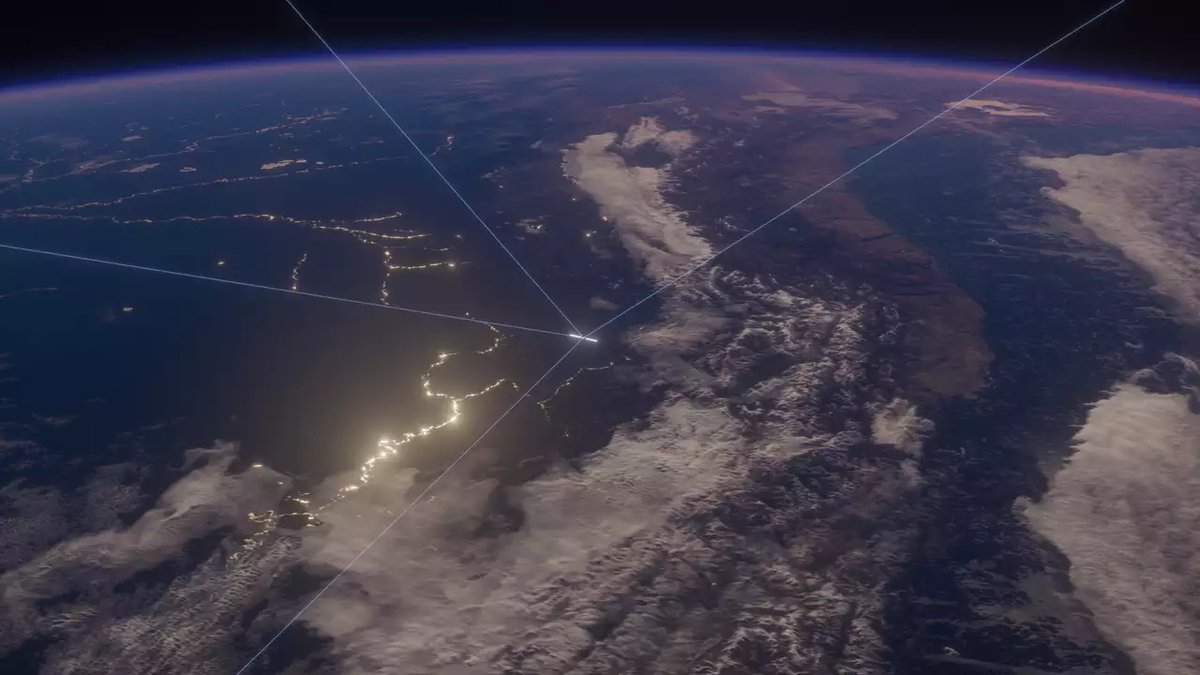
Inside each chip sits an Arm Cortex-M85 CPU running at up to 800 MHz. SpaceX confirmed in December 2025 that the STM32V8 was already deployed in Starlink's laser inter-satellite link (ISL) systems — the optical crosslinks that allow satellites to relay data directly to each other rather than bouncing signals down to ground stations. Those laser links are central to Starlink's low-latency performance, particularly over oceans and polar regions where ground infrastructure is sparse.
Until now, production has been anchored at STMicroelectronics' fab in Crolles, France. The Austin expansion creates a parallel U.S.-based supply line — a deliberate redundancy that reduces geopolitical and logistical risk for a program that SpaceX is scaling aggressively.
The Numbers Behind the Decision
| Detail | Figure |
|---|---|
| Samsung Austin investment | $1.9 billion (~2.7 trillion won) |
| Target production start | 2030 |
| Samsung total Texas capex | $37 billion+ (Austin + Taylor) |
| U.S. CHIPS Act subsidies | Up to $4.745 billion |
| Chip process node | 18nm FD-SOI |
| CPU core | Arm Cortex-M85, up to 800 MHz |
Why Austin, Why Now
The timing is not accidental. Samsung's Texas semiconductor buildout — spanning both its Austin and Taylor facilities — is being partially underwritten by up to $4.745 billion in U.S. CHIPS Act subsidies. Documents from the Department of Commerce's NIST confirm the Austin fab is designated to support FD-SOI production for aerospace, defense, and automotive applications. Starlink sits squarely in that mandate.
There is also a supply chain logic here that goes beyond any single customer. Concentrating production of a radiation-hardened, space-qualified chip in a single country — let alone a single facility — is an exposure that both SpaceX and U.S. defense planners would want to reduce. A domestic second source for the STM32V8 addresses that directly. According to background research, Samsung has not officially confirmed a named contract with SpaceX for this specific production run, but the chip's documented use in Starlink systems and the fab's stated purpose leave little ambiguity about the intended customer.
What It Means for Starlink's Trajectory
Starlink's laser inter-satellite links are what separate the constellation's performance from older satellite internet architectures. Ground-station-dependent systems introduce latency every time a signal has to travel down and back up; ISLs let data route through space at the speed of light across the full orbital shell. Securing a domestic supply of the chip that manages those links is less a business story than an infrastructure story — the kind of investment that only makes sense if SpaceX is planning to keep scaling the constellation for years to come.
The Austin fab is not expected to come online until 2030, which means this investment is a long-horizon commitment. Samsung is effectively betting that demand for space-grade FD-SOI chips will be substantial enough four years from now to justify nearly $2 billion in dedicated capacity. Given SpaceX's stated ambitions for Starlink — including direct-to-cell service, aviation, maritime, and government contracts — that bet looks conservative rather than aggressive. For our full SpaceX coverage, including Starlink milestones and launch updates, check the tag page.
Sources & reporting notes
The links below identify the material source records used for this report.
- @SawyerMerritt on X (2026-11-15T23:55:23.000Z) — Direct source
Source links are preserved as published or accessed. See our editorial standards and corrections policy.
The BASENOR Editorial Desk covers Tesla, SpaceX, and related technology, curating reporting from primary sources — official accounts, regulatory filings, and software release data. Every article passes source-record and fact-checking review before publication. About the newsroom.
This report was curated by the BASENOR Editorial Desk from the sources listed above. Read our editorial standards or email editorial@basenor.com to report an error.