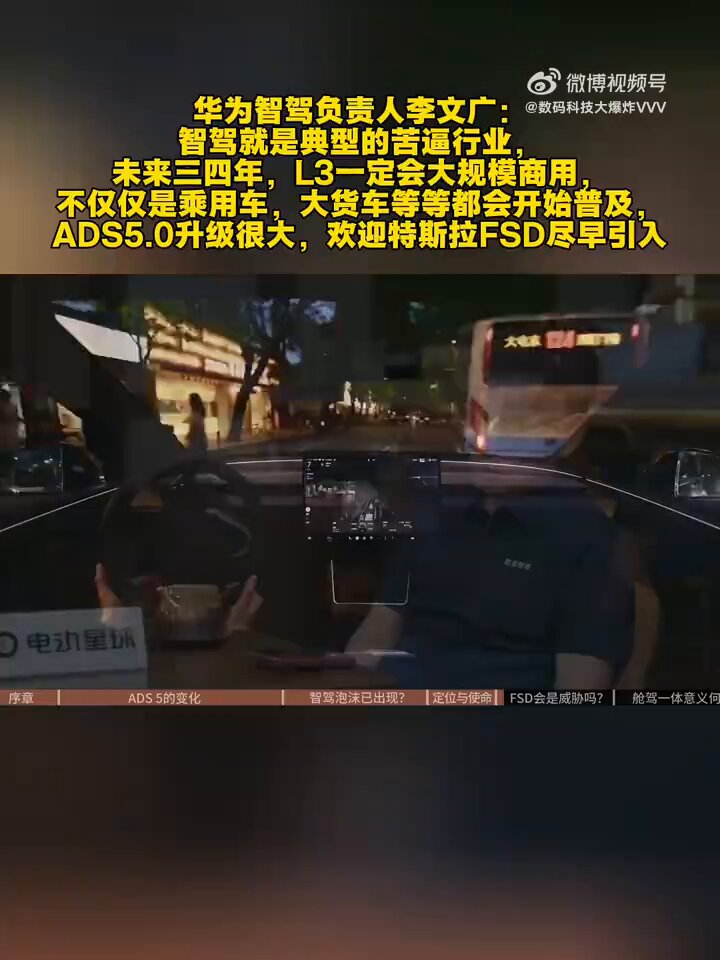
Li Wenguang, Huawei's head of autonomous driving, has publicly welcomed Tesla FSD's entry into the Chinese market — a notable statement from the executive leading one of Tesla's most formidable local rivals. His comments cut to two distinct points: that competition sharpens products, and that Tesla's subscription pricing model could do the entire industry a favor by normalizing software-as-a-service in the automotive space.

A Competitor That Wants Tesla to Succeed — Sort Of
Li Wenguang is not the first Huawei executive to take this position. According to reporting from multiple industry sources, Jin Yuzhi, CEO of Huawei's Intelligent Automotive Solution BU, had previously told government researchers that he actively supported Tesla FSD's entry into China. Richard Yu, Huawei's Smart Automotive Solution Chairman, made similar remarks back in February 2025, saying he was pleased to see Tesla pushing FSD deployment in China because competition in smart driving drives progress across the board.
That's a consistent posture from Huawei's leadership — and it's worth understanding why. Huawei's ADS (Advanced Driving System) is arguably the most capable domestic competitor to Tesla FSD in China right now. A market where consumers are actively comparing and paying for advanced driver assistance is a market that validates Huawei's own premium pricing. Tesla raising the profile of intelligent driving software is, from that angle, good for everyone selling it.
Where Tesla FSD Actually Stands in China
Tesla officially confirmed FSD (Supervised) availability in China on May 21, 2026 — though this is a supervised, limited deployment rather than a fleet-wide rollout. Full regulatory clearance for broader deployment was targeted for Q3 2026, according to previous Tesla statements. The company has also rebranded the feature locally as "Tesla Assisted Driving" (TAD) to align with Chinese regulatory language — the third name change for the feature in China.
On pricing, the one-time purchase option sits at 64,000 yuan (approximately $9,400 USD). Unlike most global markets where Tesla shifted to a subscription-only model for FSD in February 2026, China still offers the outright purchase path. A monthly subscription option has not yet launched for Chinese customers, though some reports have suggested a figure around 599 RMB per month as a potential future price point — nothing officially confirmed.
Why the Subscription Question Actually Matters
Li Wenguang's comment about Tesla's subscription model is the more strategically interesting of his two points. Chinese consumers have historically been resistant to ongoing software subscription fees for features they expect to own outright after purchasing a vehicle. That friction has made it difficult for any automaker — domestic or foreign — to build a recurring software revenue stream in the market.
If Tesla can successfully introduce and normalize FSD subscriptions in China, it creates a precedent that benefits every player trying to monetize intelligent driving software on an ongoing basis. Huawei, which sells its ADS system to automaker partners including AITO, Avatr, and Luxeed, would stand to gain from a market that's more comfortable with the model. It's a rare case where a competitor's commercial success in pricing strategy is genuinely useful to you.
For Tesla owners in China, the practical takeaway is that FSD's regulatory and commercial path is still being built out. The supervised deployment is live, the one-time purchase option exists, and a subscription tier may follow — but the timeline depends on both regulatory clearance and how aggressively Tesla chooses to push the model into a market where it hasn't yet been tested at scale.
Related Gear
Gear up your Tesla with tested, custom-fit BASENOR accessories — shop Tesla accessories →
Sources & reporting notes
The links below identify the material source records used for this report.
- @ray4tesla on X (2026-08-10T14:44:16.000Z) — Direct source
Source links are preserved as published or accessed. See our editorial standards and corrections policy.
The BASENOR Editorial Desk covers Tesla, SpaceX, and related technology, curating reporting from primary sources — official accounts, regulatory filings, and software release data. Every article passes source-record and fact-checking review before publication. About the newsroom.
This report was curated by the BASENOR Editorial Desk from the sources listed above. Read our editorial standards or email editorial@basenor.com to report an error.