Elon Musk isn't mincing words about the global chip and memory shortage. In comments circulated widely this week, he described the situation as the most severe supply crunch he's ever witnessed — one that poses a direct threat to Tesla's production timelines and the broader AI buildout his companies depend on.

How Bad Is It?
According to multiple verified reports, Musk stated he has "never seen memory chip prices spike this hard." DRAM prices have surged dramatically, and High-Bandwidth Memory (HBM) — the type of memory critical for AI accelerators — is reportedly sold out through the end of 2026. That's not a short-term blip; it's a structural problem.
Musk reportedly warned Tesla internally in late January 2026 of a "chip wall" — his term for the point at which chip scarcity becomes an existential threat to production schedules. For a company that increasingly treats its vehicles as rolling compute platforms, that warning carries real weight. Every new feature, from FSD improvements to in-car AI, requires more silicon than the generation before it.
He also pointed to a stark domestic manufacturing gap: "There's not a single high-volume computer memory fab in America right now. Zero." That dependency on overseas supply chains — primarily in South Korea and Taiwan — leaves U.S. manufacturers, including Tesla, exposed to geopolitical risk and capacity constraints they can't directly control.
The Terafab Response
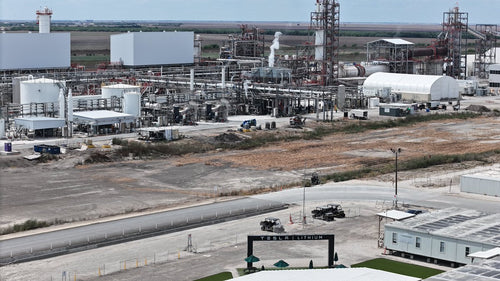
Rather than wait for existing suppliers to scale up, Tesla, SpaceX, and xAI announced a joint venture called Terafab in March 2026. The project plans to build two AI chip factories in Austin, Texas, structured as a vertically integrated facility covering chip design, lithography, fabrication, memory production, packaging, and testing — all under one roof.
The projected investment sits between $119 billion and $122 billion, according to verified reporting. The long-term output target is one terawatt of compute hardware per year — a figure that would, if achieved, exceed the current annual U.S. chip consumption of approximately 0.5 TW.
Two chip types are planned: one optimized for edge and inference workloads destined for Tesla vehicles, robotaxis, and humanoid robots; and a second high-performance chip for space-based computing to support SpaceX and xAI's orbital AI ambitions. Intel joined the project in April 2026 as a partner, though SpaceX's S-1 filing ahead of its IPO noted that current partners carry no long-term obligation to remain involved.
What the Timeline Actually Looks Like
Here's the honest picture for Tesla owners and investors: Terafab is a long game. Small-batch production of Tesla's next-generation AI5 chip is anticipated sometime in 2026, with volume production expected in 2027. But the broader Terafab facility isn't expected to meaningfully impact Tesla's supply chain before 2030.
In the interim, Tesla remains dependent on Samsung, TSMC, and Micron. Musk has publicly acknowledged this, expressing gratitude to those suppliers while noting that his companies would purchase their entire output if they could expand faster — but their current rate of expansion is, in his words, "much less than we would like."
The gap between what AI-driven companies need and what the global semiconductor industry can currently deliver is enormous. Musk has indicated that existing global AI compute output of roughly 20 gigawatts per year represents only about 2% of what his companies require. That's not a rounding error — it's a fundamental mismatch between demand and supply that no single factory announcement resolves overnight.
Why This Matters for Tesla Owners
For current owners, the chip shortage is a background risk rather than an immediate disruption. Tesla has so far managed production without announcing major delays tied to chip supply. But the shortage shapes what comes next: how quickly FSD improves, when new hardware generations reach vehicles, and how aggressively Tesla can expand its robotaxi fleet. If the chip wall tightens further before Terafab comes online, those timelines could slip.
The Terafab announcement signals that Musk is treating this as a decade-defining infrastructure problem — not a quarterly procurement headache. Whether a $120 billion bet on domestic chip manufacturing pays off by 2030 is an open question, but the urgency behind it reflects just how seriously the shortage is being taken at the highest levels of Tesla's leadership.
Related Gear
Gear up your Tesla with tested, custom-fit BASENOR accessories — shop Tesla accessories →
Sources & reporting notes
The links below identify the material source records used for this report.
- @wholemars on X (2026-06-25T21:39:04.000Z) — Direct source
Source links are preserved as published or accessed. See our editorial standards and corrections policy.
The BASENOR Editorial Desk covers Tesla, SpaceX, and related technology, curating reporting from primary sources — official accounts, regulatory filings, and software release data. Every article passes source-record and fact-checking review before publication. About the newsroom.
This report was curated by the BASENOR Editorial Desk from the sources listed above. Read our editorial standards or email editorial@basenor.com to report an error.