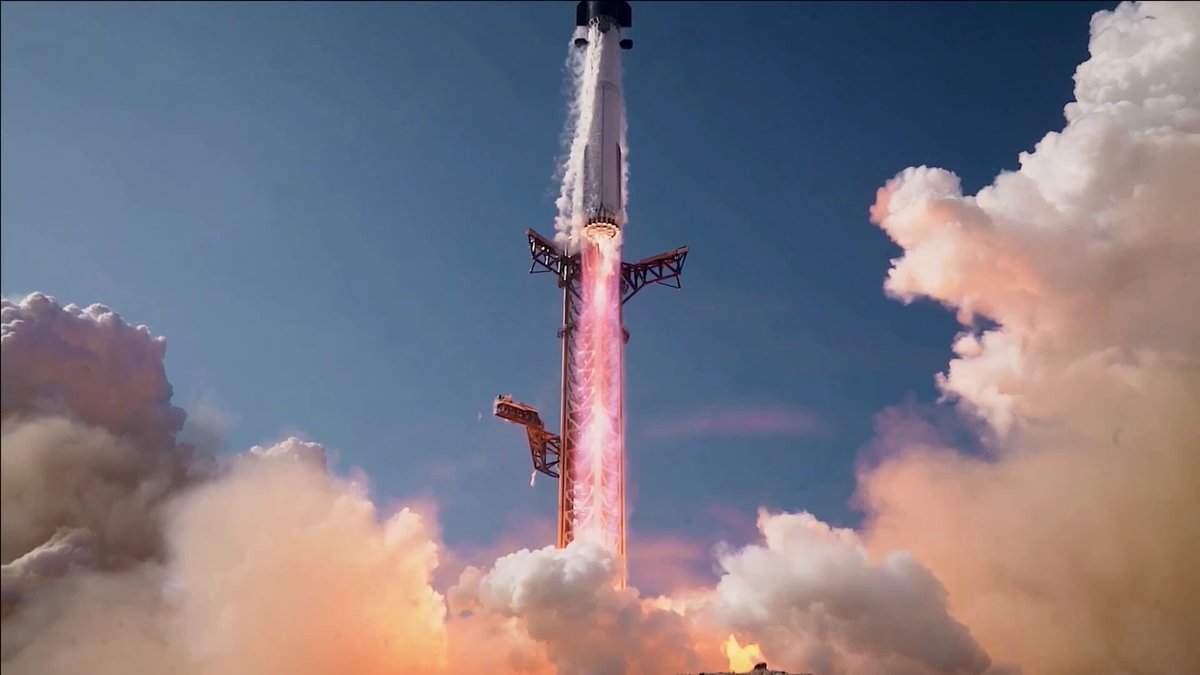
Elon Musk laid out one of the most ambitious production targets in spaceflight history on June 8: SpaceX intends to scale Starship's annual orbital delivery capacity from roughly 2,500 tonnes today to one million tonnes within approximately three years — with an eventual ceiling of millions of tonnes per year. The statement reframes Starship not as a rocket, but as industrial infrastructure for space.

The upmass numbers put the ambition in sharp relief. According to background research, the current Starship Version 2 carries roughly 35 tonnes to orbit per flight. Version 3, expected to launch in 2026, is designed to carry over 100 tonnes — and SpaceX has cited a maximum payload capacity of 150 metric tons for the platform. Reaching one million tonnes annually at that per-flight capacity would require thousands of launches per year, which is precisely the point: Musk has previously described needing thousands of Starship flights timed to planetary alignment windows just to establish a self-sustaining Mars city.

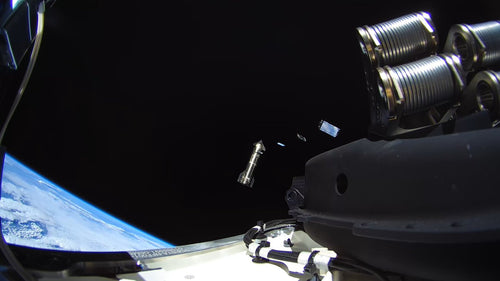
Musk tied the upmass goal directly to reusability, calling rapid reusability the essential unlock — not just for cost, but for civilizational scale. "This is the first time there has ever been a rocket where that is possible," he said, referencing the Kardashev scale as the broader frame: moving humanity toward a multi-planetary, energy-abundant future requires moving mass cheaply and repeatedly, not expensively and once. SpaceX is targeting full reusability demonstrations in 2026, including catching both the booster and the ship, alongside a full-scale propellant transfer test between two Starships that is critical for deep-space missions.
The near-term Mars calendar adds urgency to the ramp. SpaceX is targeting late 2026 for the first uncrewed Starship flight to Mars — Musk puts the odds at roughly 50/50 for that window — with the first human missions potentially as early as 2029. Miss the 2026 window and the next Earth-Mars alignment doesn't open until late 2028. Getting to a million tonnes annually isn't just an engineering milestone; it's the logistics backbone that makes any permanent Mars presence viable. For more on the Starship program, see our SpaceX coverage.
🚀 Following the Starship program? See every test flight, official outcome and the next launch window in our SpaceX Starship Tracker.
Sources & reporting notes
The links below identify the material source records used for this report.
- @SawyerMerritt on X (2026-06-08T21:59:40.000Z) — Direct source
- @SawyerMerritt on X (2026-06-08T21:55:45.000Z) — Direct source
Source links are preserved as published or accessed. See our editorial standards and corrections policy.
The BASENOR Editorial Desk covers Tesla, SpaceX, and related technology, curating reporting from primary sources — official accounts, regulatory filings, and software release data. Every article passes source-record and fact-checking review before publication. About the newsroom.
This report was curated by the BASENOR Editorial Desk from the sources listed above. Read our editorial standards or email editorial@basenor.com to report an error.