Elon Musk said on X Monday that the output value of Terafab — the Tesla-SpaceX AI chip megafab planned for Grimes County, Texas — will be large enough to rank among the top 20 country GDPs, all from a single building. The claim, posted alongside a recap of a TheElec report on Terafab's Korean supply chain, is the most aggressive public framing Musk has given the project to date and signals how central in-house chip production has become to Tesla's long-term AI and robotics roadmap.

What Musk Actually Said
The quote is short and absolute: “The value of Terafab's output will place it in the top 20 of country GDP in a single building.” For context, the 20th-largest economy in the world currently sits in the $700 billion to $1 trillion annual GDP range, depending on the year and ranking methodology. Musk is asserting that one facility — not a company, not a sector, one building — will generate output on that order.
Whole Mars Catalog, which Musk frequently amplifies, restated the claim for a broader audience, calling it a prediction that Terafab “will produce enough value to put it in the top 20 countries by GDP if it were a country.” Musk did not provide a timeline for when that output level would be reached, nor did he specify whether the figure refers to revenue, the compute value delivered to Tesla and SpaceX, or an estimated market value of the chips produced.
What Terafab Is
Terafab is a semiconductor fabrication plant jointly developed by Tesla and SpaceX, with the stated goal of producing AI chips for Tesla's Full Self-Driving stack, the Optimus humanoid robot program, and SpaceX systems. According to project filings and reporting from TheElec and Teslanorth, the facility targets annual production capacity exceeding 1 terawatt of computing power — a figure Tesla has previously claimed is roughly 50 times the current global annual output of AI chips.
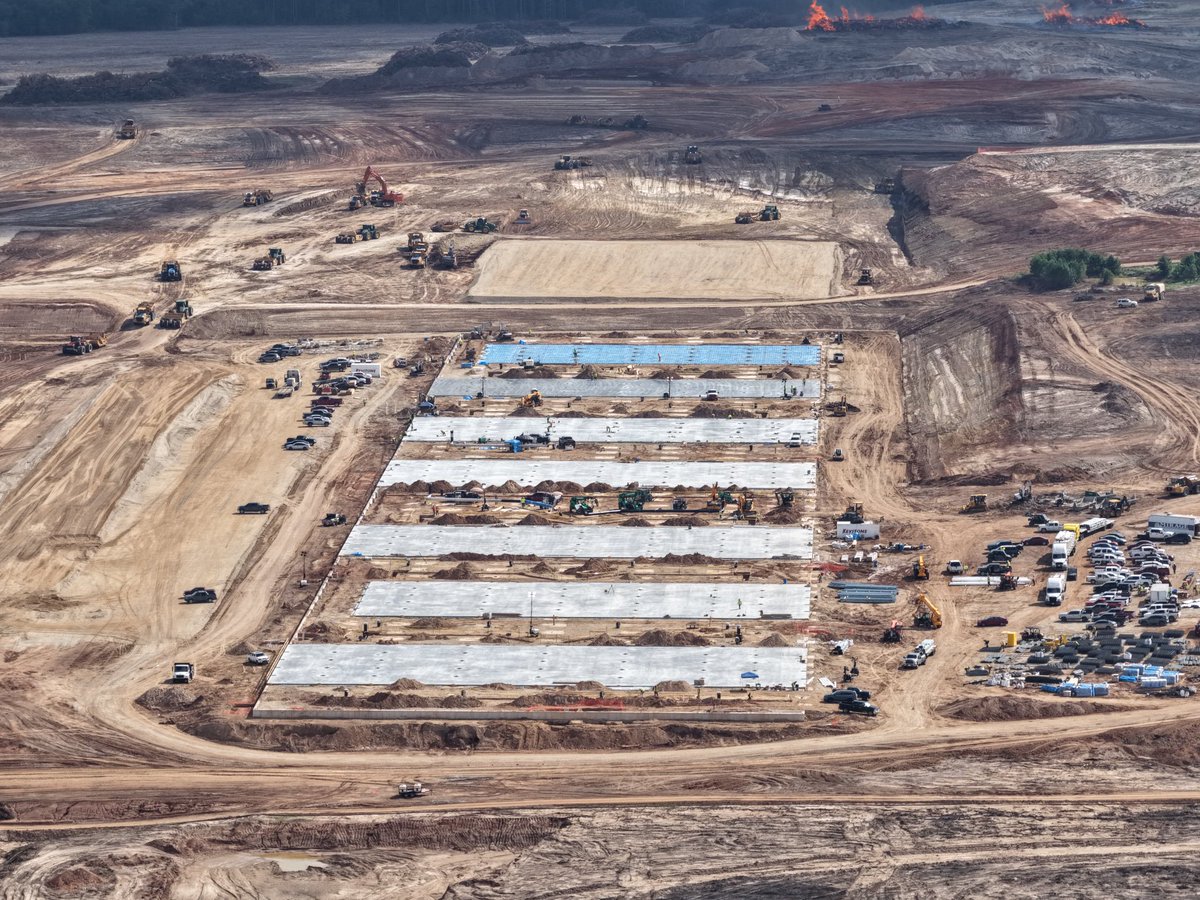
The permanent plant is planned for Grimes County, Texas. Tesla and SpaceX have committed $16.8 billion to begin construction, with county filings from May 2026 indicating an initial outlay around $55 billion and total investment across all phases potentially reaching $119 billion, according to reporting from manufacturing and semiconductor trade press. Some longer-horizon estimates put the final cumulative investment above $1 trillion if all planned phases are built out.
Key Figures
| Metric | Figure | Source |
|---|---|---|
| Annual compute capacity target | >1 terawatt | Tesla project disclosures |
| Initial committed investment | $16.8 billion | Tesla / SpaceX |
| Initial phase outlay (county filings) | ~$55 billion | Grimes County filings, May 2026 |
| Potential total investment (all phases) | Up to $119 billion | Manufacturing trade reports |
| Target output value (Musk framing) | Top-20 country GDP equivalent | @elonmusk, Oct 20, 2026 |
| Earliest production estimate | 2028 | TheElec / Teslanorth |
How We Got Here
Tesla has signaled for more than a year that it views in-house silicon as a strategic bottleneck. The AI5 and AI6 chip programs, Dojo training compute, and the Optimus rollout all depend on access to leading-edge wafer capacity that today runs through TSMC and Samsung. A dedicated fab solves two problems at once: it removes the ceiling that external foundry allocation imposes on Tesla's and SpaceX's compute roadmap, and it internalizes the economic value of each wafer rather than paying foundry margins.
Construction has already commenced on a research facility in Austin that serves as a precursor and process-development line for the main Grimes County plant, according to Teslanorth. Tesla and SpaceX representatives attended SEMICON West on October 13, 2026, and are reportedly in discussions with roughly 10 Korean chip equipment suppliers, with more than half having signed nondisclosure agreements. Korean toolmaker HPSP has agreed to supply a high-pressure hydrogen annealing system for the R&D line — one of the first publicly confirmed equipment deals for the project.
Industry analysts generally estimate that a leading-edge greenfield fab takes five to ten years from groundbreaking to volume production. TheElec's reporting suggests Terafab could begin producing chips in 2028, which would be aggressive but not unprecedented for a project of this capital intensity.
Does the GDP Claim Hold Up?
Musk's framing deserves scrutiny. The 20th-ranked country by GDP generates on the order of $700 billion to $1 trillion in annual economic output. For a single fab to produce comparable “value,” Terafab would need to either sell chips at those revenue levels or produce compute whose imputed value — the throughput it unlocks for FSD, Optimus, and SpaceX — reaches that scale internally.
For comparison, TSMC's entire corporate revenue in 2024 was roughly $90 billion across dozens of fabs serving the global semiconductor market. Reaching ten times that output from one building would require either a dramatic shift in how chip value is measured, extraordinary pricing power on AI silicon, or Musk valuing the compute at its downstream economic impact rather than its wafer-level sale price. Each interpretation is defensible on its own terms, but each implies very different things about how to verify the claim later.
What It Means for Tesla's Roadmap
For Tesla owners and investors, the practical takeaway is less about the GDP comparison and more about what it signals. Musk is publicly anchoring expectations that Terafab is not a supporting facility — it is being positioned as the single most economically consequential asset Tesla and SpaceX will build this decade. That framing has implications for capital allocation, for how aggressively Tesla pursues vertical integration on AI5/AI6 chips, and for how quickly the Optimus and Robotaxi programs can scale once wafer supply is no longer a constraint.
It also raises the stakes on execution. A project with this profile — multi-year build, Korean and domestic supply chain dependencies, leading-edge process technology — carries real risk of delay. The 2028 production estimate assumes a lot goes right.
What to Watch Next
- Austin R&D line milestones: First tool install and process qualification will be the earliest public signals of whether the 2028 production timeline holds.
- Korean supplier announcements: More than five Korean toolmakers have NDAs. Watch for additional confirmed equipment deals beyond HPSP.
- Grimes County permits: Phase-two filings will indicate whether the $55B initial outlay is tracking toward the higher $119B envelope.
- Tesla earnings commentary: How Tesla accounts for Terafab capex and whether it discloses output value assumptions in future shareholder communications.
Frequently Asked Questions
What is Terafab?
Terafab is a jointly developed Tesla-SpaceX semiconductor fabrication facility planned for Grimes County, Texas. Its primary purpose is to produce AI chips for Tesla's Full Self-Driving systems, Optimus humanoid robots, and SpaceX programs, with a target output exceeding 1 terawatt of annual compute capacity.
When will Terafab start producing chips?
According to TheElec reporting referenced by Musk, Terafab may begin producing chips in 2028. A smaller R&D line is already under construction in Austin and will come online first. Industry norms suggest a leading-edge fab typically takes 5-10 years from groundbreaking to volume production.
How much will Terafab cost?
Tesla and SpaceX have committed $16.8 billion to begin construction. Grimes County filings in May 2026 indicated an initial phase outlay around $55 billion, with total investment across all phases potentially reaching $119 billion, according to manufacturing trade reports.
Why does Tesla need its own chip fab?
Access to leading-edge wafer capacity is currently a bottleneck for Tesla's AI roadmap. Building Terafab removes dependence on external foundries like TSMC and Samsung, internalizes margin, and gives Tesla direct control over process timing for AI5, AI6, and future Dojo-class chips.
Is the top-20 GDP claim realistic?
It depends on how “output value” is defined. The 20th-ranked country generates $700B-$1T in annual GDP. Reaching that figure in chip revenue alone from one building would far exceed TSMC's entire corporate revenue. Musk may be valuing Terafab's output at its downstream economic impact — the FSD, Robotaxi, and Optimus revenue it unlocks — rather than at wafer sale price. He did not clarify.
🤖 Tracking Tesla's humanoid robot? See every Optimus production milestone and appearance in our Tesla Optimus Tracker.
Related Gear
Gear up your Tesla with tested, custom-fit BASENOR accessories — shop Tesla accessories →
Sources & reporting notes
The links below identify the material source records used for this report.
- @elonmusk on X (2026-10-20T17:02:31.000Z) — Direct source
- @wholemars on X (2026-10-20T17:05:40.000Z) — Direct source
Source links are preserved as published or accessed. See our editorial standards and corrections policy.
The BASENOR Editorial Desk covers Tesla, SpaceX, and related technology, curating reporting from primary sources — official accounts, regulatory filings, and software release data. Every article passes source-record and fact-checking review before publication. About the newsroom.
This report was curated by the BASENOR Editorial Desk from the sources listed above. Read our editorial standards or email editorial@basenor.com to report an error.