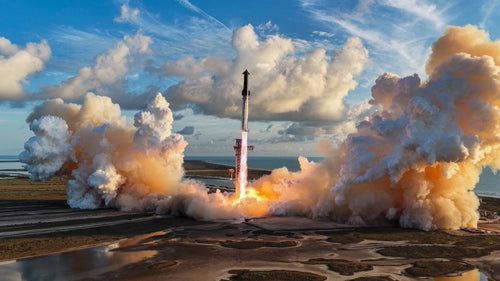
SpaceX quietly rewrote the aerodynamic rulebook for its Super Heavy booster with the Starship V3 design, dropping from four grid fins to three — and making each one substantially larger and smarter in the process. Everyday Astronaut flagged the engineering logic behind the move this week, noting that Elon Musk has already floated the possibility of cutting that number down to two in a future iteration. Here's what the redesign actually involves and why the engineering is more interesting than the headline number suggests.

1. Four Fins Became Three — But Each One Got 50% Bigger
The Super Heavy V3 booster, which debuted formally on May 12, 2026, carries three grid fins instead of the previous four. That sounds like a step backward until you look at the specs: each fin is 50% larger and significantly stronger than the versions it replaced. The net result is that total control surface area is maintained — or improved — while one entire fin assembly, with all its associated mass and drag, is simply gone. According to SpaceX's own documentation, the goal was to reduce both mass and aerodynamic drag without sacrificing the control authority needed to guide a 70-meter booster back to a catch.
2. The Asymmetric Layout Is Deliberate
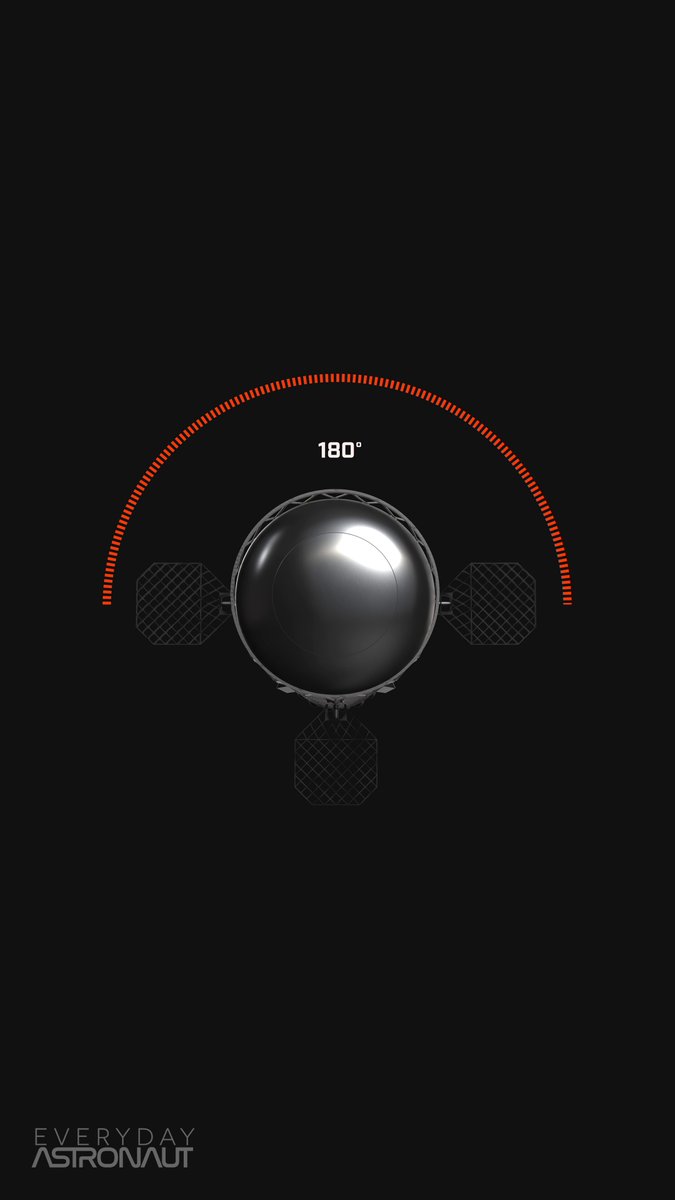
Three fins arranged symmetrically around a cylinder would sit 120 degrees apart. SpaceX didn't do that. The V3 fins are arranged in a 90/90/180-degree configuration — two fins spaced 90 degrees apart, with the third sitting 180 degrees from one of them. This asymmetry is intentional: it gives the flight control system distinct leverage axes to work with, and it reduces rotational inertia in a way that makes the booster respond faster during the final seconds of descent when Mechazilla is waiting to catch it. Tighter, quicker corrections at low altitude are exactly what a precision catch operation demands.
3. The Fins Were Repositioned to Survive Hot-Staging
One of the less-discussed changes is where the fins now sit on the booster. They've been re-clocked and moved lower on the vehicle specifically to reduce heat exposure from Starship's upper-stage engines during hot-staging — the moment when Starship's engines ignite before Super Heavy has fully shut down. Previous fin placements put them in a more vulnerable thermal zone. Moving them lower keeps them out of the worst of that exhaust plume. SpaceX also relocated the fin shaft, actuator, and fixed structure inside the booster's main fuel tank, protecting the mechanical internals from both heat and aerodynamic stress.
4. They No Longer Fold
Earlier Super Heavy designs — and Falcon 9 — used folding grid fins that retract for launch and deploy for descent. The V3 fins are fixed. They don't fold. On the surface this sounds like a regression, but it's actually a simplification: fewer moving parts, fewer potential failure modes, and less mass dedicated to the folding mechanism itself. The trade-off is a small amount of additional drag during ascent, but SpaceX has apparently decided that the reliability and mass gains outweigh that cost. A new catch point has also been integrated into the fin structure, directly supporting the Mechazilla booster-catch operation.
5. Musk Has Already Suggested Going to Two
The three-fin configuration may not be the final word. On September 25, 2026, Elon Musk stated that SpaceX "might be able to reduce to 2 grid fins and use S-turns for the third axis of control" on future Super Heavy boosters. The idea is that the booster could compensate for the missing third fin's roll authority by executing programmed S-turn maneuvers during descent — using the vehicle's trajectory itself as a control input rather than a dedicated surface. It's an unconfirmed future concept, not a scheduled design change, but the fact that SpaceX is already thinking this way signals that the optimization logic driving the four-to-three move hasn't stopped running.
SpaceX published photos of the redesigned fin between August 13–16, 2025, and released the formal "Super Heavy V3 Change Highlights" document on August 6, 2026. The engineering thread Everyday Astronaut laid out this week is a useful explainer of why each of these decisions connects — less mass, faster response, better catch reliability. Whether two fins and S-turns eventually replaces three is the question worth watching as Starship's flight cadence increases. For more on SpaceX's development program, see our SpaceX coverage.
🚀 Following the Starship program? See every test flight, official outcome and the next launch window in our SpaceX Starship Tracker.
Sources & reporting notes
The links below identify the material source records used for this report.
- @Erdayastronaut on X (2026-10-20T18:04:24.000Z) — Direct source
Source links are preserved as published or accessed. See our editorial standards and corrections policy.
The BASENOR Editorial Desk covers Tesla, SpaceX, and related technology, curating reporting from primary sources — official accounts, regulatory filings, and software release data. Every article passes source-record and fact-checking review before publication. About the newsroom.
This report was curated by the BASENOR Editorial Desk from the sources listed above. Read our editorial standards or email editorial@basenor.com to report an error.