Elon Musk pushed back on a common framing this week, saying that pinning AI infrastructure delays on electricity alone misses the point. In a post on X, he described the full scope of what it takes to bring massive compute capacity online at speed — and why time is the one variable nobody can manufacture more of.

What exactly did Musk say?
In a post on X, Musk wrote: "'Lack of electricity' is an oversimplification. Everything is hard about bringing massive compute online at extremely high speed. If there was twice as much time, this would be relatively easy, but there is not." The comment appears to be a direct response to coverage framing AI data center delays primarily as a power grid problem. Musk's point is that electricity is just one node in a much longer critical path.
So what are the actual bottlenecks beyond power?
According to Musk's earlier statements from August 2026, the constraint list is long: transformers, electrical wiring, liquid-cooling systems, large chillers, and complex networking all need to be designed, manufactured, delivered, and commissioned as an integrated system simultaneously. Each of those supply chains has its own lead times, and they all have to converge at once. Miss any one of them and the entire cluster sits idle — regardless of whether the power is available.
How big is the actual shortfall?
Musk stated in August 2026 that the consensus estimate puts roughly 15 gigawatts of AI-compute capacity produced in 2027 unable to come online during that same year — purely because the surrounding infrastructure can't be built fast enough to absorb it. To put that in perspective, 15 GW is a significant fraction of what major grid operators manage across entire regions. That compute will exist on paper but remain effectively stranded.
What is the power demand picture long-term?
Musk has previously indicated that AI scaling requirements could ultimately exceed 1 terawatt — roughly double the total average electricity consumption of the United States. In February 2026, he warned that the pace of AI expansion could overwhelm global power grids within 30 to 36 months, risking disruption to essential digital services. He had flagged as early as May 2025 that AI's power appetite would outstrip available generation capacity by mid-to-late 2026.
How are xAI and Tesla actually handling this right now?
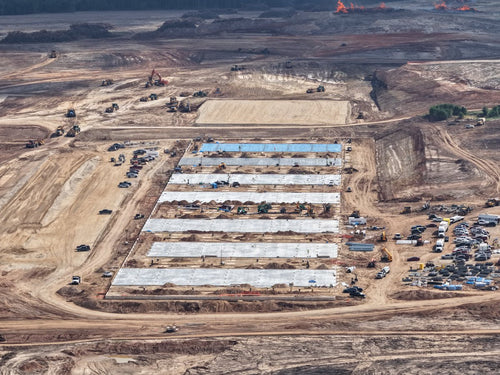
On the generation side, xAI's Colossus data center cluster in Memphis has moved to on-site gas turbines — an initial deployment of 27 units capable of generating approximately 495 megawatts, with the follow-on Colossus 2 project targeting gigawatt-scale operation. Tesla's Cortex 1 and Cortex 2 facilities in Texas, according to the company's Q2 2026 SEC filing, provide over 205 megawatts of production capacity, with further expansion planned through year-end. Both approaches reflect the same underlying logic: if the grid can't keep up, build your own supply.
Is there a longer-term solution being pursued?
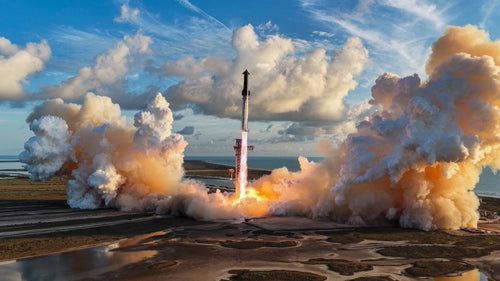
Musk has consistently pointed to orbital computing as the only path that scales without terrestrial constraints. SpaceX has applied to the FCC to build a data-center system of one million satellites, with AI compute satellites potentially active by 2028. Separately, Musk announced on October 15, 2026, that SpaceX and Nvidia are jointly developing a system called "Star Mind" — an adaptation of Nvidia's Vera Rubin NVL72 computing platform for both ground-based data centers and space operations — with volume production targeted for 2027. The logic is straightforward: Sun-synchronous orbit offers near-continuous solar exposure and the vacuum of space for passive cooling, two problems that cost billions to solve on the ground.
What does this mean practically for Tesla owners and the AI products they use?
Tesla's FSD and Autopilot systems depend on the company's ability to train increasingly large models on its Cortex compute clusters. If infrastructure bottlenecks slow the expansion of that training capacity, it directly affects how quickly new FSD versions can be developed and validated. The same constraint applies to Grok and any other AI products that run on xAI's Colossus infrastructure. Musk's framing suggests the industry isn't facing a single solvable problem — it's facing a coordination problem across a dozen supply chains at once, all on a compressed timeline. That's a harder thing to fix with money alone.
Related Gear
Gear up your Tesla with tested, custom-fit BASENOR accessories — shop Tesla accessories →
Sources & reporting notes
The links below identify the material source records used for this report.
- @elonmusk on X (2026-10-20T17:56:36.000Z) — Direct source
Source links are preserved as published or accessed. See our editorial standards and corrections policy.
The BASENOR Editorial Desk covers Tesla, SpaceX, and related technology, curating reporting from primary sources — official accounts, regulatory filings, and software release data. Every article passes source-record and fact-checking review before publication. About the newsroom.
This report was curated by the BASENOR Editorial Desk from the sources listed above. Read our editorial standards or email editorial@basenor.com to report an error.