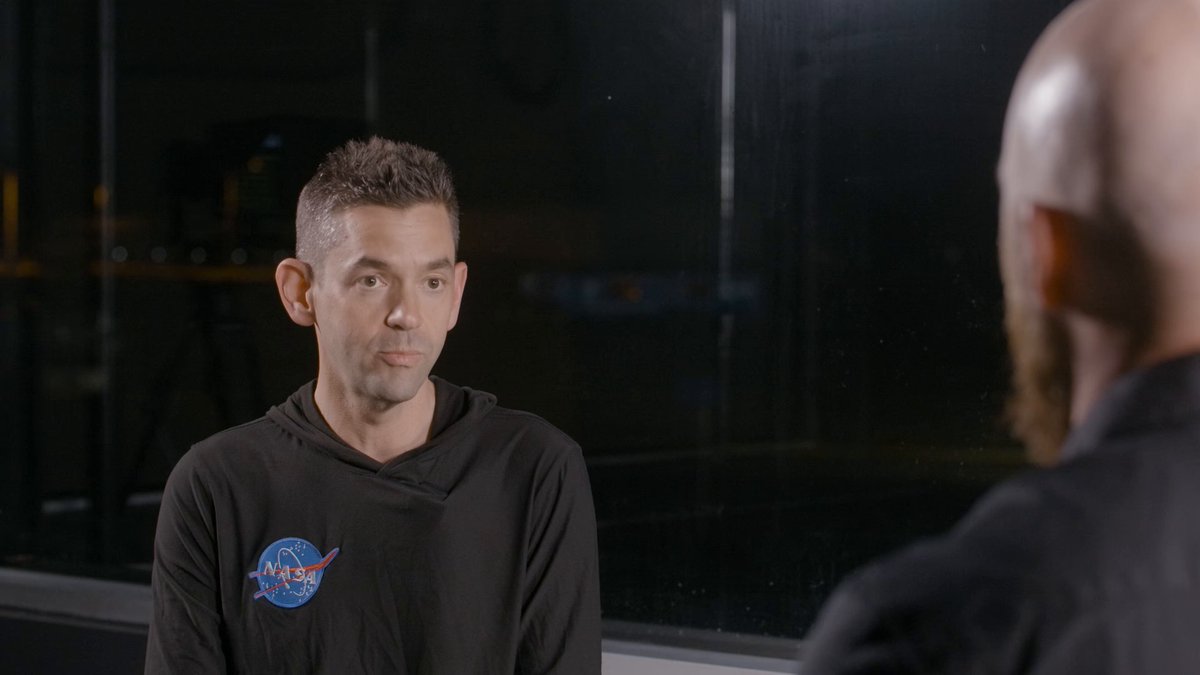
The News: NASA Administrator Jared Isaacman issued a pointed challenge on the future of American lunar exploration — land on the Moon, or be content to orbit it.
Why It Matters: Isaacman's directional push is reshaping the entire Artemis program, with SpaceX's Starship lander at the center of a high-stakes race to put boots on the lunar surface before the end of the decade.
Source: @NASASpaceflight on X
NASA Administrator Isaacman Draws the Line: Land on the Moon or Just Watch From Orbit?
NASA Administrator Jared Isaacman doesn't do diplomatic ambiguity. In a preview clip shared by NASASpaceflight ahead of a full interview, the former SpaceX Inspiration4 commander — now the 15th Administrator of NASA — delivered one of the most direct statements yet on America's lunar direction:
"We can be above the Moon looking down, or we can be on the Moon. You decide what is more important."

It's a binary choice framed with deliberate sharpness — and it signals a fundamental shift in how NASA under Isaacman intends to operate. The full interview airs tonight, but the clip alone tells you everything about the agency's new posture.
The 'Ignition' Plan: What NASA Is Actually Building
Isaacman's quote isn't rhetorical. It directly reflects the strategic pivot NASA announced on March 24, 2026, under the banner of "Ignition" — a hyper-accelerated roadmap to establish a permanent lunar surface base, with a stated goal of achieving that outpost before the end of President Trump's term.
The headline numbers from that announcement are significant:
📊 NASA 'Ignition' Plan — Key Figures
| Lunar Base Budget | ~$20 billion over 7 years |
| CLPS Robotic Landings Target | Up to 30 starting 2027 |
| CLPS Expanded Budget | $6 billion over next decade |
| Artemis II Launch | April 1, 2026 (crewed lunar flyby) |
| Artemis IV Moon Landing Target | 2028 (2 astronauts, 1 week) |
| Crewed Landing Cadence (post-IV) | Every 6 months |
Critically, NASA has paused the Gateway lunar orbital station — the very definition of "above the Moon looking down" — to redirect those resources toward surface infrastructure. Isaacman's quote wasn't abstract philosophy. It was the official policy, condensed into one sentence.
SpaceX's Role — and the Pressure It's Under
SpaceX sits at the center of this ambition. NASA has stated it will select between SpaceX and Blue Origin for crewed lunar landers based on which company delivers a flight-ready vehicle first. For Artemis III — now restructured as a rendezvous and docking test in Earth orbit, targeted for mid-to-late 2027 — both companies' hardware will be evaluated in parallel.
But there's a complication. A March 9, 2026 report from the NASA Office of Inspector General found that SpaceX's Starship human landing system is behind schedule and not projected to be ready for a 2027 lunar touchdown. That's a significant flag given the administration's stated urgency.
Artemis IV, the first mission targeting an actual crewed lunar landing, is scheduled for 2028 — with two astronauts spending a week on the surface. After that, NASA's plan calls for crewed landings every six months, a cadence that would require both reliable landers and a growing surface infrastructure. The VIPER water-hunting rover, launching aboard a Blue Origin vehicle in 2027, is part of the advance scouting effort for that permanent base near the lunar south pole.
🔭 The BASENOR Take
| Timeline | Strategy announced March 24, 2026 — Isaacman interview tonight |
| Impact Level | 🔴 High — reshapes Artemis program and commercial space priorities |
| Confidence | High — confirmed by NASA official announcements and OIG report |
Isaacman's framing is a direct rebuke of the previous decade's approach to lunar exploration — incremental, orbital-first, infrastructure-heavy. The Gateway station represented the "above the Moon" philosophy: build a waypoint in lunar orbit, use it as a staging post, eventually get to the surface. That approach is now effectively shelved.
What replaces it is more aggressive and more commercially dependent. NASA is betting that SpaceX and Blue Origin will deliver flight-ready landers on a compressed timeline, that robotic CLPS missions will scout the south pole effectively before humans arrive, and that $20 billion over seven years is enough to build something permanent on another world. Those are large bets.
The OIG's finding that Starship's lunar lander is behind schedule is the most immediate risk factor. If SpaceX can't deliver for Artemis III's Earth-orbit docking test in 2027, the entire downstream timeline compresses in ways that are hard to recover from. Blue Origin's New Glenn and its Blue Moon lander become more strategically important in that scenario — not as a backup, but as a genuine alternative that NASA has explicitly kept on the table.
For the broader commercial space ecosystem — and for SpaceX specifically — Isaacman's leadership represents an unusual alignment: a NASA Administrator who has personally flown on a SpaceX vehicle, who understands commercial spaceflight from the inside, and who is now setting the terms under which SpaceX competes for the most prestigious contract in the agency's history. That's not a conflict of interest so much as a very specific kind of pressure. Isaacman knows exactly what SpaceX is capable of — and exactly what it needs to deliver. Tonight's full interview will likely add significant texture to where that pressure is being applied. For our full SpaceX coverage, follow the tag.
🚀 Following the Starship program? See every test flight, official outcome and the next launch window in our SpaceX Starship Tracker.
Sources & reporting notes
The links below identify the material source records used for this report.
- @NASASpaceflight on X (2026-03-31T16:40:42.000Z) — Direct source
Source links are preserved as published or accessed. See our editorial standards and corrections policy.
The BASENOR Editorial Desk covers Tesla, SpaceX, and related technology, curating reporting from primary sources — official accounts, regulatory filings, and software release data. Every article passes source-record and fact-checking review before publication. About the newsroom.
This report was curated by the BASENOR Editorial Desk from the sources listed above. Read our editorial standards or email editorial@basenor.com to report an error.