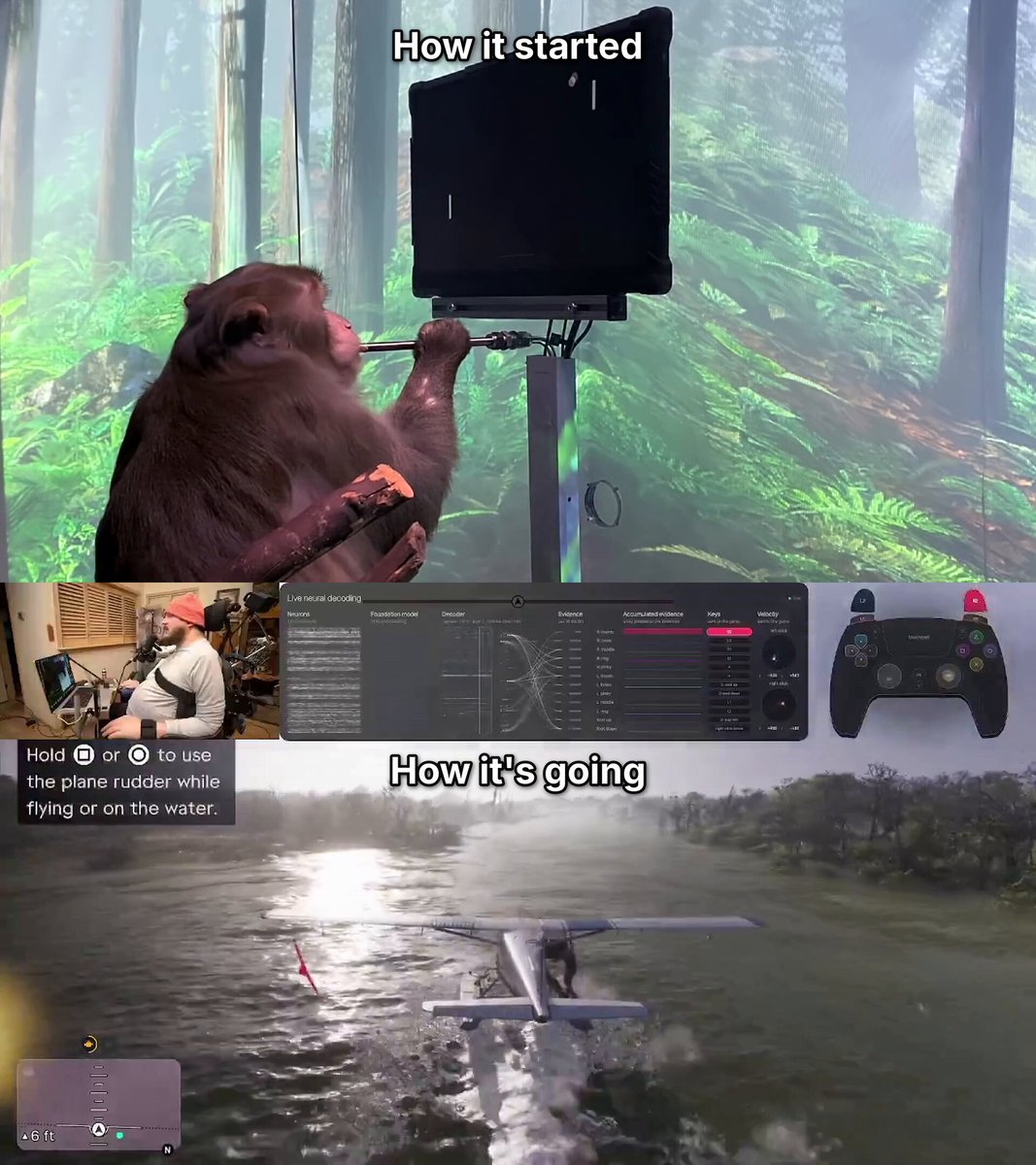
Elon Musk resurfaced Neuralink's animal trial program this week with a characteristically casual update: the monkeys have been playing video games and drinking banana smoothies for five years. It sounds like a punchline, but the underlying science — and the regulatory scrutiny that has surrounded it — is anything but. Here's what we actually know.

What exactly did Musk say, and what does it refer to?
In a post on X, Musk wrote: "We've had monkeys playing video games while drinking banana smoothies for 5 years. Not a bad life." The reference traces back to April 2021, when Neuralink released a widely-viewed demonstration video of a nine-year-old macaque named Pager playing the game MindPong — first with a joystick, then entirely through thought, guided by two Neuralink chips implanted in his motor cortex roughly six weeks earlier. The banana smoothie delivered through a straw was the reward. Musk's comment this week suggests that type of trial activity has continued for half a decade.
How does the brain-computer interface actually work in these trials?
The Neuralink device records electrical signals from neurons in the brain's motor cortex — the region responsible for planning and executing movement. When the monkey intends to move a cursor or interact with a game, those neural firing patterns are decoded in real time by the implant and translated into on-screen actions. The system essentially learns to map the monkey's intended movements to outputs, allowing control without any physical input. The banana smoothie serves as positive reinforcement, training the animal to engage with the interface consistently.
What has the regulatory and animal welfare scrutiny looked like?
The trials have not been without controversy. In February 2022, the Physicians Committee for Responsible Medicine (PCRM) filed a complaint with the U.S. Department of Agriculture (USDA), alleging that Neuralink conducted lethal experiments on 23 monkeys between 2017 and 2020 during a collaboration with the University of California, Davis — a partnership Neuralink ended in 2020. Neuralink acknowledged that monkeys died during testing but denied allegations of animal cruelty. By July 2023, the head of the US animal welfare agency informed lawmakers that a focused investigation, including site visits to two Neuralink facilities in January 2023, found no violations of animal research rules. The PCRM disputed that conclusion, citing a 2019 incident involving a subject referred to as "Animal 8" that it argued would have constituted a violation under a since-rescinded agency policy.
Has the FDA raised any concerns about the animal research side?
Yes. According to reporting from February 2024, the FDA flagged quality control issues related to Neuralink's animal experiments during inspections conducted in mid-June 2023 — shortly after the agency approved Neuralink's first human trial. Cited issues included an inability to locate calibration records for devices used in animal tests, and quality assurance officials who had not signed off on final study reports. These were procedural findings rather than safety violations, but they added to the broader picture of regulatory attention the program has attracted.
Where do the human trials stand?
Neuralink received FDA approval for its first human clinical trial in May 2023. The first human patient received an implant in January 2024. Neuralink subsequently reported that the patient was able to control a computer cursor using thought alone. The animal trials — now running for at least five years by Musk's own account — have served as the foundational proof-of-concept that supported the regulatory case for moving to human subjects. Whether the current monkey cohort includes the same animals from the 2021 MindPong demonstration, or represents a newer generation of trial subjects, has not been specified.
What does this update actually signal about Neuralink's progress?
Musk's framing — "not a bad life" — is partly a response to the animal welfare criticism the company has faced. The five-year figure implies sustained, long-term device function in living subjects, which is scientifically meaningful: brain-computer interfaces have historically struggled with signal degradation over time as scar tissue forms around implanted electrodes. If Neuralink's devices are maintaining reliable neural readouts across a multi-year window in primates, that would represent a genuine engineering milestone, even if Musk's tweet doesn't frame it in those terms. The human trial data, as it accumulates, will ultimately be the more consequential test.
Sources & reporting notes
The links below identify the material source records used for this report.
- @elonmusk on X (2026-11-21T07:38:33.000Z) — Direct source
Source links are preserved as published or accessed. See our editorial standards and corrections policy.
The BASENOR Editorial Desk covers Tesla, SpaceX, and related technology, curating reporting from primary sources — official accounts, regulatory filings, and software release data. Every article passes source-record and fact-checking review before publication. About the newsroom.
This report was curated by the BASENOR Editorial Desk from the sources listed above. Read our editorial standards or email editorial@basenor.com to report an error.