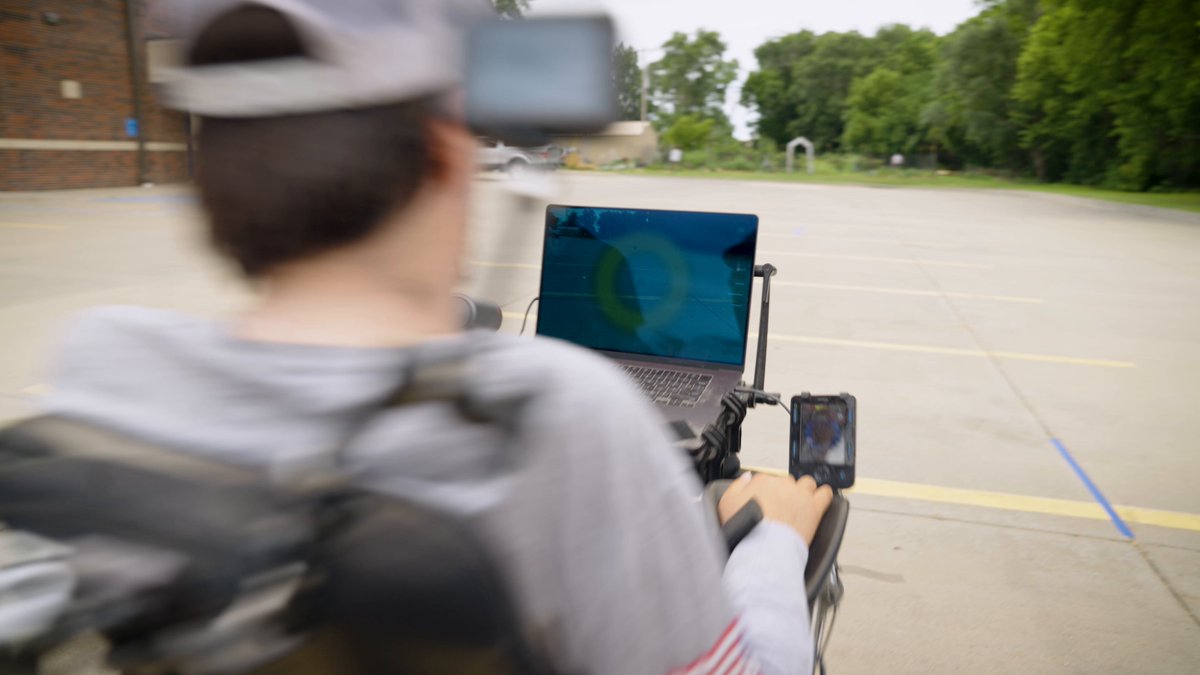
Neuralink has pulled back the curtain on one of the most consequential applications of its brain-computer interface to date: clinical trial participants with paralysis driving powered wheelchairs using only their thoughts. In a thread posted July 23, the company detailed how neural signals from its N1 implant are being translated into forward motion, steering, reversing, and even seat-position adjustments — a meaningful step beyond the cursor and robotic-arm demonstrations that have defined the program so far.
The disclosure builds on Neuralink's PRIME Study, which began in January 2024 with Noland Arbaugh as the first recipient of the device Elon Musk has branded 'Telepathy.' What's new here is not the implant itself, but what participants are now doing with it: navigating physical space in the real world.

How the System Works
The N1 implant sits in the motor cortex — the region of the brain that plans and executes voluntary movement. According to Neuralink, the device carries over 1,000 electrodes distributed across more than 100 threads, each thinner than a human hair. Those threads are inserted by the company's surgical robot, a level of precision required to place flexible electrodes near individual neurons without damaging surrounding tissue.
When a participant intends to move — even if the physical body can't respond — those motor-cortex neurons still fire. The electrodes record that activity, and a machine learning model maps the patterns to cursor movement on a screen: up, down, left, right. That decoded intent is then routed to whatever the participant is controlling. In earlier demos, that was a computer cursor or robotic arm. Now, it's a wheelchair.

From Cursor to Chair
The bridge between cursor control and wheelchair control is deceptively simple in concept but demanding in execution. Participants see a live video feed from a camera mounted on the wheelchair. As they move a virtual cursor with their thoughts, the system translates those movements into drive commands — forward, reverse, steer — and into seating adjustments. The camera feed gives them the visual grounding they need to make navigation decisions in real environments.

Neuralink stopped short of showing extended real-world navigation footage, and the company explicitly framed the work as ongoing: 'There's more to do, but this provides a glimpse into how Neuralink can help restore independent mobility for people with paralysis.' In other words, this is a research milestone, not a product launch.
Where the Trial Stands
To understand the significance of the wheelchair demonstration, it helps to know how far the program has scaled. According to reporting summarized from Neuralink's own updates, 21 individuals across four countries had received the N1 implant as of January 28, 2026, and that number had grown to 26 patients globally by June 22. A separate GB PRIME study in Great Britain had enrolled seven patients as of May 2026.
The implant itself is roughly 23 mm in diameter — about the size of a quarter — and the electrode count has held steady at 1,024, though the thread architecture has evolved. Early implants like Arbaugh's used 64 flexible threads; later implants distribute the same electrode count across 128 thinner threads, according to Neuralink's public documentation.
Key Figures
| Metric | Value |
|---|---|
| Electrodes per implant | 1,024 |
| Threads (current generation) | Up to 128, each thinner than a human hair |
| Implant diameter | ~23 mm (quarter-sized) |
| Patients implanted (as of June 22, 2026) | 26 globally |
| First participant | Noland Arbaugh, January 2024 (PRIME Study) |
| Regulatory status | Investigational — not FDA approved |
Regulatory Reality Check
Neuralink included the standard disclaimer with this thread, and it matters: 'Neuralink devices are investigational and have not been approved by the FDA or other regulatory authorities.' The wheelchair demonstration involves voluntary clinical trial participants whose experiences 'may not reflect all participants or future outcomes.'

That framing isn't just legal boilerplate. It signals that Neuralink is still in the data-collection phase of proving safety, durability, and real-world reliability. Moving a cursor across a screen is one risk profile; steering a 250-pound powered wheelchair through a hallway is another. The company will need to demonstrate that decoding errors, signal drift, or connection issues don't translate into physical accidents before this becomes a routine capability for trial participants — let alone a commercial product.
Why the Tesla Ecosystem Cares
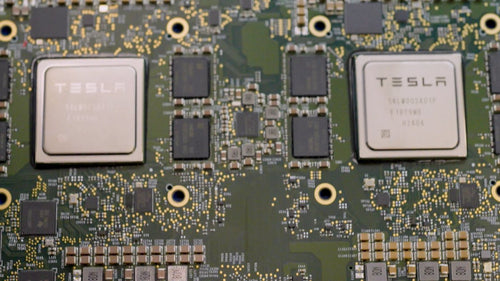
Neuralink sits inside Elon Musk's broader portfolio alongside Tesla and SpaceX, and there's an obvious throughline in the technology stack: real-time sensor fusion, machine-learning decoders trained on noisy input, and closed-loop control of physical hardware. The same class of problem that Tesla's Autopilot team solves for cameras and radar — turning messy sensor data into precise vehicle commands — is what Neuralink's decoding algorithm does with neural spikes.
None of that means Tesla vehicles will one day be steered by implants; there's no indication of any such crossover, and framing it that way would be speculative. But the engineering culture and toolchain overlap is real, and progress in one domain tends to inform the other.
What to Watch Next
Three signals will matter as this program advances. First, whether Neuralink publishes peer-reviewed data on decoding accuracy and safety events from the wheelchair trials — public demos are compelling, but regulatory bodies want statistics. Second, how quickly the trial expands beyond the 26 implanted patients, and whether enrollment criteria broaden. Third, whether any participants graduate from tethered lab environments to routine at-home use of the wheelchair system.
For now, the takeaway is straightforward: people who could not move are moving themselves through the world using signals recorded from their own motor cortex. That's a genuine advance, even framed conservatively — and it's the clearest demonstration yet of what Neuralink means when it talks about restoring independent mobility.
Related Gear
Gear up your Tesla with tested, custom-fit BASENOR accessories — shop Tesla accessories →
Sources & reporting notes
The links below identify the material source records used for this report.
- @neuralink on X (2026-07-23T21:31:29.000Z) — Direct source
- @neuralink on X (2026-07-23T21:31:29.000Z) — Direct source
- @neuralink on X (2026-07-23T21:31:30.000Z) — Direct source
- @neuralink on X (2026-07-23T21:31:30.000Z) — Direct source
- @neuralink on X (2026-07-23T21:31:31.000Z) — Direct source
- @neuralink on X (2026-07-23T21:31:31.000Z) — Direct source
Source links are preserved as published or accessed. See our editorial standards and corrections policy.
The BASENOR Editorial Desk covers Tesla, SpaceX, and related technology, curating reporting from primary sources — official accounts, regulatory filings, and software release data. Every article passes source-record and fact-checking review before publication. About the newsroom.
This report was curated by the BASENOR Editorial Desk from the sources listed above. Read our editorial standards or email editorial@basenor.com to report an error.