Tesla is accelerating hiring for Terafab, its vertically integrated semiconductor fabrication venture, at a pace that signals the project has moved well beyond the planning stage. Job postings are up roughly 50% above Tesla's 2025 average, and Elon Musk issued a direct public recruitment call for elite chip engineers just weeks ago. Here's what the hiring ramp actually tells us about where Terafab stands.

1. This Is a Three-Company Venture, Not Just Tesla
Terafab is a joint project between Tesla, SpaceX, and xAI, with Intel officially joining as a process partner in April 2026. That partnership matters: Intel brings established fab process expertise that the consortium would otherwise have to build from scratch. The chips produced are intended to serve all three companies' needs — AI inference for xAI, onboard compute for Tesla's Optimus robots and Cybercab fleet, and space-based data centers for SpaceX. The hiring surge reflects demand from all of those pipelines simultaneously.
2. There Are Two Separate Facilities at Different Stages
Terafab isn't one building — it's a two-site strategy. A research fab in Austin, Texas, near Gigafactory Texas, broke ground on April 22, 2026, and equipment commissioning there is already underway. The larger production facility is planned for Grimes County, Texas, on the site of a former coal plant, with construction scheduled to begin December 1, 2026, and a completion target of end-2028. The current hiring push spans both sites, covering factory design, construction ramp-up, and semiconductor process engineering.
3. The Roles Being Filled Reveal the Technology Roadmap
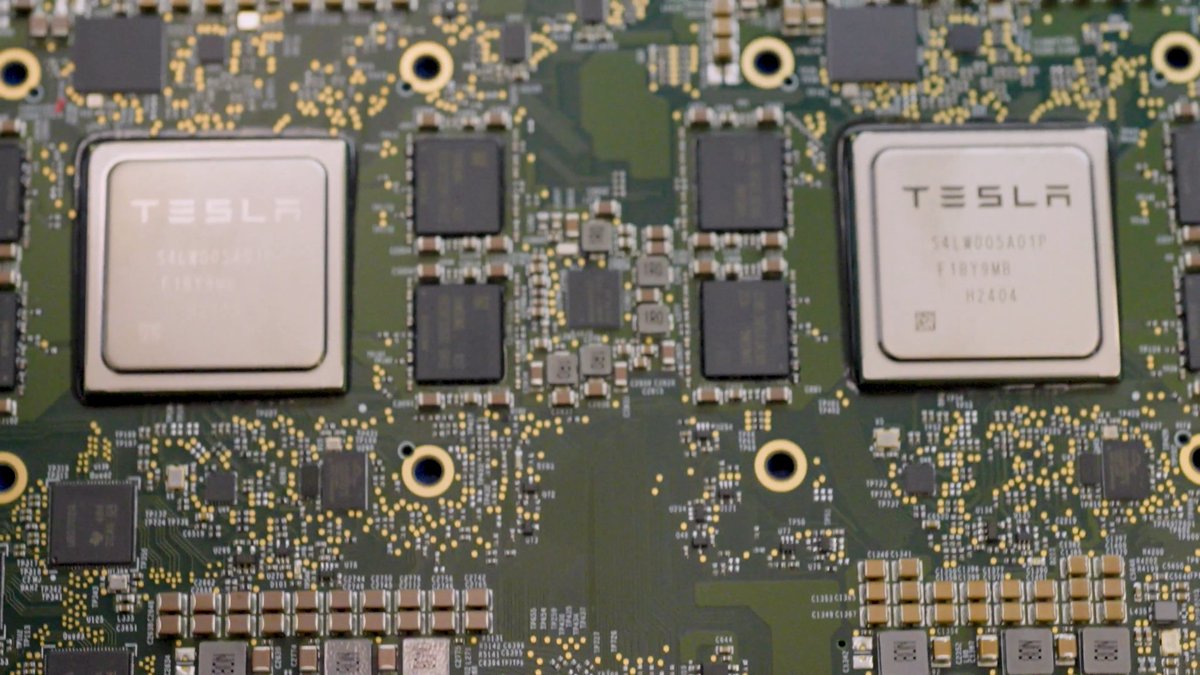
Tesla isn't hiring generalists. Recent job listings include a Sr. Equipment Engineer (Lithography), Sr. Staff Device Engineer (Memory), Sr. Staff Materials Engineer (Semiconductor & Thin Films), and a Memory Process Integration Engineer — the last of which confirms Tesla intends to develop advanced DRAM manufacturing in-house. Separately, Tesla is recruiting experienced chip engineers in Taiwan specifically for processes below 7 nanometers. The target production node is 2nm, which would place Terafab at the leading edge of global semiconductor manufacturing if achieved on schedule.
4. The Investment Numbers Are Among the Largest in U.S. Industrial History
The first phase of the Grimes County facility alone carries a projected investment of approximately $16.8 billion, according to background research. Total investment across all phases is estimated to range from $55 billion to over $100 billion. For context, Tesla has also indicated it plans to allocate roughly $20 billion toward new equipment in 2026 — and Terafab spending sits on top of that as a separate capital commitment. These are not exploratory R&D budgets; they are construction-grade financial commitments.
5. The Production Target Is Measured in Terawatts, Not Chips
Terafab's stated goal is one terawatt (1 TW) of annual AI compute output at full build-out — equivalent to roughly one billion Nvidia Blackwell-class chips per year, according to reporting. More concretely, that translates to a target of 100–200 billion custom AI and memory chips annually, starting from an initial 100,000 wafer starts per month. If those numbers hold, Terafab would represent one of the largest dedicated AI compute manufacturing operations on the planet, built entirely outside the traditional foundry ecosystem.
6. The Grimes County Site Is Expected to Create 3,000 Jobs
Beyond the specialized engineering roles being recruited now, the Grimes County production facility is projected to generate 3,000 new jobs once operational. Combined with the Austin research fab and corporate hiring, Tesla's overall job postings are running approximately 50% above their 2025 average — a concrete, measurable signal that Terafab has crossed from announcement into active execution. The December 1 construction start date for Grimes County is the next hard milestone to watch.
The pace of hiring is the clearest indicator yet that Tesla views Terafab not as a long-horizon moonshot but as an operational priority with a defined construction schedule. Whether the 2nm process target and 2028 completion date hold under real-world fab construction pressure is the open question — semiconductor facilities have a long history of schedule slippage. The December groundbreaking in Grimes County will be the first real test of whether the timeline is as aggressive as the hiring suggests.
Related Gear
Gear up your Tesla with tested, custom-fit BASENOR accessories — shop Tesla accessories →
Sources & reporting notes
The links below identify the material source records used for this report.
- @TeslaNewswire on X (2026-10-22T16:32:04.000Z) — Direct source
Source links are preserved as published or accessed. See our editorial standards and corrections policy.
The BASENOR Editorial Desk covers Tesla, SpaceX, and related technology, curating reporting from primary sources — official accounts, regulatory filings, and software release data. Every article passes source-record and fact-checking review before publication. About the newsroom.
This report was curated by the BASENOR Editorial Desk from the sources listed above. Read our editorial standards or email editorial@basenor.com to report an error.