Tesla's Q3 2026 earnings call left analysts with more questions than answers on one of the company's most closely watched metrics: how many buyers are actually sticking with Full Self-Driving after the free trial ends. The headline 75% North American attachment rate sounds impressive — but investors and analysts are pushing for a cleaner read on what that number really means.

1. The 75% attach rate includes free-trial subscribers
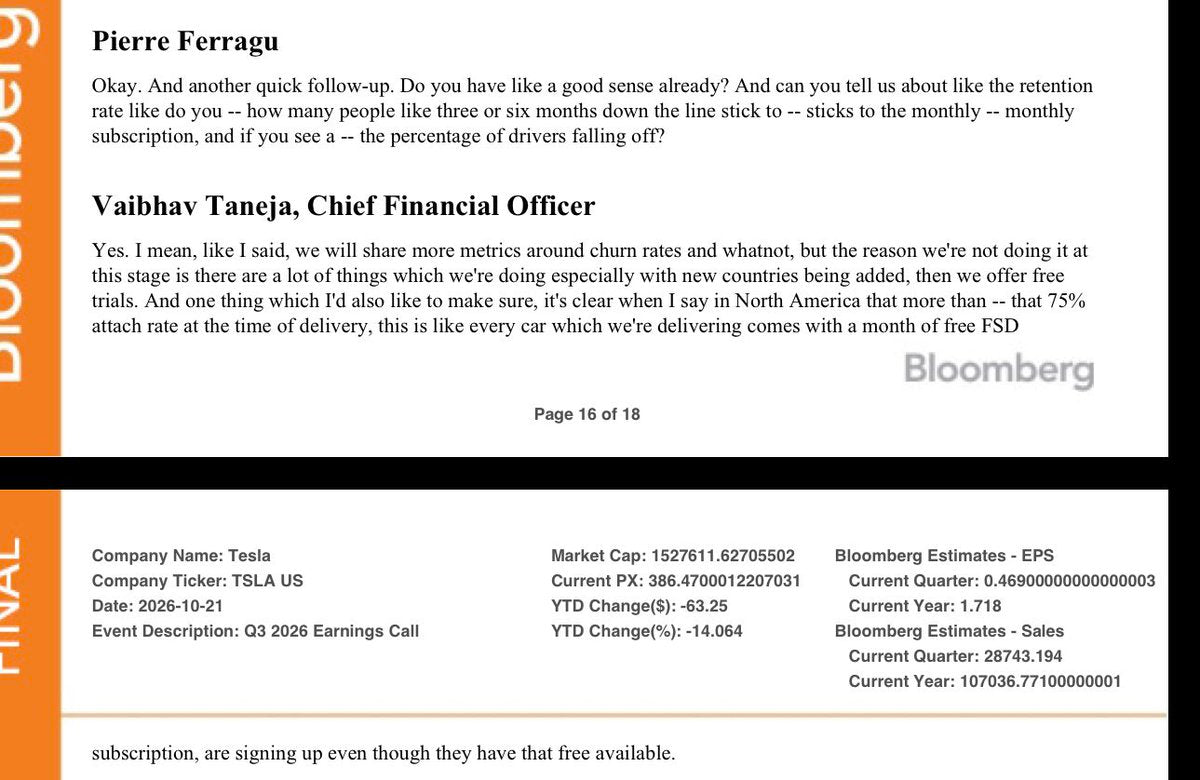
Tesla reported that more than 75% of new vehicle deliveries in North America came with FSD (Supervised) attached in Q3 2026 — a nearly 20-percentage-point jump from the 55%+ rate in Q2. But CFO Vaibhav Taneja confirmed on the call that this figure includes customers still within their complimentary first month. That means the headline number blends genuine paid adoption with trial users who haven't yet decided whether to keep paying, making it difficult to gauge true long-term retention.
2. Analyst Pierre Ferragu asked the right question — and didn't get a clean answer
Analyst Pierre Ferragu pressed Tesla's CFO on what FSD attachment looks like 3 to 6 months after purchase — the point at which free trials have expired and customers are making real financial decisions. According to investor Gary Black, the CFO's response was not clear. That gap matters: a 75% attach rate at delivery tells you about marketing effectiveness; a 3-to-6-month retention rate tells you about product satisfaction and recurring revenue durability.
3. Active FSD customers hit 1.74 million globally — up 67% year-over-year
Whatever the trial-versus-paid breakdown, the raw growth numbers are hard to dismiss. According to Tesla's Q3 2026 earnings data, active FSD customers globally reached 1.74 million, up from 1.04 million a year earlier. That 67% annual increase reflects both the expanding subscriber base and Tesla's aggressive free-trial strategy, which has clearly accelerated top-of-funnel adoption even if the bottom-of-funnel retention picture remains opaque.
4. Subscriptions now account for more than half of paid FSD customers — a first
For the first time, the majority of Tesla's paid FSD customers are on subscriptions rather than outright purchases. Tesla also reported record net new subscriptions in Q3. This shift is partly structural: Tesla removed the option to buy FSD outright in North America on February 14, 2026, leaving the $99/month subscription (or $49/month for previous Enhanced Autopilot buyers) as the only path. That means the subscription dominance reflects policy as much as preference — another reason the retention rate after month one is the number that actually matters.
5. Musk called FSD the "key driver for demand"
On the earnings call, CEO Elon Musk stated that FSD is the key driver for vehicle demand, arguing that buyers are increasingly prioritizing the feature when choosing a Tesla. He also expressed optimism about EU-wide regulatory approval, expecting it possibly within a few months or by Q1 2027 at the latest. FSD is currently approved in nine EU countries, with over 100,000 European customers having used it and more than 160 million kilometers logged. A German vote on EU-wide approval is scheduled for December.
6. The missing metric: what happens after month one
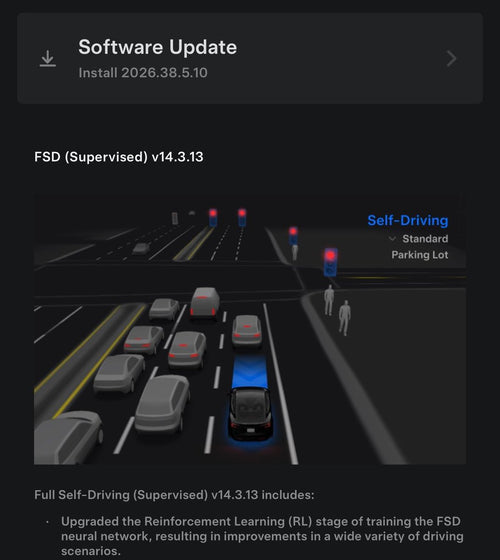
The core issue flagged by analysts is straightforward: Tesla has the data to show what percentage of trial users convert to paying subscribers after the free period expires, but has not disclosed it. That single figure would do more to validate FSD's revenue trajectory than any headline attach rate. Until Tesla provides a post-trial retention breakdown — either on a future earnings call or in a supplemental filing — the 75% number will continue to generate more analyst skepticism than confidence.
The December German vote on EU-wide FSD approval and the upcoming FSD V15 release (which will incorporate Tesla's AI-based mapping and navigation, currently running on Cybercab and Robotaxi Model Y) give Tesla natural upcoming moments to demonstrate that adoption holds up beyond the trial window. Whether the company chooses to share that data proactively will say as much about its confidence in the product as any software milestone.
Related Gear
Gear up your Tesla with tested, custom-fit BASENOR accessories — shop Tesla accessories →
Sources & reporting notes
The links below identify the material source records used for this report.
- @garyblack00 on X (2026-10-22T04:07:14.000Z) — Direct source
- @SawyerMerritt on X (2026-10-22T04:33:31.000Z) — Direct source
Source links are preserved as published or accessed. See our editorial standards and corrections policy.
The BASENOR Editorial Desk covers Tesla, SpaceX, and related technology, curating reporting from primary sources — official accounts, regulatory filings, and software release data. Every article passes source-record and fact-checking review before publication. About the newsroom.
This report was curated by the BASENOR Editorial Desk from the sources listed above. Read our editorial standards or email editorial@basenor.com to report an error.