30-Second Brief
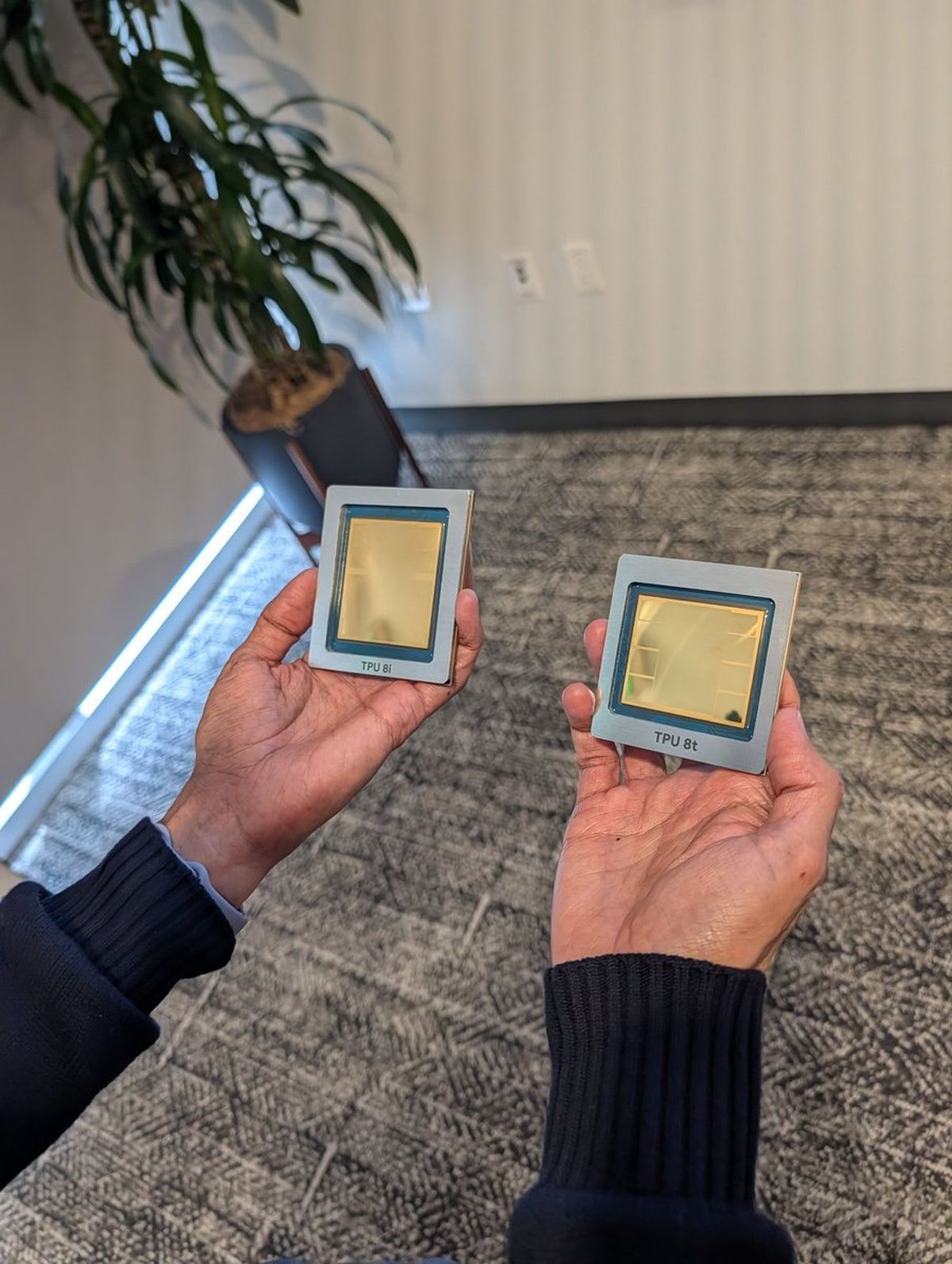
The News: Prominent Tesla community voice @wholemars signaled new Tensor Processing Units (TPUs) have just been released, coinciding with verified reports that Tesla's next-generation AI5 chip taped out on April 15, 2026.
Why It Matters: More compute power accelerates FSD development, Optimus robot training, and the Cybercab's autonomous capabilities — all of which directly affect what your Tesla can do in the coming years.
Source: @wholemars on X
New TPUs Drop as Tesla's AI5 Chip Tapes Out — Here's What It Means for Your Tesla
The AI hardware race just got a new data point. Whole Mars Catalog — one of the most plugged-in voices in the Tesla community — posted a simple but loaded message Tuesday afternoon: "wake up babe new TPUs just dropped." It's the kind of shorthand that lands differently when you know the context behind it.

The timing is not coincidental. According to verified reporting, Tesla's AI5 chip — the company's most powerful in-house silicon to date — officially taped out on April 15, 2026, just one week before this signal. TPUs (Tensor Processing Units) are the specialized accelerator chips that do the heavy lifting for AI training and inference. When new ones drop, the models trained on top of them get smarter, faster, and more capable. For Tesla owners, that chain reaction ends at your steering wheel and, soon, at your Cybercab door.
📊 Key Figures
| Metric | Value | Context |
|---|---|---|
| AI5 Tape-Out Date | April 15, 2026 | TSMC (AZ) + Samsung (TX), 3nm |
| Compute Uplift vs AI4 | ~8–10× | Per verified reports |
| Memory (AI5) | 192 GB LPDDR5X | 9× the memory of AI4 |
| Memory Bandwidth | 5× vs AI4 | Critical for real-time inference |
| GPU Equivalent | ≈ Nvidia H100 | For Tesla-specific workloads |
| First Silicon Expected | Late 2026 | High-volume production: mid-to-late 2027 |
| Primary Use Cases | Optimus + Cybercab | AI4 remains FSD vehicle chip |
What Are TPUs and Why Should Tesla Owners Care?
TPUs are purpose-built chips designed to accelerate the matrix math that underpins neural networks. Unlike general-purpose GPUs, they're optimized for a single job: running AI workloads as fast and efficiently as possible. Google coined the term for its own internal chips, but the concept applies broadly — Tesla's in-house silicon (the AI-series chips) functions in a similar role within its own ecosystem.
When @wholemars says new TPUs just dropped, the implication is clear to anyone tracking the AI hardware cycle: the training infrastructure that teaches Tesla's neural networks to drive, navigate, and perceive the world just got a meaningful upgrade. Better training hardware means faster iteration on FSD, more capable Grok models, and a more intelligent Optimus robot — all on a compressed timeline.
Tesla AI5: The Chip Behind the Next Leap
According to reporting from Teslarati and corroborated by multiple sources, Tesla's AI5 chip taped out on April 15 — meaning the final design was locked and sent to fabrication. That's a significant milestone. Tape-out is the point of no return in chip development; it means Tesla's engineers are confident enough in the design to commit it to silicon.
The AI5 is being manufactured at two facilities: TSMC's Arizona fab and Samsung's Texas facility, both on a cutting-edge 3nm process node. The performance numbers are striking — roughly 8 to 10 times the compute of the current AI4 chip, 9 times the memory at 192GB LPDDR5X, and 5 times the memory bandwidth. For reference, a single AI5 chip is considered comparable to an Nvidia H100 GPU for Tesla's specific workloads. That's a chip that typically costs tens of thousands of dollars on the open market.
Importantly, Elon Musk has stated that AI4 — the chip currently in production vehicles — is already sufficient for achieving "much better than human safety for FSD." AI5 isn't replacing your car's brain anytime soon. Its primary targets are the Optimus humanoid robot and Cybercab autonomous taxis, plus Tesla's supercomputer clusters used for training. Think of it as the engine room getting a massive upgrade, even if your dashboard stays the same for now.
🔭 The BASENOR Take
The convergence of a new TPU signal from @wholemars and the confirmed AI5 tape-out within the same week is not a coincidence — it's a window into the pace of Tesla's AI infrastructure build-out. The company is simultaneously locking in its next-generation vehicle and robot chip while the training hardware that feeds those models gets refreshed.
Here's the strategic picture: Tesla is building a closed-loop AI flywheel. More capable training hardware (TPUs/clusters) produces better models. Better models ship as FSD updates to 7 million+ vehicles. Those vehicles generate more real-world data. That data feeds back into the training clusters. Repeat. Every time the hardware tier improves, the entire loop accelerates.
For current FSD subscribers, the near-term impact is indirect but real — the models being trained today on this new hardware will arrive as OTA updates over the next 12–18 months. For anyone watching the Cybercab and Optimus roadmap, AI5 entering first silicon in late 2026 puts high-volume production on track for mid-to-late 2027, which aligns with Tesla's stated Cybercab launch ambitions. The hardware foundation is being laid right now. Check out our FSD coverage for the latest on how these improvements are showing up in real-world driving.
📰 Deep Dive
The phrase "new TPUs just dropped" carries more weight than its casual delivery suggests. In AI development circles, a new generation of training accelerators is a forcing function — it compresses the timeline on everything downstream. If Tesla and xAI now have access to meaningfully faster training hardware, the models they can produce in the next 12 months will reflect that advantage. FSD's neural networks, Grok's reasoning capabilities, and Optimus's physical intelligence all run on models that are only as good as the hardware used to train them.
The dual-fab strategy for AI5 — splitting production between TSMC Arizona and Samsung Texas — is also worth noting. It's a deliberate hedge against supply chain concentration risk, a lesson the entire semiconductor industry absorbed painfully during the 2021–2022 chip shortage. Tesla is not repeating that vulnerability for its most critical AI silicon.
One nuance that often gets lost in the excitement: Musk's own framing separates the vehicle FSD story from the AI5 story. AI4, currently deployed in Model 3, Model Y, Model S, Model X, and Cybertruck, is the chip that matters for your car's driving capabilities right now. AI5 is the platform for what comes after — the Cybercab, the Optimus robot, and the supercomputer clusters that will train the next generation of models. That distinction matters for owners trying to assess whether a hardware upgrade is in their future. For most current vehicle owners, the answer is: not immediately, but the software improvements trained on AI5-era hardware will absolutely reach you via OTA.
The broader competitive context is also shifting. The AI chip market is moving fast, and Tesla's ability to design its own silicon — rather than depending entirely on third-party suppliers — gives it a structural advantage in cost, customization, and supply security. AI5 taping out on schedule, combined with fresh TPU availability for training, suggests Tesla's AI infrastructure roadmap is executing on time. For owners, that's the most important signal of all.
🚕 Following the Robotaxi rollout? See every operating city, launch date and announced market in our Tesla Robotaxi Tracker.
🤖 Tracking Tesla's humanoid robot? See every Optimus production milestone and appearance in our Tesla Optimus Tracker.
Related Gear
Gear up your Tesla with tested, custom-fit BASENOR accessories — shop Tesla accessories →
Sources & reporting notes
The links below identify the material source records used for this report.
- @wholemars on X (2026-04-22T16:27:56.000Z) — Direct source
Source links are preserved as published or accessed. See our editorial standards and corrections policy.
The BASENOR Editorial Desk covers Tesla, SpaceX, and related technology, curating reporting from primary sources — official accounts, regulatory filings, and software release data. Every article passes source-record and fact-checking review before publication. About the newsroom.
This report was curated by the BASENOR Editorial Desk from the sources listed above. Read our editorial standards or email editorial@basenor.com to report an error.