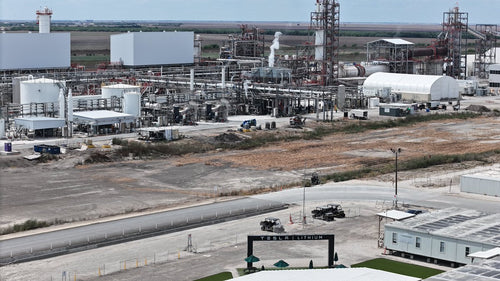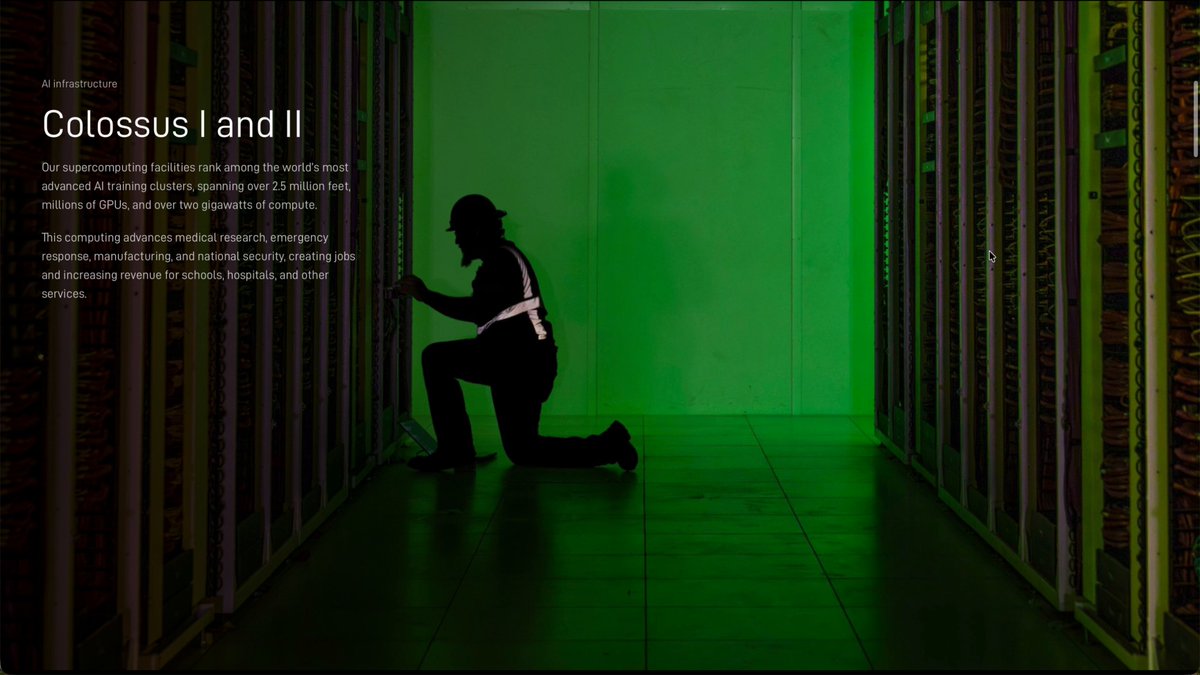
SpaceX has quietly published a new website detailing its Colossus AI training clusters in the Memphis metro, and the most consequential disclosure has nothing to do with GPUs. Buried in the site's energy section is confirmation that Tesla Megapacks will provide 3.3 GWh of battery storage to the Colossus 2 campus — enough, per SpaceX, to power the entire city of Memphis for roughly two hours. If the figure holds, it establishes Colossus 2 as home to what is likely the largest grid-connected battery pack in the United States.
The disclosure was surfaced Thursday by @SawyerMerritt, who also published renderings of the completed campus that show a buildout dramatically larger than what satellite imagery has captured so far.

Why 3.3 GWh Is a Big Deal
For context, the largest operating grid-connected battery in the U.S. before this announcement — Vistra's Moss Landing facility in California — sits in the 3 GWh range across multiple phases, and much of that capacity has been offline following fire incidents. A single-site, 3.3 GWh Megapack installation dedicated to an AI training cluster represents a fundamentally new category of battery deployment: not utility peak-shaving, not renewables firming, but industrial-scale load smoothing for GPU workloads that can swing hundreds of megawatts in milliseconds.
That's the operational problem Megapacks are solving here. Frontier AI training runs produce brutal power transients — a synchronized GPU cluster can drop or spike load faster than any thermal generation asset can respond. Batteries absorb those transients, protect grid stability, and let SpaceX draw a smoother baseline from the Tennessee Valley Authority.
The Numbers Behind the Megapack Buildout
Merritt's disclosure aligns with a paper trail that has been building all year. According to reporting from Canary Media and Teslarati, SpaceXAI energy and data center developer Riley Trettel publicly described the Memphis battery system as "the biggest in the nation" at 3.3 GWh on August 20, and Memphis Light, Gas and Water CEO Doug McGowan corroborated the claim on September 2, referencing roughly 2,000 MW of behind-the-meter batteries at the site.
| Metric | Value | Source |
|---|---|---|
| Battery storage capacity | 3.3 GWh | SpaceX website, Sep 2026 |
| Behind-the-meter battery power | ~2,000 MW | MLGW CEO Doug McGowan, Sep 2, 2026 |
| Megapack containers on site (July 2026) | 720 units | Satellite imagery, July 11, 2026 |
| SpaceX Q2 2026 Megapack spend | $295 million | Canary Media reporting |
| SpaceX H1 2026 Megapack spend | $329 million | Canary Media reporting |
| Permanent gas plant coming online | 1.2 GW by July 2027 | Authorized March 2026 |
The buildout has been staged aggressively. Roughly 168 Megapacks were delivered to the site by May 2025 to support the initial Colossus 2 energy footprint, and satellite imagery from July 11, 2026 showed 720 Megapack containers installed — a more than 4x expansion in about 14 months. At Tesla's list-price economics, this single customer represents one of the largest Megapack orders on record.
What SpaceX's Renderings Reveal
Merritt's second post shared new architectural renderings of the completed Colossus 2 campus.

The renderings depict a substantially larger footprint than the currently operational Colossus 1 facility, with dedicated substations, battery yards, and what appear to be multiple discrete data hall clusters. The Tennessee Valley Authority board approved a direct grid hookup for SpaceXAI in August 2026, which — combined with the permanent 1.2 GW natural gas plant authorized in March 2026 — will replace the temporary gas turbines that have drawn regulatory scrutiny in Memphis. SpaceXAI has committed to removing those temporary turbines by July 2027.
How We Got Here
Colossus 2 broke ground in early 2025 and its first major GPU cluster came online around January 2026, per reporting from Epoch AI and Tom's Hardware. The site is operated by SpaceXAI, the entity formed after SpaceX's acquisition of xAI in early 2026 folded Elon Musk's AI ambitions into the same corporate umbrella that runs Starlink and Starship. That reorganization has had a visible effect on capital allocation: SpaceX became one of Tesla Energy's single largest customers almost overnight.
It's also worth noting the structural irony. Tesla and SpaceX are legally separate companies, but the flow of capital from Musk's rocket-and-AI business into Tesla's battery business has become one of the most consequential — and least discussed — energy-industry stories of 2026. Tesla's Megapack backlog now includes a captive, price-insensitive customer that intends to keep buying as long as AI training clusters keep scaling.
What to Watch Next
- Full commissioning timeline. SpaceX's website does not yet publish a date for when all 3.3 GWh will be operational and grid-synchronized. Expect updates over the next two quarters.
- TVA integration. The Tennessee Valley Authority's direct hookup approval is unusual for a private data center at this scale. How the grid interconnection performs under real AI training loads will be closely watched by every hyperscaler planning gigawatt-class sites.
- Gas turbine phase-out. The July 2027 deadline to remove temporary generators is enforceable, and local air-quality regulators have been vocal. If the permanent 1.2 GW gas plant slips, the Megapack fleet becomes even more load-critical.
- Tesla Energy earnings impact. Watch Tesla's Q3 and Q4 2026 Energy Generation & Storage revenue lines — SpaceX's ongoing purchases should be visible in the reported deployment figures.
For Tesla owners and shareholders, the takeaway is straightforward: the Megapack business, which Tesla has repeatedly flagged as its highest-margin and fastest-growing segment, just got a very public validation from the most demanding customer imaginable. AI infrastructure is now a Megapack story, and Colossus 2 is the reference deployment everyone else will benchmark against.
Sources & reporting notes
The links below identify the material source records used for this report.
- @SawyerMerritt on X (2026-09-25T16:01:31.000Z) — Direct source
- @SawyerMerritt on X (2026-09-25T16:05:57.000Z) — Direct source
Source links are preserved as published or accessed. See our editorial standards and corrections policy.
The BASENOR Editorial Desk covers Tesla, SpaceX, and related technology, curating reporting from primary sources — official accounts, regulatory filings, and software release data. Every article passes source-record and fact-checking review before publication. About the newsroom.
This report was curated by the BASENOR Editorial Desk from the sources listed above. Read our editorial standards or email editorial@basenor.com to report an error.