📌 UPDATE — March 17, 2026
Following tonight's Falcon 9 launch from Vandenberg, SpaceX has officially crossed a major milestone: 10,000 active Starlink satellites now in orbit. Over two-thirds (66%) of all active satellites globally now belong to SpaceX, cementing Starlink's dominance of low Earth orbit. The launch carried 29 Starlink satellites, pushing the constellation past the historic threshold.

📌 UPDATE — March 14, 2026
SpaceX has confirmed a successful launch and deployment of all 29 Starlink satellites from Florida. The company posted confirmation of satellite deployment at 13:37 UTC, followed by the official launch confirmation shortly after at 13:47 UTC. All 29 Starlink V2 Mini satellites are now in orbit, further expanding the Starlink constellation.


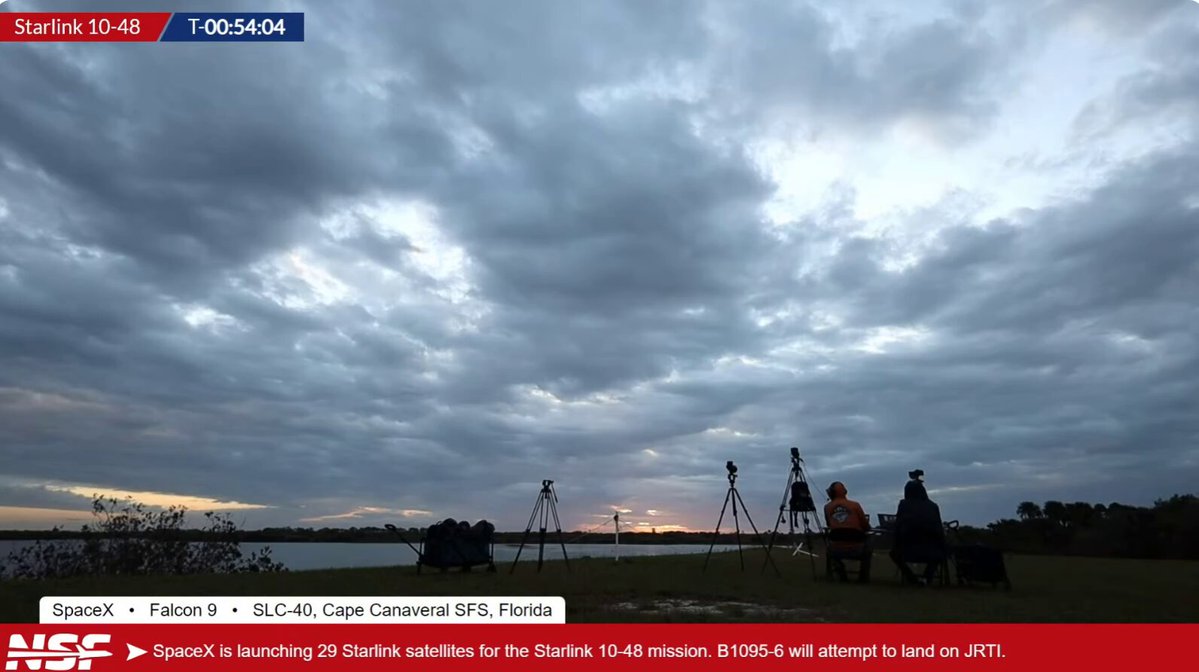
The News: SpaceX is launching Falcon 9 booster B1095 on its sixth flight today, deploying 29 Starlink V2 Mini Optimized satellites from Space Launch Complex 40 at Cape Canaveral.
Why It Matters: Each Starlink batch incrementally strengthens global coverage and network capacity — directly impacting connection quality for Starlink subscribers worldwide.
Source: @NASASpaceflight on X
SpaceX Falcon 9 B1095-6 Set to Deploy 29 Starlink Satellites Today — Here's Everything You Need to Know
SpaceX is on the pad again. Falcon 9 booster B1095 is ready for its sixth launch, this time carrying the Starlink Group 10-48 batch from Space Launch Complex 40 (SLC-40) at Cape Canaveral Space Force Station in Florida. Liftoff is targeted for approximately 12:37 UTC (8:37 a.m. EDT) today, March 14, 2026 — after the mission was pushed back from earlier attempts on March 12 and 13.

📊 Key Figures
| Metric | Value | Context |
|---|---|---|
| Booster Flight Number | 6th | B1095 — proven hardware |
| Satellites Deployed | 29 | Starlink V2 Mini Optimized |
| Launch Time (UTC) | ~12:37 UTC | 8:37 a.m. EDT |
| Launch Site | SLC-40 | Cape Canaveral, Florida |
| Landing Target | Just Read the Instructions | Drone ship, Atlantic Ocean |
The Mission in Detail
This is a textbook Starlink resupply run — but a few details make it worth paying attention to. Booster B1095 is flying for the sixth time, which continues to validate SpaceX's rapid reusability model. The booster will attempt to land on the drone ship Just Read the Instructions in the Atlantic, a recovery operation SpaceX has now executed hundreds of times with near-routine reliability.
The payload — 29 Starlink V2 Mini Optimized satellites — represents SpaceX's current production-standard hardware. The V2 Mini Optimized generation delivers meaningfully higher throughput per satellite compared to the original V1.5 design, which translates to more bandwidth headroom for the growing subscriber base. According to verified launch tracking sources, this batch is designated Group 10-48, slotting into an established orbital shell that fills in coverage gaps and adds redundancy.
The mission had previously been scrubbed on March 12 and 13, likely due to weather or range availability. Today's window appears clear, with NSF confirming the countdown is proceeding as of this morning.
🔭 The BASENOR Take
Timeline: Launch window opens ~12:37 UTC today, March 14, 2026. Booster landing expected approximately 8–9 minutes after liftoff.
Impact Level: Incremental — each batch adds capacity, but no single launch dramatically shifts the network overnight.
Confidence: High — countdown confirmed active, weather nominal, booster is flight-proven hardware.
Watch for: Booster landing on Just Read the Instructions. A sixth successful recovery for B1095 further cements the case for even higher reuse rates going forward.
SpaceX's launch cadence in 2025 and into 2026 has been relentless, and Group 10-48 is another data point in that pattern. The Starlink constellation now numbers in the thousands of active satellites, and missions like this one are less about dramatic expansion and more about densification — packing more capacity into existing orbital planes to handle subscriber growth and improve performance in high-demand regions.
For Starlink subscribers, the practical effect of each new batch is gradual: slightly lower latency, slightly higher peak speeds, and better resilience during peak hours. The V2 Mini Optimized satellites are particularly impactful because their higher throughput means each satellite can serve more users without degrading the experience for existing ones. For our SpaceX coverage, this launch fits into a broader story of infrastructure-building that underpins Tesla's own ambitions around vehicle connectivity.
📰 Deep Dive
The B1095 booster has quietly become one of SpaceX's workhorses. Six flights on a single first stage, each with a successful recovery, is a testament to how far the reusability program has matured. Early Falcon 9 missions treated boosters as expendable; today, a six-flight booster is considered mid-cycle. SpaceX has publicly discussed aspirations for 20+ flights per booster, and hardware like B1095 is the proving ground for that goal.
The choice of SLC-40 at Cape Canaveral is standard for Starlink missions targeting these mid-inclination orbital shells. The Atlantic drone ship recovery corridor is well-established, and Just Read the Instructions has been stationed for this mission. Weather in the Cape region in mid-March can be variable, which likely contributed to the earlier scrubs on March 12 and 13 — but today's conditions appear favorable.
Zooming out: SpaceX has been launching Starlink batches at a pace that makes individual missions easy to overlook. But the cumulative effect is a constellation that has fundamentally changed what satellite internet can deliver — low latency, high bandwidth, and global reach. Group 10-48 is one more step in that direction, and with the V2 Mini Optimized hardware onboard, it's a step that adds real capacity to the network rather than just filling orbital slots.
Sources & reporting notes
The links below identify the material source records used for this report.
- @NASASpaceflight on X (2026-03-14T11:44:40.000Z) — Direct source
- @SpaceX on X (2026-03-14T13:47:42.000Z) — Direct source
- @SpaceX on X (2026-03-14T13:37:46.000Z) — Direct source
- @SawyerMerritt on X (2026-03-17T05:22:10.000Z) — Direct source
- @SpaceX on X (2026-03-17T05:10:36.000Z) — Direct source
Source links are preserved as published or accessed. See our editorial standards and corrections policy.
The BASENOR Editorial Desk covers Tesla, SpaceX, and related technology, curating reporting from primary sources — official accounts, regulatory filings, and software release data. Every article passes source-record and fact-checking review before publication. About the newsroom.
This report was curated by the BASENOR Editorial Desk from the sources listed above. Read our editorial standards or email editorial@basenor.com to report an error.