📌 UPDATE — April 7, 2026
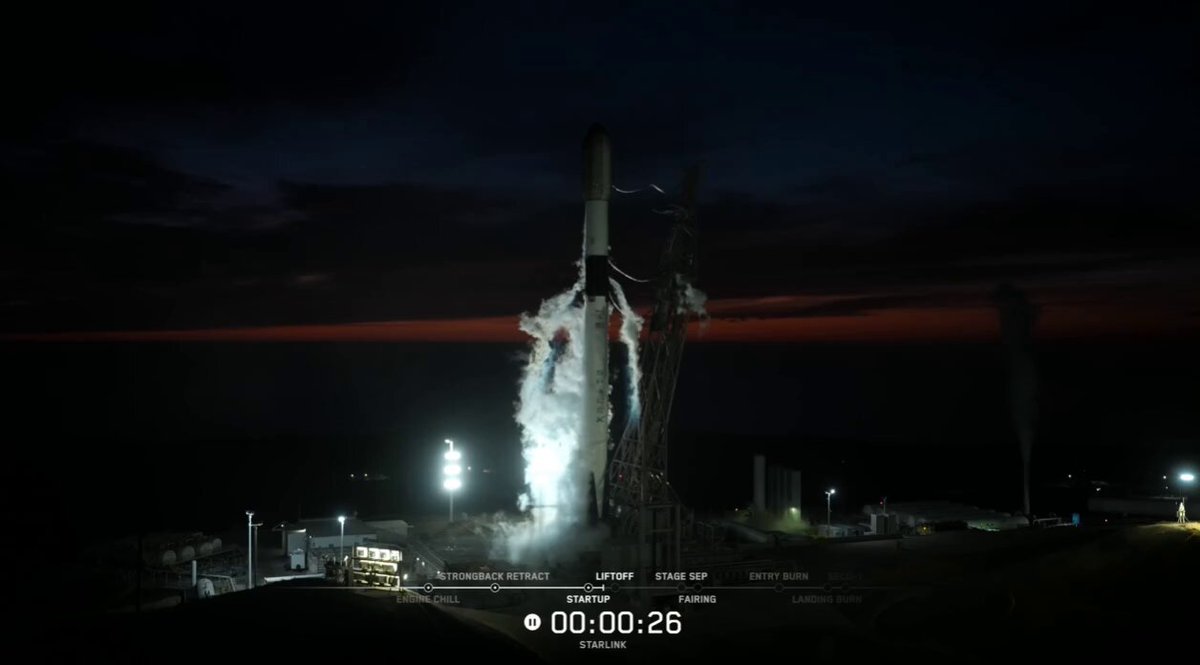
SpaceX successfully launched the Starlink Group 17-35 mission after the earlier wind shear scrub, lifting off from SLC-4E at Vandenberg aboard new booster B1103-1 at approximately 02:51 UTC. All 25 Starlink satellites were deployed to orbit, and the new booster completed its first-ever landing — a milestone for SpaceX's reusability program.


📌 UPDATE — April 6, 2026
SpaceX has confirmed a new launch target of Monday, April 6 for the Falcon 9 Starlink 17-35 mission from California, citing unfavorable upper-level winds as the reason for the continued delay. This follows the earlier scrub at T-40 seconds due to wind shear at Vandenberg. The official announcement came via SpaceX's account early Monday morning UTC, with a live webcast link shared for the rescheduled attempt.

The News: SpaceX scrubbed the Starlink 17-35 Falcon 9 launch from Vandenberg at T-40 seconds due to high-altitude wind shear — not a vehicle issue.
Why It Matters: The scrubbed mission was carrying 25 Starlink satellites and featured brand-new booster B1103-1 on its debut flight. Delays ripple through SpaceX's dense 2026 launch manifest.
Sources: @SpaceX · @NASASpaceflight · @JoeTegtmeyer
Countdown Cuts Short at Vandenberg
SpaceX was set to send 25 Starlink satellites into low Earth orbit from Space Launch Complex 4 East (SLC-4E) at Vandenberg Space Force Base, California, on April 5, 2026. The launch window ran from 4:03 p.m. to 8:03 p.m. PT. Everything appeared on track — until it wasn't.
With just 40 seconds remaining on the countdown clock, the automated flight termination system called a halt. Within minutes, SpaceX confirmed the mission — designated Starlink 17-35 — was officially scrubbed for the day.

Wind Shear: The Culprit, Not the Rocket
Initial reaction from the launch community was quick. NASASpaceflight's live coverage team confirmed the abort within seconds of it happening, noting that the booster — B1103-1 — was making its very first flight.

Moments later, NSF clarified the root cause: high-altitude wind shear. This is an atmospheric condition where wind speed or direction changes sharply across a short vertical distance — a known hazard for rockets climbing through the upper atmosphere. Critically, the scrub had nothing to do with the vehicle itself.


📊 Key Figures
| Metric | Value | Context |
|---|---|---|
| Scrub Time | T-40 seconds | Very late in countdown |
| Payload | 25 Starlink satellites | Mission: Starlink 17-35 |
| Booster | B1103-1 | Debut flight (brand new) |
| Launch Site | SLC-4E, Vandenberg SFB | California |
| Planned Landing | Of Course I Still Love You | Pacific Ocean droneship |
| Next Opportunity | ~April 9, 2026 | Per SpaceX schedule |
🔭 The BASENOR Take
Timeline: Scrub confirmed April 5, 2026 · Next window estimated ~April 9, 2026
Impact Level: Low — routine weather scrub, no hardware concerns
Confidence: High — wind shear cause confirmed by NASASpaceflight within minutes of scrub
A T-40 second scrub sounds dramatic, but in the world of orbital launch operations, it's a textbook outcome. Falcon 9's automated systems are designed to catch exactly this kind of marginal atmospheric condition before ignition — and they did their job. The vehicle and its payload are safe, the booster is intact, and the 25 Starlink satellites will fly another day.
What makes this particular scrub worth watching is the booster. B1103-1 is a brand-new first stage, and new boosters carry a slightly different risk profile than flight-proven hardware. SpaceX has become so reliant on reused boosters — some now flying their 20th or more missions — that a debut flight draws extra scrutiny. The good news: the scrub was atmospheric, not mechanical. B1103-1 will get its chance.
SpaceX's launch cadence in 2026 has been relentless, and a single-day slip on a Starlink mission is a minor footnote. According to SpaceX's published schedule, another Starlink mission from SLC-4E is slated for around April 9, 2026 — which may serve as the next opportunity for Starlink 17-35, depending on how SpaceX sequences its manifest. For Starlink subscribers, 25 fewer satellites in the constellation for a few days is imperceptible. For SpaceX, it's a small scheduling puzzle, nothing more. For more on SpaceX's broader launch program, see our SpaceX coverage.
Sources & reporting notes
The links below identify the material source records used for this report.
- @NASASpaceflight on X (2026-04-06T02:57:21.000Z) — Direct source
- @NASASpaceflight on X (2026-04-06T02:58:48.000Z) — Direct source
- @JoeTegtmeyer on X (2026-04-06T02:57:15.000Z) — Direct source
- @SpaceX on X (2026-04-06T02:46:18.000Z) — Direct source
- @SpaceX on X (2026-04-06T03:06:45.000Z) — Direct source
- @NASASpaceflight on X (2026-04-07T02:59:28.000Z) — Direct source
- @NASASpaceflight on X (2026-04-07T02:51:41.000Z) — Direct source
- @SpaceX on X (2026-04-07T02:40:16.000Z) — Direct source
Source links are preserved as published or accessed. See our editorial standards and corrections policy.
The BASENOR Editorial Desk covers Tesla, SpaceX, and related technology, curating reporting from primary sources — official accounts, regulatory filings, and software release data. Every article passes source-record and fact-checking review before publication. About the newsroom.
This report was curated by the BASENOR Editorial Desk from the sources listed above. Read our editorial standards or email editorial@basenor.com to report an error.