The News: SpaceX's Falcon 9 has been awarded nine National Security Space Launch (NSSL) Phase 3 Lane 1 task orders worth a combined $739 million to fly missions for the U.S. Space Force's Space Development Agency and the National Reconnaissance Office.
Why It Matters: This cements Falcon 9's dominance in America's most sensitive launch market — and signals long-term confidence in SpaceX's reliability at a time when national security space infrastructure is expanding rapidly.
Source: @SpaceX on X

Falcon 9 Locks In America's Most Sensitive Payloads
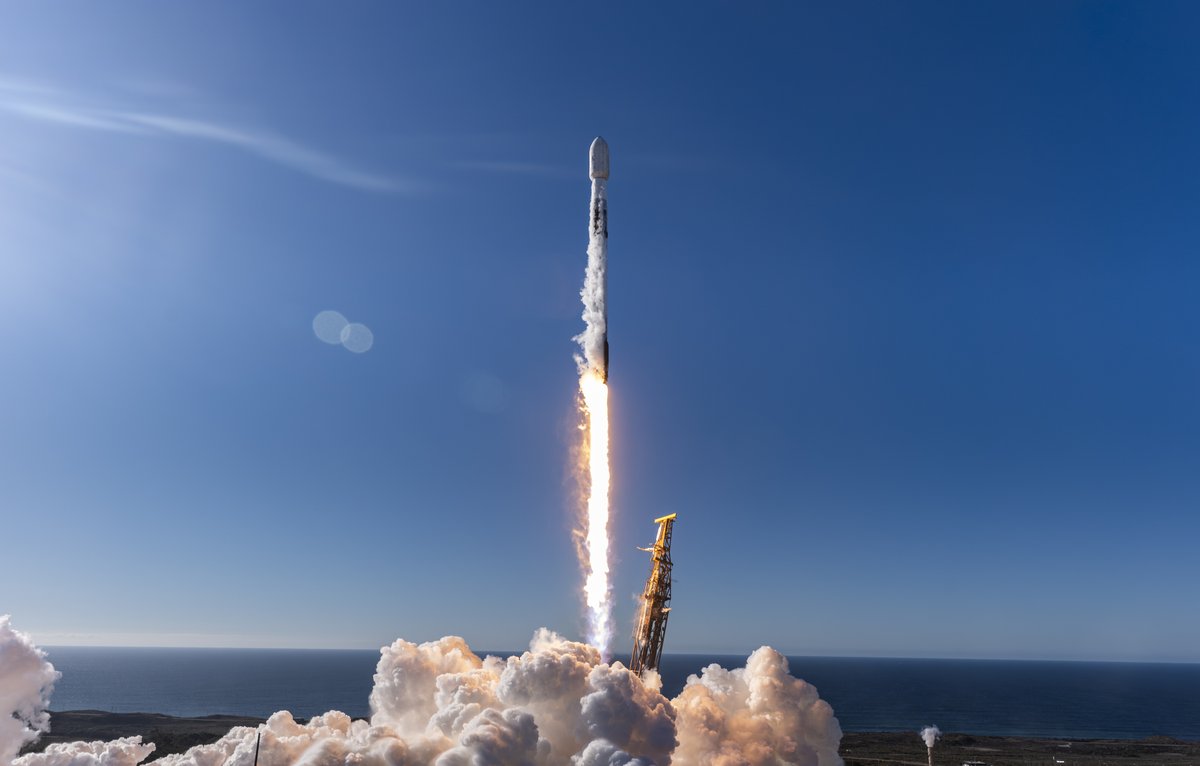
SpaceX just landed nine new national security launch contracts under the NSSL Phase 3 Lane 1 program — a combined $739 million in awards announced in January 2026. The missions will fly on Falcon 9 from both Florida and California, supporting the Space Development Agency (SDA) and the National Reconnaissance Office (NRO). Launches are expected to begin as early as fiscal year 2026, with the final missions targeted through fiscal year 2027.
This isn't a single contract win. It's a sustained, multi-mission commitment from the U.S. government to Falcon 9 as the backbone of its national security space architecture — covering everything from missile-tracking satellites to classified NRO payloads.
📊 Key Figures
| Metric | Value | Context |
|---|---|---|
| Total Contract Value | $739 million | NSSL Phase 3 Lane 1 |
| Missions Covered | 9 | SDA + NRO |
| SDA Tranche 2 Satellites (L3Harris) | 18 | 2 launches, SDA-2 |
| F2 Space Vehicles (Millennium Space) | 8 | 1 launch, SDA-2 |
| SDA Tranche 2 Satellites (Lockheed Martin) | 18 | 2 launches, SDA-3 |
| First SDA-2 Launch Target | Q4 FY2026 | Florida or California |
| SDA-3 Launch Target | Q3 FY2027 | Lockheed Martin payloads |
What's Actually Flying on These Missions?
The SDA task orders are the most detailed. Under the SDA-2 task order, Falcon 9 will fly three missions: two carrying 18 Tranche 2 Tracking Layer satellites built by L3Harris, and one carrying eight Fire-control On Orbit-support-to-the-warFighter (F2) Space Vehicles built by Millennium Space Systems. These are part of the Pentagon's Proliferated Warfighter Space Architecture (PWSA) — a low-Earth orbit constellation designed to provide missile tracking and targeting data to warfighters in real time. SDA-2 launches are projected to begin in Q4 of fiscal year 2026.
The SDA-3 task order adds two more launches, carrying 18 additional Tranche 2 Tracking Layer satellites — this time built by Lockheed Martin. Those are expected to fly by Q3 of fiscal year 2027.
The NRO missions, covered under the NTO-5 task order, carry classified payloads and have a projected launch window beginning in Q1 of fiscal year 2027. Details on NRO payloads are, by nature, limited.
🔭 The BASENOR Take
Timeline: First launches expected Q4 FY2026 (SDA-2) through Q3 FY2027 (SDA-3 and NRO)
Impact Level: 🟠 High — $739M in government contracts across nine missions is a significant institutional endorsement of Falcon 9
Confidence: ✅ High — Contract awards confirmed by official SpaceX announcement and corroborated by Aviation Week and Air & Space Forces Magazine
Nine missions. $739 million. Two agencies. Three satellite manufacturers. That's not a contract win — that's an ecosystem lock-in.
The NSSL Phase 3 Lane 1 program was specifically designed for lower-complexity national security missions where cost matters as much as capability. Falcon 9's reusability economics are the primary reason it keeps winning these awards. The U.S. government is essentially subsidizing the continued maturation of SpaceX's launch cadence — and in return, it gets reliable, cost-effective access to orbit for its most critical space assets.
What's notable here is the diversity of satellite manufacturers involved: L3Harris, Millennium Space Systems, and Lockheed Martin are all represented across these task orders. SpaceX isn't just the launch provider — it's the common thread connecting the Pentagon's entire low-Earth orbit security architecture. That's a position that's very difficult for any competitor to displace in the near term.
📰 Deep Dive
The NSSL program has been one of the most competitive and consequential procurement battles in the U.S. defense space industry. Phase 3, which divided missions into Lane 1 (routine, cost-sensitive) and Lane 2 (complex, high-assurance), was structured specifically to allow SpaceX to compete more aggressively on the lower end while legacy providers like ULA retained access to the most demanding missions. SpaceX has consistently dominated Lane 1 on price and schedule.
The SDA's Proliferated Warfighter Space Architecture is worth understanding in context. It's the Pentagon's answer to the vulnerability of large, expensive geostationary satellites — instead of a few high-value targets, the SDA is building hundreds of smaller, cheaper satellites in LEO that are collectively harder to degrade. Falcon 9's ability to deploy large batches of satellites per mission makes it an ideal vehicle for this strategy. The Tranche 2 Tracking Layer satellites being flown here are specifically designed to detect and track hypersonic missiles — one of the most pressing defense priorities of the current decade.
For SpaceX, these awards also matter operationally. A predictable manifest of government launches through 2027 provides schedule certainty that allows the company to optimize its booster reuse cadence across both commercial and government customers. Each Falcon 9 booster that flies a national security mission is also accumulating flight heritage that reduces risk on future commercial flights — a virtuous cycle that competitors launching on expendable rockets simply cannot replicate.
The dual launch site requirement — Florida and California — is also strategically significant. Kennedy Space Center and Cape Canaveral serve equatorial and eastward orbits, while Vandenberg Space Force Base in California handles polar and sun-synchronous orbits. The fact that these contracts span both sites reflects the orbital diversity of the SDA and NRO mission sets, and further entrenches SpaceX's bicoastal infrastructure advantage.
Sources & reporting notes
The links below identify the material source records used for this report.
- @SpaceX on X (2026-04-02T17:47:43.000Z) — Direct source
Source links are preserved as published or accessed. See our editorial standards and corrections policy.
The BASENOR Editorial Desk covers Tesla, SpaceX, and related technology, curating reporting from primary sources — official accounts, regulatory filings, and software release data. Every article passes source-record and fact-checking review before publication. About the newsroom.
This report was curated by the BASENOR Editorial Desk from the sources listed above. Read our editorial standards or email editorial@basenor.com to report an error.