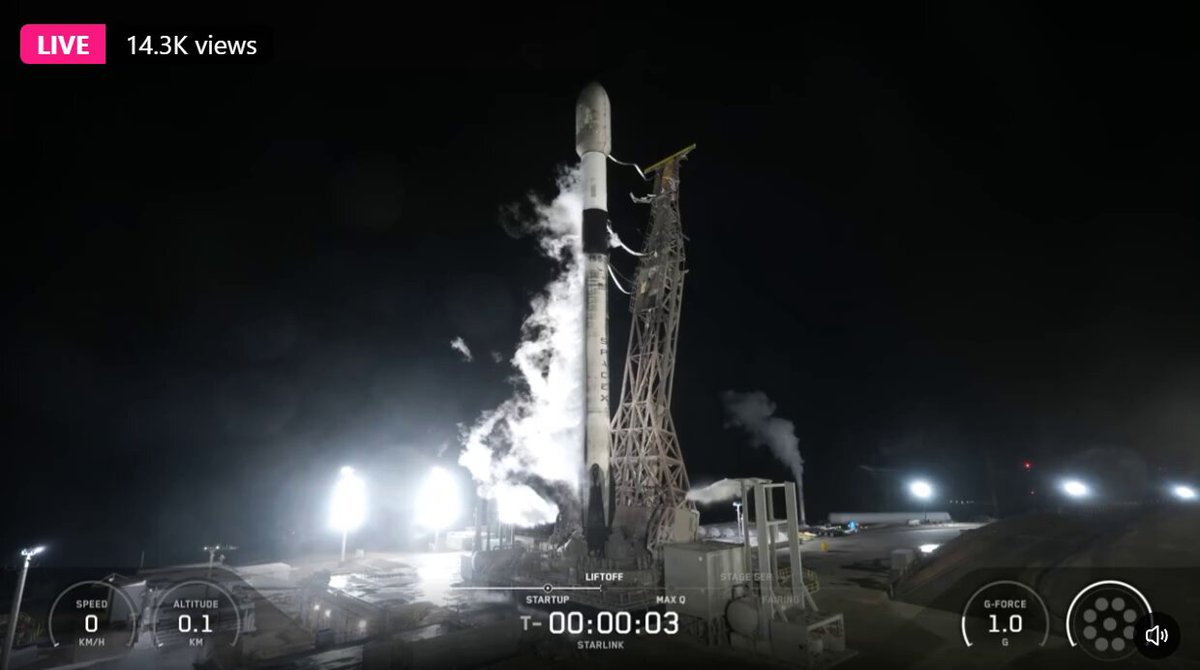
SpaceX crossed a significant threshold on October 30, 2026, when Falcon 9 booster B1093 lifted off from Vandenberg Space Force Base carrying 27 Starlink V2 Mini Optimized satellites — and in doing so, marked the 700th launch of the Falcon 9 rocket. Eight and a half minutes later, the booster touched down on the drone ship Of Course I Still Love You in the Pacific Ocean, completing the 675th Falcon booster recovery in the program's history.

The Numbers Behind Mission 700
Milestones like this one are easy to gloss over, but the scale of what SpaceX has built with Falcon 9 is worth pausing on. The vehicle first flew in June 2010. Reaching 700 launches in roughly 16 years — with an accelerating cadence over the past three — reflects a manufacturing and operational tempo that no other orbital launch provider has matched. According to verified mission data, this flight also logged the 231st landing on Of Course I Still Love You specifically, making that drone ship one of the busiest landing pads in aerospace history.
| Milestone | Count |
|---|---|
| Total Falcon 9 launches | 700 |
| Total Falcon booster landings | 675 |
| Landings on Of Course I Still Love You | 231 |
| B1093 booster flights | 18 |
| Satellites deployed (this mission) | 27 |
| Time from liftoff to booster landing | ~8.5 min |
B1093: A Workhorse Booster
Booster B1093 is now 18 flights deep — a figure that would have seemed implausible when SpaceX first demonstrated booster reuse a decade ago. Each reflown booster represents a direct cost reduction on the launch manifest, and at 18 flights, B1093 has more than paid back its development and refurbishment costs many times over. The 27 V2 Mini Optimized satellites aboard represent SpaceX's current-generation Starlink hardware, which packs higher throughput into the same mass envelope as earlier variants.

What This Means for Starlink
Each Starlink Group mission adds capacity and redundancy to the constellation. The Group 15-18 designation places these satellites in a specific orbital shell, filling gaps in coverage and helping sustain the sub-20ms latency performance that SpaceX has been advertising for premium Starlink tiers. For Tesla owners who rely on Starlink connectivity at remote properties or for in-vehicle use cases, a denser constellation translates directly to more consistent service — particularly in mid-latitude regions where earlier shells had thinner coverage.
The pace of launches also matters strategically. SpaceX has been filing for next-generation Starlink satellites with higher power and laser inter-satellite links, and the ability to deploy them quickly — using a booster that has already flown 17 previous missions — keeps marginal launch costs low enough to sustain that cadence without waiting on new hardware. For more on SpaceX's launch program, see our SpaceX coverage.
Mission 700 is a round number, but the more meaningful figure may be 675 — the number of times SpaceX has successfully caught a booster it would otherwise have thrown away. That recovery rate, sustained across hundreds of missions and multiple landing zones, is what makes the current launch tempo financially viable. The next milestone worth watching is how quickly B1093 turns around for flight 19.
Sources & reporting notes
The links below identify the material source records used for this report.
- @NASASpaceflight on X (2026-10-31T04:05:32.000Z) — Direct source
- @NASASpaceflight on X (2026-10-31T04:13:26.000Z) — Direct source
Source links are preserved as published or accessed. See our editorial standards and corrections policy.
The BASENOR Editorial Desk covers Tesla, SpaceX, and related technology, curating reporting from primary sources — official accounts, regulatory filings, and software release data. Every article passes source-record and fact-checking review before publication. About the newsroom.
This report was curated by the BASENOR Editorial Desk from the sources listed above. Read our editorial standards or email editorial@basenor.com to report an error.