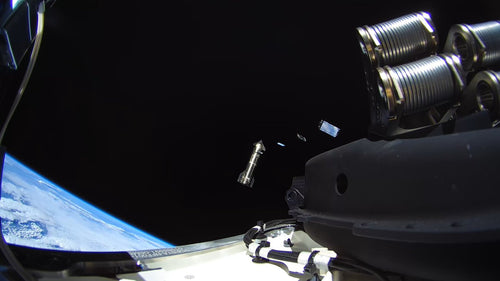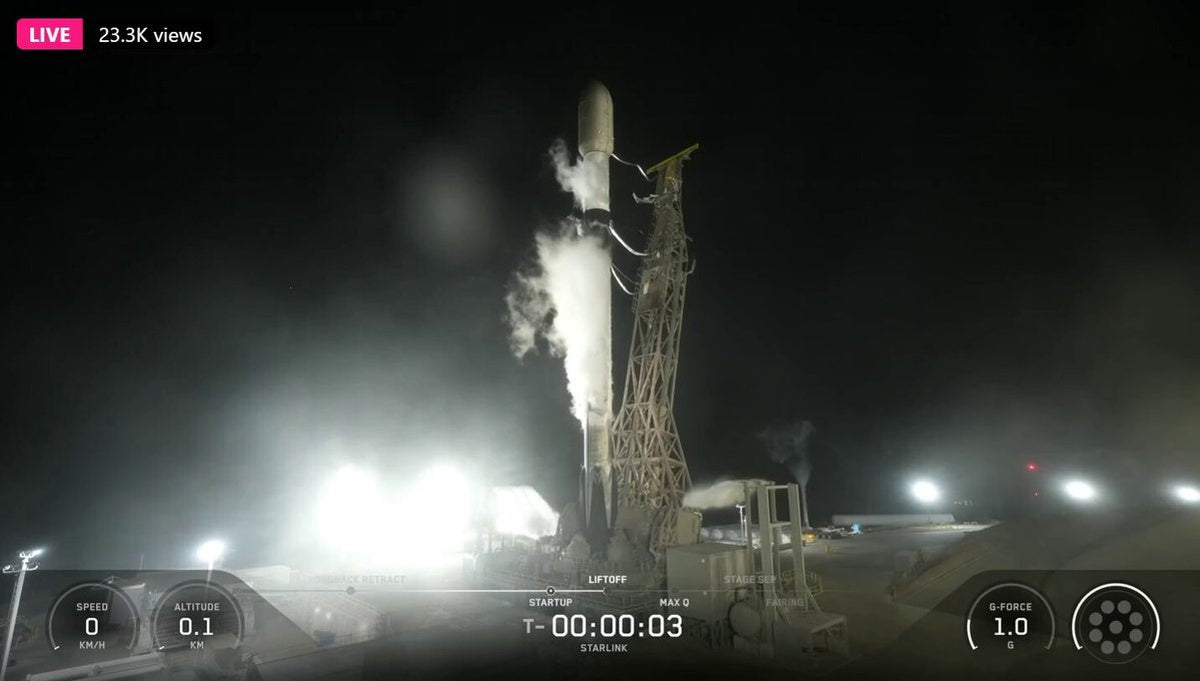
SpaceX successfully launched 23 satellites into orbit from Vandenberg Space Force Base early Sunday morning, with the Falcon 9 first stage touching down cleanly on a drone ship in the Pacific Ocean roughly eight and a half minutes after liftoff. The mission, designated Starlink Group 17-43, carried 21 standard Starlink broadband satellites alongside two Starshield satellites — the government-oriented variant of Starlink designed for national security applications.

Liftoff from Space Launch Complex 4E (SLC-4E) occurred at 9:24:45 p.m. PDT on June 6 — 04:24:45 UTC on June 7. The booster flying this mission, B1097, was on its tenth flight, a milestone that continues to demonstrate the cadence and reliability SpaceX has built into its reusability program. After stage separation, B1097 made a successful propulsive landing on the autonomous spaceport drone ship Of Course I Still Love You, stationed in the Pacific Ocean.


The inclusion of two Starshield satellites alongside the standard Starlink batch is consistent with SpaceX's growing role as a defense contractor. Starshield uses the same underlying hardware platform as Starlink but is purpose-built for government and military use cases, with enhanced security features and inter-satellite link capabilities. B1097's tenth successful flight adds to the growing list of Falcon 9 boosters that have crossed the double-digit reuse mark — a threshold that would have seemed ambitious just a few years ago and now reads as routine. For more on SpaceX's launch cadence and constellation progress, see our SpaceX coverage.
Sources & reporting notes
The links below identify the material source records used for this report.
- @NASASpaceflight on X (2026-06-07T04:33:36.000Z) — Direct source
- @NASASpaceflight on X (2026-06-07T04:25:38.000Z) — Direct source
- @SpaceX on X (2026-06-07T04:14:23.000Z) — Direct source
Source links are preserved as published or accessed. See our editorial standards and corrections policy.
The BASENOR Editorial Desk covers Tesla, SpaceX, and related technology, curating reporting from primary sources — official accounts, regulatory filings, and software release data. Every article passes source-record and fact-checking review before publication. About the newsroom.
This report was curated by the BASENOR Editorial Desk from the sources listed above. Read our editorial standards or email editorial@basenor.com to report an error.