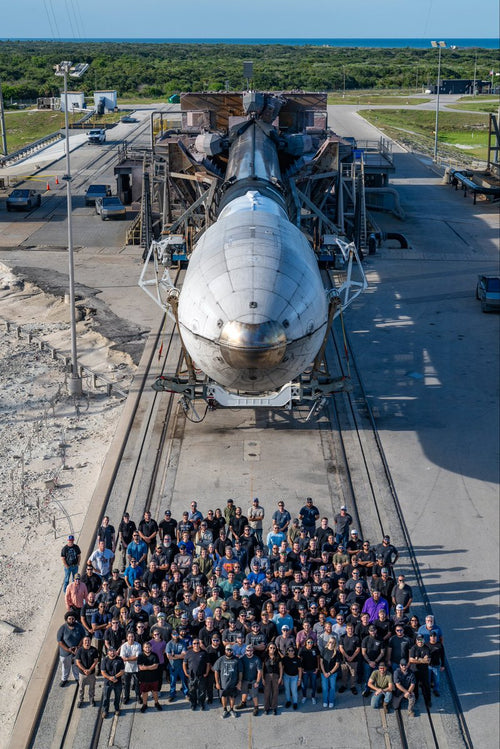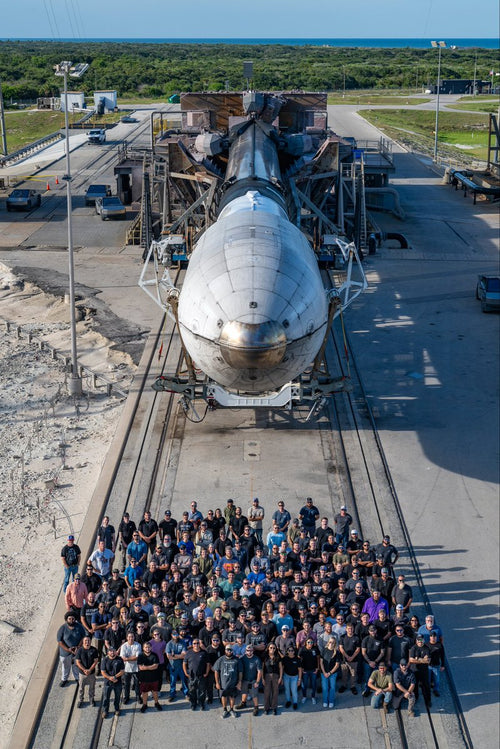
SpaceX's launch infrastructure buildout just got a scale check. With the addition of Starbase, Louisiana announced on August 25, 2026, the company now has 17 Starship launch pads in various stages of development across four sites — a footprint designed to eventually support more than 15,000 launches per year. For context, that annualized target is more than twice the total number of orbital rocket launches recorded in human history to date.
The figure comes from a post by @SawyerMerritt summarizing the newly-expanded roadmap, which lines up with SpaceX's own filings and CEO Elon Musk's stated cadence goals.

The 17-Pad Map, Site by Site
The 17 figure spans four locations. According to SpaceX's official announcement and reporting from Teslarati, Space.com, and Aviation Week, here is how the pads distribute:
| Site | Pads (Planned/Building) | Status |
|---|---|---|
| Starbase, Texas (Boca Chica) | 2 | Pad 1 operational; Pad 2 under construction |
| Kennedy Space Center — LC-39A (Florida) | 1 | FAA-approved Feb 2026 for up to 44 launches/year |
| Cape Canaveral SFS — SLC-37 (Florida) | 2 | Air Force approval Dec 2025; ~76 missions/year projected |
| Cape Canaveral SFS — additional | 2 | Reported as part of the three new Florida pads |
| Starbase, Louisiana (Vermilion Parish) | 10 | Five launch complexes × 2 pads each; construction 2027 |
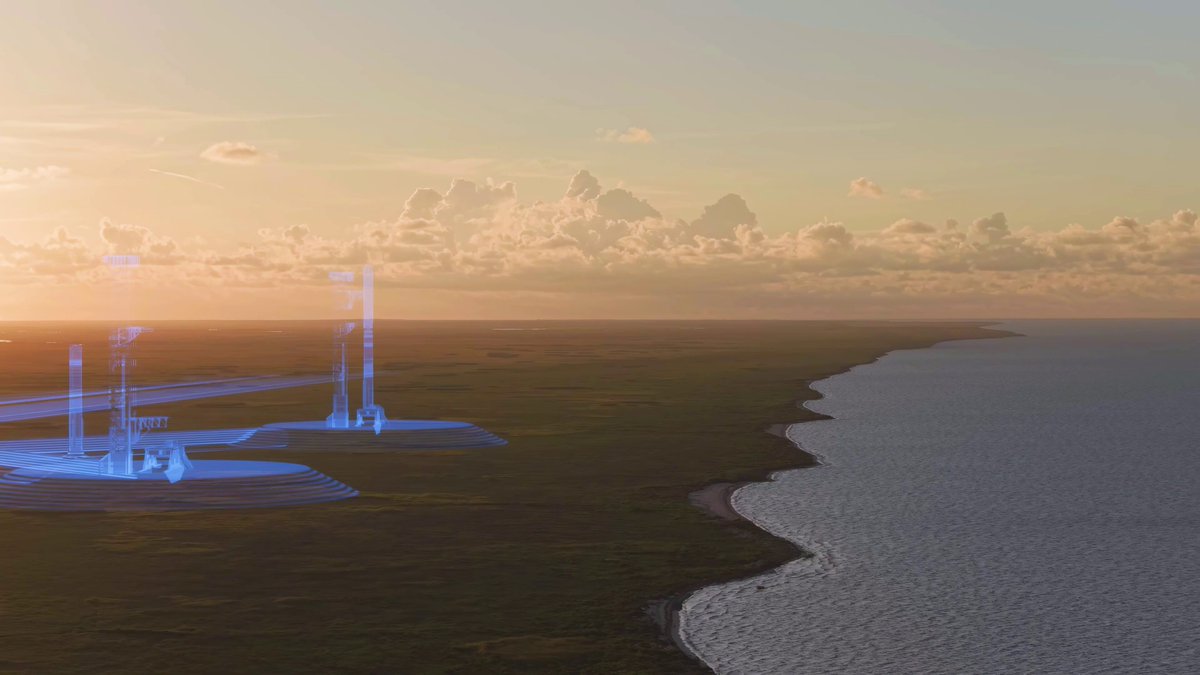
The Louisiana site is the anchor of the expansion. According to SpaceX's announcement and reporting from the Financial Times and Forbes, the company is committing at least $100 billion in investment to build out the Pecan Island facility, which will include propellant production, power generation, deep-water shipping, vehicle processing, and its own airport. First launch from Louisiana is targeted for as early as 2029.
How 15,000 Launches Per Year Actually Pencils Out
The 15,000+ annual figure is a theoretical maximum capacity across all 17 pads once fully built out and operating at their permitted cadences. It is not a near-term target. Musk's more concrete stated goal, delivered on August 21, 2026, is 30 or more Starship launches per day by 2030 — which annualizes to roughly 10,000 flights.
The gap between 10,000 (Musk's 2030 target) and 15,000+ (theoretical pad capacity) is the buffer SpaceX is engineering in. Individual pad approvals already hint at the math: LC-39A alone is permitted for 44 Starship launches per year, and SLC-37's two pads are projected at roughly 76 missions annually. Scale that logic across 17 pads with the Louisiana site explicitly designed to host "thousands of Starship flights a year," per SpaceX's filing, and the top-line number stops looking arbitrary.
To put the 15,000 figure in historical context: from Sputnik in 1957 through today, humanity has conducted somewhere in the range of 6,000-7,000 orbital launch attempts total. SpaceX is describing an annualized capacity that more than doubles that entire cumulative history — every year.
Why Louisiana, and Why Now
The Louisiana site addresses two constraints that limit Texas and Florida operations. First, physical space: Vermilion Parish offers the acreage to build ten pads in a way Boca Chica cannot. Second, regulatory ceiling: even with FAA approvals climbing, single-site launch caps in Florida and Texas will eventually throttle cadence. Spreading pads across four states — and multiple FAA regions — de-risks any single environmental review or airspace restriction becoming a bottleneck.
Environmental scrutiny is already part of the Louisiana plan. SpaceX has acknowledged the marshland impact and committed to partnering with state and federal agencies on shoreline breakwaters and thousands of acres of marsh creation as part of Louisiana's Coastal Master Plan, according to reporting from WBRZ and the 10/12 Industry Report.
What It Means for the Broader Program
For Tesla owners and Musk-orbit watchers, the pad expansion matters because it defines the throughput ceiling for everything Starship is meant to enable: Starlink V3 satellite deployment at scale, lunar cargo under NASA's Artemis contracts, and eventually Mars transit windows that require dozens of tanker flights per departure. A single-pad program can serve one of those missions at a time. A 17-pad program can run them in parallel.
It also raises the stakes for Starship's reliability curve. Cadence targets in the thousands only work if the vehicle achieves airline-like turnaround and a failure rate several orders of magnitude better than any orbital rocket has demonstrated. The pads are the easy part. The vehicle still has to earn the runway.
What to Watch Next
- 2027: Construction start on Starbase, Louisiana
- Ongoing: Second Texas pad activation and first Florida Starship launch from LC-39A
- By 2029: First Louisiana launch target
- By 2030: Musk's stated 30+ launches-per-day goal — the real benchmark for whether the 17-pad architecture is being used
🚀 Following the Starship program? See every test flight, official outcome and the next launch window in our SpaceX Starship Tracker.
Sources & reporting notes
The links below identify the material source records used for this report.
- @SawyerMerritt on X (2026-08-25T20:21:14.000Z) — Direct source
Source links are preserved as published or accessed. See our editorial standards and corrections policy.
The BASENOR Editorial Desk covers Tesla, SpaceX, and related technology, curating reporting from primary sources — official accounts, regulatory filings, and software release data. Every article passes source-record and fact-checking review before publication. About the newsroom.
This report was curated by the BASENOR Editorial Desk from the sources listed above. Read our editorial standards or email editorial@basenor.com to report an error.