📌 UPDATE — August 9, 2026
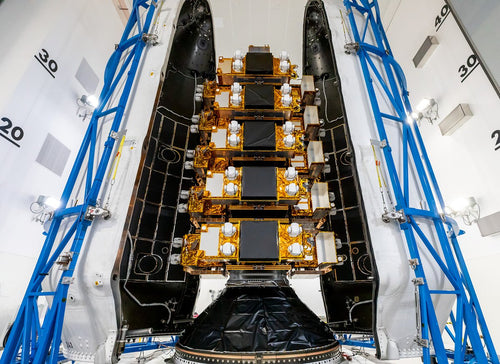
Elon Musk has clarified that SpaceX's $1 trillion revenue target refers to actual revenue in the single year 2030 — not a cumulative figure — making the projection even more striking than initially understood. He attributed the growth thesis primarily to AI and robotics, arguing their bandwidth demand is "orders of magnitude more than humans," and that Starlink stands to capture a massive share even if the overall communications market merely doubles. Musk also confirmed that Starlink V3 satellites, set to launch aboard Starship, will be "an order of magnitude more capable" than the V2 satellites currently flying on Falcon — calling this fact non-speculative, not aspirational. He acknowledged the projections could prove delusional but described them as genuine internal forecasts.
"No, I meant actual revenue in the year 2030 itself, not cumulative, which would be a higher number. Of course, it's always possible that we flounder along the way or are delusional, but those are our actual internal projections." — @elonmusk, Aug 8, 2026
On SpaceX's Q2 2026 earnings call, Elon Musk moved the company's internal milestone for $1 trillion in annual revenue from 2031 to 2030 — and floated a non-zero probability of hitting it as early as 2029. For a company that posted $18.67 billion in revenue in 2025, the trajectory implied by that target is extraordinary, and the gap between Musk's projections and Wall Street's tells its own story.

The Numbers Behind the Claim
SpaceX's 2025 revenue of $18.67 billion is the baseline. Getting from there to $1 trillion by 2030 would require roughly a 54x increase in five years — a compound annual growth rate of approximately 120%. That is not a typo. It is also, by any conventional financial modeling standard, an extreme projection.
Wall Street is nowhere close to agreeing. According to publicly available analyst estimates, Goldman Sachs projects SpaceX's 2030 revenue at approximately $470 billion, while Morgan Stanley sits even lower at around $330 billion. Both figures represent massive businesses in their own right — and both are less than half of Musk's internal target. The divergence between management's view and institutional analysts is not a rounding error; it reflects fundamentally different assumptions about how fast Starlink can scale, what Starship enables commercially, and how quickly new revenue streams (point-to-point travel, government contracts, direct-to-cell) can mature.
Context: SpaceX Just Went Public
The timing of this projection matters. SpaceX completed its IPO in June 2026, valuing the company at over $2 trillion. Musk's trillion-dollar revenue comment on the first Q2 earnings call as a public company is not an offhand remark — it is a statement made to shareholders, analysts, and the market simultaneously. Whether it functions as a genuine internal operating target or as a narrative anchor for the stock is a question investors will be debating for some time.
A $2 trillion valuation against $18.67 billion in 2025 revenue already implies the market is pricing in extraordinary growth. If SpaceX does reach even $470 billion in revenue by 2030 — Goldman's estimate — the current valuation starts to look more defensible. At $1 trillion, it would look conservative in hindsight. At $330 billion, questions about the IPO pricing would intensify.
What Would Have to Go Right
Reaching $1 trillion in annual revenue by 2030 essentially requires SpaceX to become one of the largest companies on Earth by revenue within four years. To put it in perspective, that would place SpaceX in the same tier as Apple and Amazon today. The plausible paths to that number all run through Starlink. The direct-to-cell service, already in commercial rollout, targets a global addressable market of billions of unconnected or underserved mobile users. If Starlink captures even a fraction of global mobile revenue at scale, the numbers start to move in Musk's direction — slowly at first, then very fast.
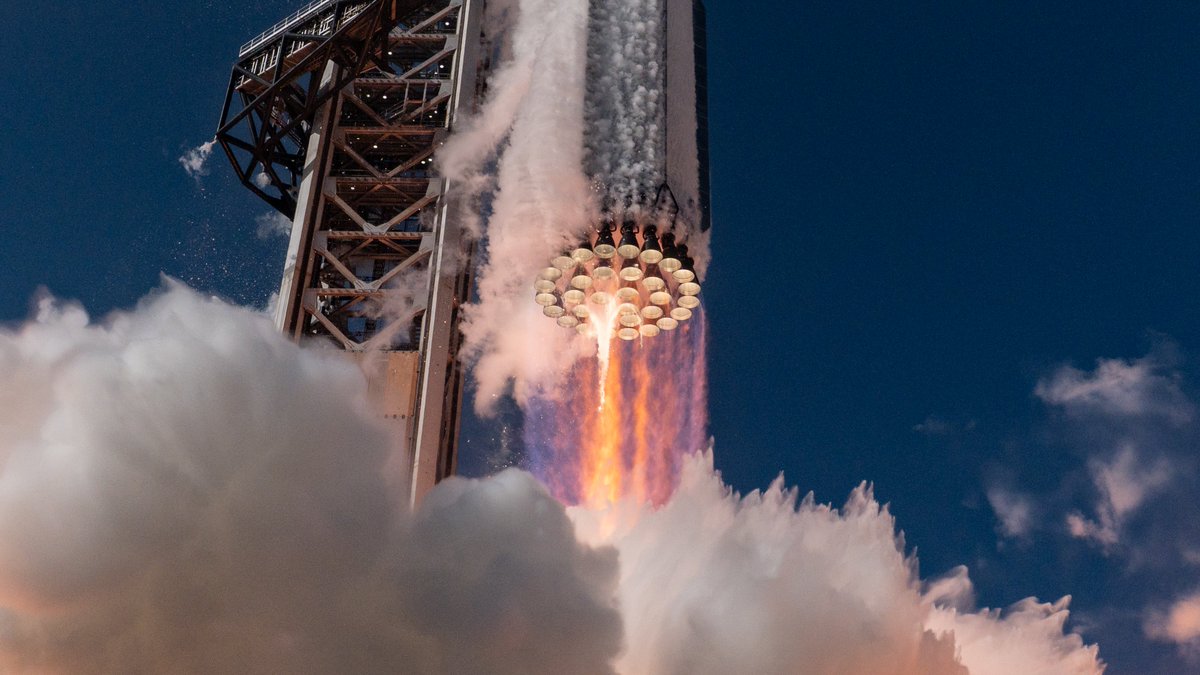
Starship is the other variable. A fully reusable heavy-lift vehicle capable of rapid turnaround would compress launch costs to a degree that opens entirely new commercial categories: in-space manufacturing, lunar logistics, and eventually the Mars program Musk has always treated as the company's core purpose. None of those revenue streams are modeled with confidence by outside analysts, which partly explains the gap between internal and external projections.
The 2029 Qualifier
Musk's phrasing — "a non-zero chance" of reaching $1 trillion by 2029 — is worth parsing carefully. It is not a forecast. It is a statement that the scenario is not impossible, which is a meaningfully different claim. It also suggests the internal model has a probability distribution wide enough to include 2029 as an outlier outcome. For a company growing as fast as SpaceX, outlier outcomes have a way of becoming base cases. But they also have a way of staying outliers. The 2030 target is the one Musk is standing behind; 2029 is the upside tail.
For the broader Musk ecosystem — and for Tesla shareholders who follow SpaceX closely given the overlapping leadership — the earnings call signals that SpaceX is entering its public-company phase with the same aggressive internal goal-setting that has defined both companies. Whether the market rewards or punishes that approach over the next four years depends almost entirely on execution. The next data point will be Q3 earnings, where analysts will be watching Starlink subscriber growth and launch cadence for early evidence that the $1 trillion trajectory is more than a headline.
Sources & reporting notes
The links below identify the material source records used for this report.
- @SawyerMerritt on X (2026-08-04T21:11:05.000Z) — Direct source
Source links are preserved as published or accessed. See our editorial standards and corrections policy.
The BASENOR Editorial Desk covers Tesla, SpaceX, and related technology, curating reporting from primary sources — official accounts, regulatory filings, and software release data. Every article passes source-record and fact-checking review before publication. About the newsroom.
This report was curated by the BASENOR Editorial Desk from the sources listed above. Read our editorial standards or email editorial@basenor.com to report an error.