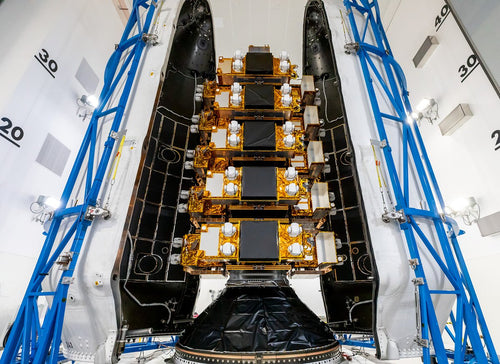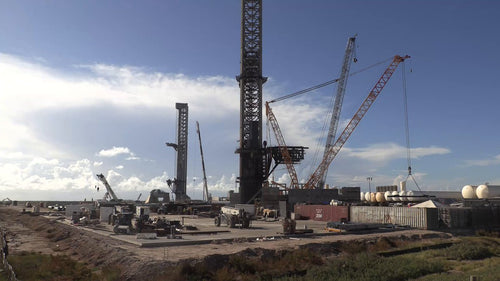
A line buried in SpaceX's S-1 pre-IPO filing is drawing attention from defense and space analysts: the company explicitly reserves the right to prioritize its own launch payloads — tied to what it calls 'orbital compute goals' — over U.S. government contracts and third-party customers. That's a significant disclosure, and it reframes how much leverage Washington actually has over SpaceX's manifest. Here's what the filing reveals.

1. The exact language is unusually direct
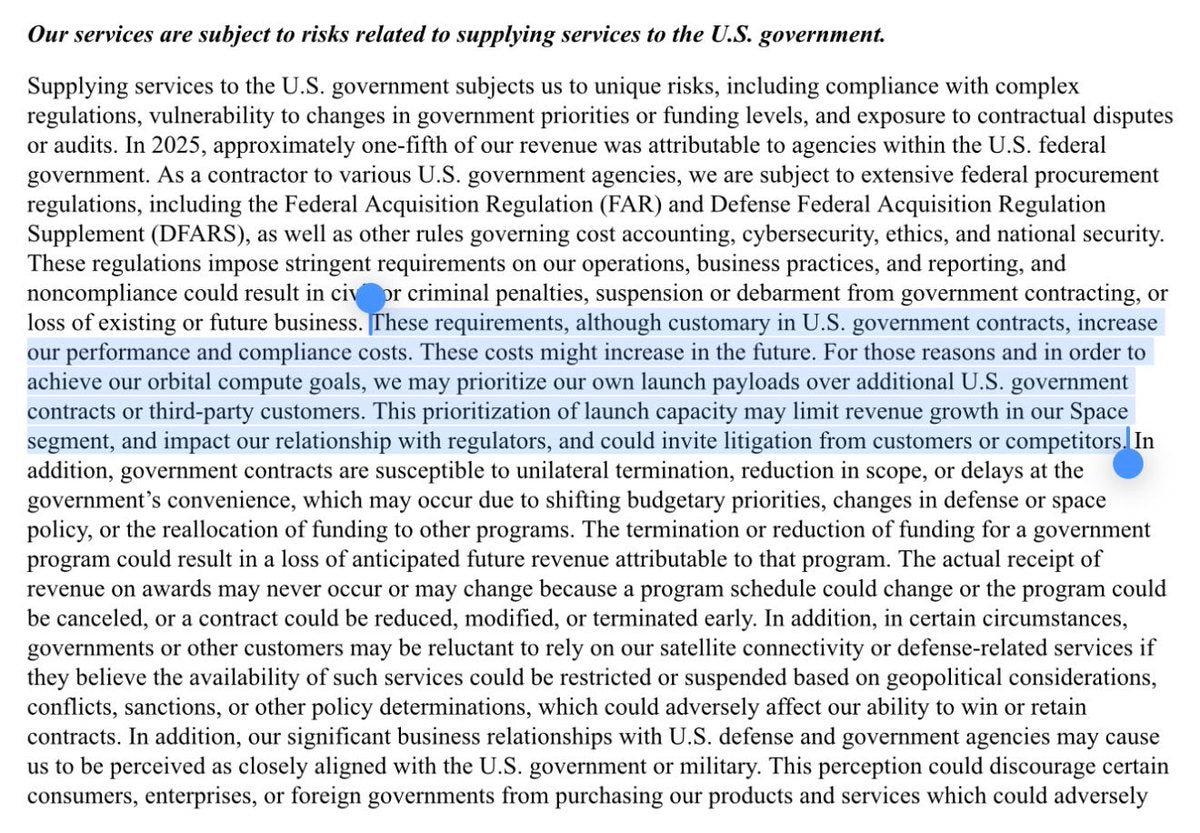
SpaceX's S-1 states: "For those reasons and in order to achieve our orbital compute goals, we may prioritize our own launch payloads over additional U.S. government contracts or third-party customers." S-1 filings are legal documents reviewed by the SEC — companies don't include language like this casually. SpaceX is putting investors and government partners on notice that its internal compute ambitions sit at the top of the manifest hierarchy.
2. 'Orbital compute goals' points to a concrete internal project
According to background research from public filings and reporting, SpaceX's orbital compute push is centered on a project called Starmind and the deployment of orbital data centers (ODCs) — essentially AI computing infrastructure placed in low Earth orbit. This isn't vague future-talk. The S-1 filing, submitted May 21, 2026, shows SpaceX posted an operational net loss of $2.58 billion in 2025, largely attributed to reinvestment in AI infrastructure of this kind. The orbital compute buildout is already consuming capital at scale.
3. It directly challenges the assumption that NSSL gives the U.S. government leverage
The National Security Space Launch (NSSL) program has long been framed as a lever Washington holds over SpaceX — the idea being that lucrative government launch contracts create dependency and, implicitly, compliance. This S-1 language complicates that framing. If SpaceX can legally and explicitly deprioritize government missions in favor of its own payloads, the leverage dynamic runs in both directions. Space policy reporters flagged this passage precisely because it undermines a common assumption about the government-SpaceX relationship.
4. The IPO context makes this disclosure more consequential
SpaceX filed its S-1 on May 21, 2026, targeting a dual listing on Nasdaq and Nasdaq Texas under the ticker SPCX, with a sought valuation of up to $1.75 trillion, according to public filings. In an IPO document, every material risk and strategic priority must be disclosed accurately or the company faces legal exposure. The inclusion of this orbital compute prioritization clause isn't spin — it's a binding statement of strategic intent that public market investors and government contracting officers can now cite directly.
5. Third-party commercial customers are also explicitly in the secondary tier
The filing's language doesn't just flag government contracts as potentially deprioritized — it groups "additional U.S. government contracts or third-party customers" together in the same clause. Commercial satellite operators, research institutions, and other paying launch customers are all operating with the understanding that SpaceX's own orbital compute manifest can legally bump them. For anyone planning a launch with SpaceX in the coming years, that's a material scheduling risk worth factoring into contracts and timelines.
The broader picture here is a company using its IPO moment to formally codify what its internal roadmap already implied: SpaceX is building toward becoming an orbital infrastructure company, not just a launch provider. Government and commercial customers remain important revenue streams, but the S-1 makes clear they're not the ceiling of SpaceX's ambition — or the top of its priority list. For our full SpaceX coverage, follow the tag.
Sources & reporting notes
The links below identify the material source records used for this report.
- @joroulette on X (2026-08-17T18:03:55.000Z) — Direct source
Source links are preserved as published or accessed. See our editorial standards and corrections policy.
The BASENOR Editorial Desk covers Tesla, SpaceX, and related technology, curating reporting from primary sources — official accounts, regulatory filings, and software release data. Every article passes source-record and fact-checking review before publication. About the newsroom.
This report was curated by the BASENOR Editorial Desk from the sources listed above. Read our editorial standards or email editorial@basenor.com to report an error.