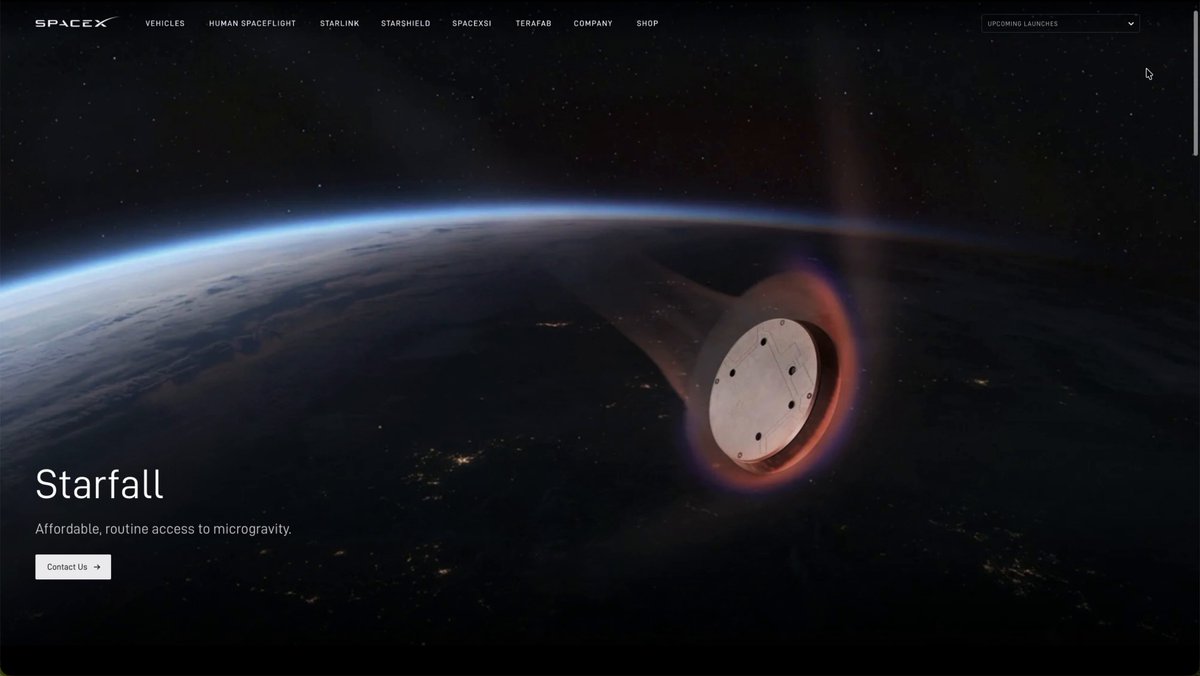
SpaceX has formally opened Starfall for business — a commercial microgravity service built around an uncrewed reentry capsule designed to make low-Earth orbit manufacturing and research as routine as booking a rideshare launch. The company launched a dedicated website for the service alongside the announcement, signaling a push to turn what was once a government-exclusive environment into an accessible platform for industry and science.

What Starfall Actually Is
Starfall is a disk-shaped, mass-producible reentry capsule — not a crewed vehicle, not a space station module, but a purpose-built container for experiments and manufactured goods that need time in microgravity and then a ride back to Earth. According to SpaceX, the capsule measures 3.1 meters in diameter and just 0.75 meters tall, with a dry mass of roughly 2,100 kilograms split between a 1,400 kg aluminum top plate and a 700 kg carbon-fiber heat shield.
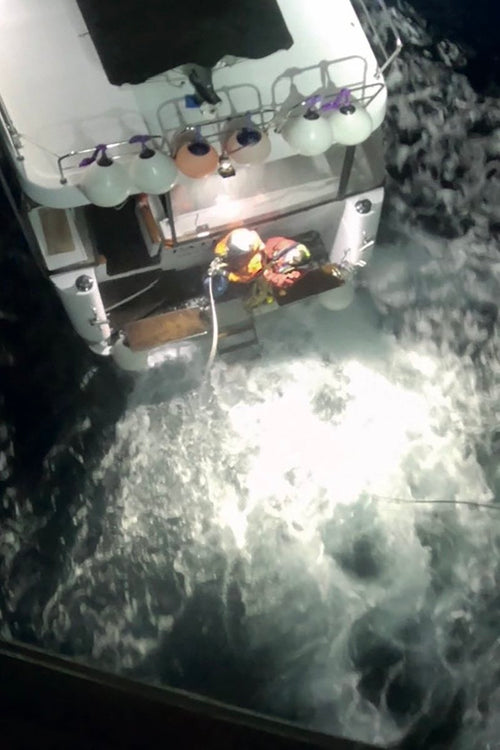
The payload capacity sits at 1,000 kilograms with a usable volume of 2.5 x 1.5 x 0.5 meters — enough room for serious commercial payloads, not just cubesat-scale experiments. Recovery is via parachute splashdown in the Pacific Ocean, with retrieval by boat. Notably, Starfall has no dedicated chemical propulsion for deorbit; it relies on its launch vehicle or an external kick-stage to come home, keeping the capsule design lean and repeatable. Attitude control during descent is handled by nitrogen cold-gas thrusters.
The capsule is compatible with both Falcon 9 and Starship, giving customers flexibility on cost and cadence depending on mission requirements.
From Demo Flights to Paying Customers
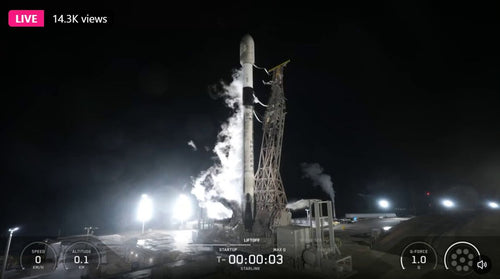
SpaceX didn't arrive at this commercial launch cold. The first Starfall demonstration mission flew on June 23, 2026, aboard a Falcon 9 from Cape Canaveral's Space Launch Complex 40. A second demonstration followed on October 20, 2026, as part of the Bandwagon-5 rideshare mission — the same flight that carried a payload for the U.S. Air Force Research Laboratory (AFRL). According to verified reports, AFRL used that October mission to test point-to-point rocket cargo delivery, recovering pods containing medical equipment and food ration packs on October 29. It's a proof-of-concept that extends Starfall's utility well beyond commercial science labs.
The formal service unveiling came on October 20, 2026, coinciding with that second demo flight. The new website and commercial positioning announced this week represent the next step: open enrollment.
Who's Already Signed Up
Three commercial contracts are already on the books, and the customer mix tells you a lot about where SpaceX sees the market:
- Space Cargo (Luxembourg) has contracted a 2028 Starfall mission launching on Starship — described as Starship's first commercial mission — carrying the company's BentoBox payload system for in-space manufacturing.
- Redwire's SpaceMD subsidiary has secured a 2028 mission to fly up to 32 of its Pharmaceutical In-Space Laboratory units (PIL-BOXes), targeting drug manufacturing applications in microgravity.
- Exolaunch has contracted a microgravity research mission slated for a Starship launch in 2029.
The pattern here is deliberate. SpaceX is seeding the customer base across pharmaceuticals, advanced manufacturing, and general research — three sectors with established demand for microgravity access but historically priced out by the cost and complexity of ISS-based experiments.
The Bigger Picture
The ISS has long been the only practical venue for sustained commercial microgravity work, but it comes with NASA scheduling constraints, limited berthing slots, and a station that is now operating well past its original design life with a planned deorbit before 2030. Starfall is positioning itself as the scalable, mass-producible alternative — a capsule SpaceX can build in volume and fly frequently, rather than a one-of-a-kind platform managed by committee.
The military angle adds another dimension. A successful AFRL point-to-point cargo test puts Starfall in contention for defense logistics contracts that go far beyond science payloads. If the capsule can reliably deliver cargo anywhere on Earth within hours via a suborbital or orbital profile, the addressable market expands considerably beyond the research community.
Two more Starfall missions are already confirmed for 2028, with a third in 2029 — all on Starship. That cadence will be the real test of whether SpaceX can deliver on the "routine" part of its "affordable, routine access" pitch. The demo flights proved the hardware works; the next two years will prove whether the business model does too.
🚀 Following the Starship program? See every test flight, official outcome and the next launch window in our SpaceX Starship Tracker.
Sources & reporting notes
The links below identify the material source records used for this report.
- @SawyerMerritt on X (2026-11-02T22:46:11.000Z) — Direct source
Source links are preserved as published or accessed. See our editorial standards and corrections policy.
The BASENOR Editorial Desk covers Tesla, SpaceX, and related technology, curating reporting from primary sources — official accounts, regulatory filings, and software release data. Every article passes source-record and fact-checking review before publication. About the newsroom.
This report was curated by the BASENOR Editorial Desk from the sources listed above. Read our editorial standards or email editorial@basenor.com to report an error.