
SpaceX's Starship Human Landing System program has a new milestone on the calendar: a full-scale Low Earth Orbit demonstration mission, now officially logged in the Launch Library 2 database with a target date of June 30, 2027. The mission, listed as Starship | SpaceX HLS LEO Demo, carries a "To Be Determined" status — meaning the date is a planning target, not a confirmed launch window — but its addition to the manifest signals that NASA and SpaceX are treating the mid-2027 timeline as a real commitment.
The stakes are significant. This isn't a routine Starship test flight. It's a pathfinder mission directly tied to NASA's Artemis III, the planned first crewed lunar landing since Apollo 17 in 1972.
What the Mission Actually Does
The HLS LEO Demo is designed to prove out one of the most technically demanding steps in the entire Artemis architecture: nose-to-nose docking between a Starship HLS test article and NASA's Orion spacecraft in low Earth orbit.
According to NASA's mission planning documents, the sequence works like this: Orion launches aboard the Space Launch System (SLS) and completes its own demonstrations in LEO — including a rendezvous with Blue Origin's Blue Moon lander. Then the Starship HLS pathfinder launches from Launch Complex 39A at Kennedy Space Center, Florida, climbs to a circularized orbit at approximately 460 kilometers altitude, and docks with Orion nose-to-nose. The two vehicles will remain connected for roughly one day while engineers run through checkouts and system tests.
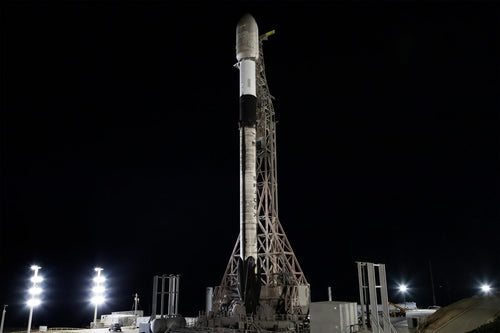
The Starship vehicle flying this mission will be a Version 3 configuration — approximately 52 meters (171 feet) tall — equipped with a docking mechanism compatible with Orion's interface. Critically, it will not carry a crew cabin or environmental control systems for this demonstration. The point is to validate the docking hardware and vehicle-control procedures, not to simulate a full lunar landing profile.
The Contract and Development Context
NASA awarded SpaceX a firm fixed-price contract in April 2021, valued at $2.89 billion, for Starship HLS development and two operational flights. In November 2022, NASA exercised "Option B" — worth an additional $1.15 billion — for a second-generation Starship HLS design intended to support Artemis IV, the second crewed lunar landing attempt, targeted for early 2028.
Development has been progressing in measurable increments. As of mid-November 2026, SpaceX's HLS team had completed 49 milestones covering subsystems, ground infrastructure, and operational procedures required for a lunar landing. That's a meaningful number, though the program's most technically novel challenge — ship-to-ship propellant transfer in orbit — had not yet been demonstrated as of late November 2026. SpaceX was targeting early 2027 for that test, which makes the timing tight relative to the June 2027 LEO Demo date.
For a full lunar mission, Starship HLS will require orbital refueling from an estimated 10 to 16 dedicated tanker flights before it can depart for the Moon. The LEO Demo sidesteps that complexity entirely — it's a docking and vehicle-control test, not a propellant-transfer exercise — but the tanker architecture still needs to be proven before Artemis III can proceed to an actual lunar landing.
Where This Fits in the Artemis Timeline
NASA revised the Artemis architecture in 2026, and the LEO Demo is now embedded in that updated plan as a prerequisite gate for Artemis III. If the June 2027 docking demonstration goes cleanly, it clears a major technical risk item before any crew boards Orion for the lunar transit. If it slips or surfaces hardware issues, the downstream Artemis III crewed landing — and the Artemis IV mission using the next-generation HLS — both move right.
For context on how Starship's broader flight cadence has been building toward this kind of operational role, the vehicle flew its first revenue mission in October 2026, deploying 26 Starlink V3 satellites, and Flight 15 marked the first return-to-launch-site catch attempt in November 2026. The program is accumulating operational experience quickly, but transitioning from those test flights to a precision orbital rendezvous with a crewed NASA spacecraft is a different category of mission assurance.
The "To Be Determined" status on the June 30 date is honest about where things stand — it's a planning anchor, not a launch commit. But its appearance in the official launch database means the mission is no longer just a line item in a contract. It's a scheduled event that NASA, SpaceX, and the broader Artemis team are now working toward. Follow our SpaceX coverage as the mission's readiness milestones come into focus over the next several months.
🚀 Following the Starship program? See every test flight, official outcome and the next launch window in our SpaceX Starship Tracker.
Sources & reporting notes
The links below identify the material source records used for this report.
- LL2 — Collected source record
Source links are preserved as published or accessed. See our editorial standards and corrections policy.
The BASENOR Editorial Desk covers Tesla, SpaceX, and related technology, curating reporting from primary sources — official accounts, regulatory filings, and software release data. Every article passes source-record and fact-checking review before publication. About the newsroom.
This report was curated by the BASENOR Editorial Desk from the sources listed above. Read our editorial standards or email editorial@basenor.com to report an error.