The News: Elon Musk confirmed SpaceX has now completed over 500 successful rocket landings.
Why It Matters: This milestone cements SpaceX's reusability lead, driving down launch costs and accelerating the cadence of missions that underpin Starlink — the satellite network increasingly relevant to Tesla owners and the broader EV ecosystem.
Source: @elonmusk on X
SpaceX Surpasses 500 Successful Rocket Landings — A Milestone That Rewrites the Economics of Space
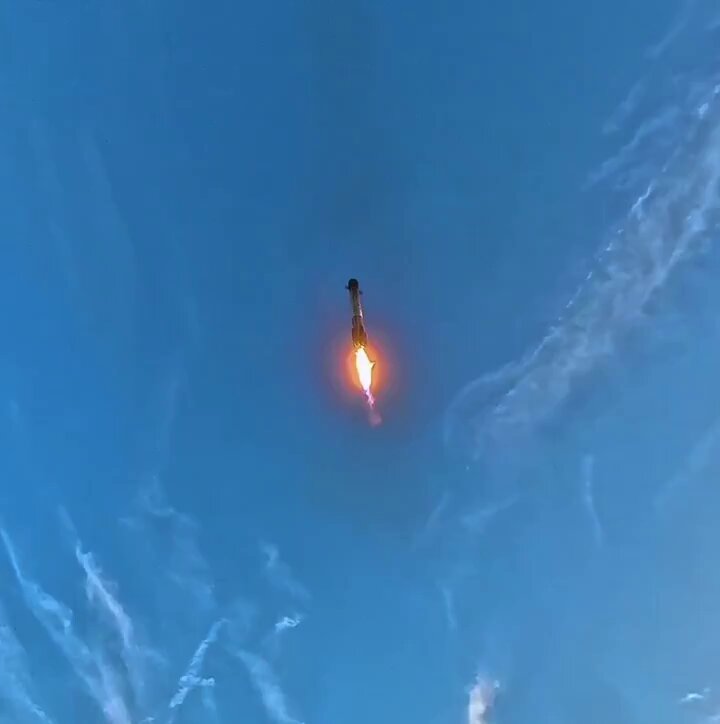
SpaceX has crossed a landmark that would have seemed like science fiction just a decade ago: over 500 successful rocket landings. Elon Musk confirmed the achievement in the early hours of March 27, 2026, with a characteristically brief post on X. Behind those four words is one of the most consequential engineering achievements in the history of spaceflight.

📊 Key Figures
| Metric | Value | Context |
|---|---|---|
| Total Successful Landings (Falcon family) | 589 | Out of 602 attempts |
| Falcon 9 Block 5 Landings | 564 | Out of 570 attempts |
| 500th Landing Mission | Starlink (28 sats) | Booster B1069, flight 27 |
| 500th Landing Site | JRTI Droneship | Off South Carolina coast |
| Overall Landing Success Rate | 97.8% | 589 of 602 attempts |
Sources: spacedaily.com, spaceflightnow.com, wikipedia.org — as of March 2026
From Impossible to Routine: How SpaceX Got Here
When SpaceX landed its first Falcon 9 booster back in December 2015, it was a genuine shock to the aerospace industry. Rockets were expendable by design — you built them, launched them, and watched them burn up or sink into the ocean. The idea of landing an orbital-class rocket upright on a pad or a drone ship at sea was widely dismissed as impractical.
SpaceX proved the skeptics wrong. Then they did it again. And again. The 500th successful landing — a Falcon 9 carrying 28 Starlink satellites, lifting off from Launch Complex 39A at NASA's Kennedy Space Center — was completed by booster B1069 on its 27th flight. The same hardware that launched 27 times. That single data point tells you everything about how dramatically reusability has matured.
According to background research, as of March 2026, Falcon family boosters have now successfully landed 589 times out of 602 attempts — a 97.8% success rate. For the Falcon 9 Block 5 variant specifically, the numbers are even tighter: 564 successful landings out of 570 attempts.
🔭 The BASENOR Take
Timeline: First successful booster landing — December 2015 → 100 landings → 500th landing (September 2025) → 589 landings as of March 2026
Impact Level: 🔴 High — Reusability at this scale fundamentally changes launch economics and mission cadence
Confidence: ✅ Confirmed — Elon Musk directly, corroborated by spaceflightnow.com and spacedaily.com
The number that matters most here isn't 500 — it's the cost trajectory that 500 landings represents. Every recovered booster is one that doesn't need to be manufactured from scratch. SpaceX has said publicly that a new Falcon 9 first stage costs roughly $30–40 million to produce. Reusing that hardware even twice cuts the per-launch cost dramatically. Reusing it 27 times, as booster B1069 has been, is a different category of economics entirely.
This matters for Starlink — and Starlink matters for the broader Tesla ecosystem. Tesla's Full Self-Driving and future autonomous vehicle infrastructure depend on connectivity. Starlink's rapid constellation expansion, enabled by low-cost reusable launches, is part of the connectivity backbone that makes global coverage viable. Cheaper launches mean faster constellation growth.
There's also a competitive dimension worth noting. No other launch provider has demonstrated anything close to this landing cadence or success rate. The gap between SpaceX and the rest of the industry on reusability isn't narrowing — it's widening. With Starship's own reusability program advancing in parallel, the next phase of this story involves hardware that dwarfs Falcon 9 in payload capacity while targeting the same rapid-reuse model.
📰 Deep Dive
Five hundred successful landings is a number that deserves to be put in historical context. The entire commercial space industry prior to SpaceX operated on the assumption that rocket hardware was single-use. That assumption shaped everything: manufacturing pipelines, launch pricing, mission planning, and the pace at which humanity could access orbit. SpaceX didn't just challenge that assumption — they dismantled it with data.
The 500th landing itself was quietly symbolic. Booster B1069, flying its 27th mission, is the kind of hardware that simply didn't exist in the aerospace playbook before SpaceX. A rocket booster with 27 flights on its airframe, still performing at a 97%+ fleet success rate, is an engineering and operational achievement that rivals anything in aviation. Commercial aircraft are certified for thousands of cycles, but they took decades to get there. SpaceX compressed that learning curve into roughly a decade of active iteration.
Looking at where the numbers stand today — 589 successful landings out of 602 attempts across the Falcon family — the consistency is as impressive as the volume. Early in the program, losses were expected and budgeted for. The fact that the fleet-wide failure rate is now under 3% means SpaceX is operating rocket recovery more like a logistics operation than an experimental program. That operational maturity is what enables the launch cadence Starlink requires, and it's what will underpin Starship's own reusability ambitions as that program matures. For anyone tracking the long arc of what SpaceX is building, 500 landings isn't a finish line — it's a proof of concept that's already been deployed at industrial scale.
Sources & reporting notes
The links below identify the material source records used for this report.
- @elonmusk on X (2026-03-27T02:59:48.000Z) — Direct source
Source links are preserved as published or accessed. See our editorial standards and corrections policy.
The BASENOR Editorial Desk covers Tesla, SpaceX, and related technology, curating reporting from primary sources — official accounts, regulatory filings, and software release data. Every article passes source-record and fact-checking review before publication. About the newsroom.
This report was curated by the BASENOR Editorial Desk from the sources listed above. Read our editorial standards or email editorial@basenor.com to report an error.