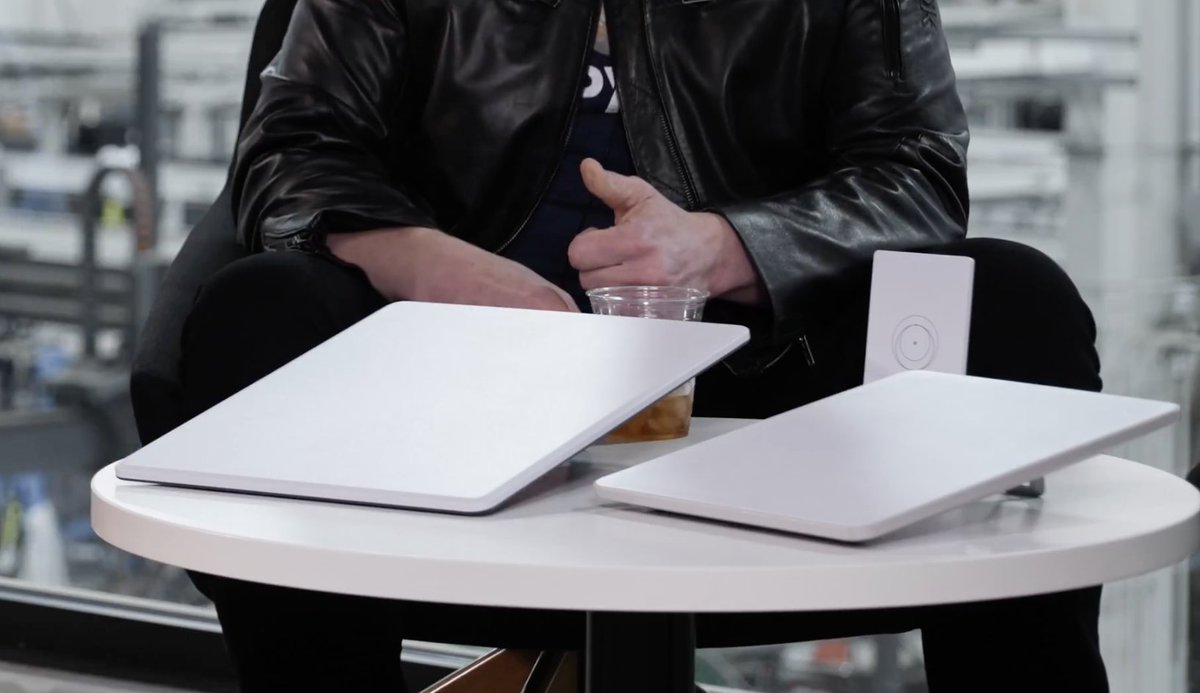
SpaceX has pulled back the curtain on a new generation of Starlink user terminals — hardware explicitly engineered for a scale the company has never attempted before. Elon Musk put the ambition plainly: the goal is "a few hundred million Starlink terminals out there." No specs or dimensions have been released yet, but the reveal signals that SpaceX is treating Starlink's ground hardware as a mass-market consumer product, not a niche satellite accessory.

The manufacturing infrastructure to back that vision is already being built. According to verified reporting, SpaceX has ramped Starlink kit production to over 170,000 units per week across U.S. facilities — roughly 9 million dishes per year at current rates. The company's primary terminal factory in Bastrop, Texas is targeting double that output by end of 2026, with a stated goal of 10 million kits annually once all production consolidates there.
Hitting "a few hundred million" terminals is a different order of magnitude entirely — one that would require sustained production at that elevated rate for decades, or a step-change in manufacturing capacity that hasn't been announced yet. What the next-gen hardware looks like under the hood, how it prices out, and whether it's designed to hit new market segments (vehicles, maritime, aviation, rural residential) remains unknown. SpaceX has offered no timeline for availability.
For context on why this matters beyond satellite internet: Starlink's terminal network is increasingly relevant to Tesla owners through the vehicle's connectivity stack, and SpaceX's manufacturing scale ambitions echo the same playbook Tesla used to drive down battery costs through volume. A cheaper, more widely deployed Starlink terminal could eventually mean more robust in-car connectivity options — but that connection remains speculative for now. Follow our SpaceX coverage as more details emerge from this reveal.
Sources & reporting notes
The links below identify the material source records used for this report.
- @SawyerMerritt on X (2026-06-08T22:31:51.000Z) — Direct source
Source links are preserved as published or accessed. See our editorial standards and corrections policy.
The BASENOR Editorial Desk covers Tesla, SpaceX, and related technology, curating reporting from primary sources — official accounts, regulatory filings, and software release data. Every article passes source-record and fact-checking review before publication. About the newsroom.
This report was curated by the BASENOR Editorial Desk from the sources listed above. Read our editorial standards or email editorial@basenor.com to report an error.