Starlink is preparing to leap from emergency texting to full 5G-grade mobile service from orbit. On September 17, the SpaceX-owned constellation operator confirmed that its next-generation Starlink Mobile offering will launch in partnership with Japanese carrier au (KDDI), leveraging the newly upgraded V2 satellite network to deliver what the company describes as 100x the data density of the current V1 fleet. The upshot: native voice calls, high-bandwidth apps, and video streaming — beamed directly to unmodified LTE and 5G-capable smartphones, with no dish and no specialized hardware required.
The announcement marks a significant escalation of the service formerly known as Direct to Cell, which to date has been limited to SMS and low-bandwidth data in most markets. If V2 delivers on its promise, Starlink Mobile would effectively become an orbital mobile network operator capable of competing with — and, more importantly, filling the coverage gaps of — terrestrial 5G carriers.

What V2 Actually Changes
The V1 Direct to Cell payloads currently flying were engineered around a modest goal: giving unmodified handsets a lifeline where terrestrial towers don't reach. That meant text messaging first, with limited data and voice trials rolling out through 2025. The physics constraint is straightforward — a satellite in low Earth orbit has a finite radio budget and must share spectrum across thousands of square kilometers of coverage footprint at once.
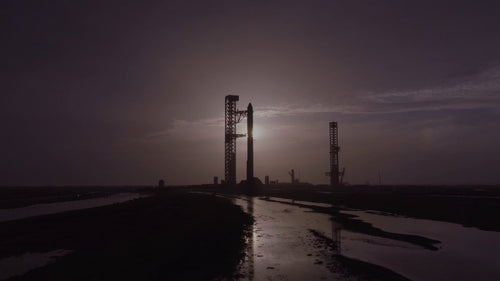
V2 attacks that constraint on two fronts. Larger satellites, launched on Starship rather than Falcon 9, can carry substantially bigger phased-array antennas and more onboard processing. According to previously published SpaceX filings, the V2 platform is designed to deliver an order-of-magnitude improvement in per-cell throughput while also enabling much narrower beam-forming — which is what the "100x data density" figure in the announcement refers to. More narrow beams over the same coverage area means more simultaneous users, higher per-user throughput, or both.
In practical terms, that's the difference between a satellite that can push an SMS to a hiker and one that can carry a FaceTime call from a boat 200 miles offshore.
Why the au Partnership Matters
The choice of au (KDDI) as the launch partner for the 5G service is not incidental. Japan is one of the most spectrum-constrained and geographically challenging mobile markets in the world — dense urban cores, mountainous rural interiors, and thousands of inhabited islands. It's a natural showcase for a service that promises to blanket-fill coverage gaps without the capex of building more terrestrial towers.
KDDI was also one of the earliest carriers globally to sign onto the original Direct to Cell program, alongside T-Mobile in the US, Rogers in Canada, and Optus in Australia. Extending that relationship into the V2 era gives Starlink a well-tested integration partner and a market where regulatory approval for satellite-to-phone service has already been secured.
Key Figures
| Metric | V1 (Current) | V2 (Next-Gen) |
|---|---|---|
| Data density | Baseline | 100x baseline |
| Primary use case | SMS, limited data | 5G speeds, calls, streaming |
| Device requirement | Standard LTE phone | Standard LTE/5G phone |
| Launch partner (announced) | T-Mobile, KDDI, others | au / KDDI (Japan) |
| Launch vehicle | Falcon 9 | Starship (larger payloads) |
The Competitive Picture
Starlink is not alone in the satellite-to-phone race, but the V2 announcement widens the technical gap. AST SpaceMobile has demonstrated 5G broadband from its BlueBird satellites in trials with AT&T and Verizon, but the constellation remains small — the company has publicly targeted a handful of operational satellites for initial service, versus Starlink's several hundred Direct to Cell birds already in orbit. Apple's Globalstar-based emergency SOS service, meanwhile, is intentionally scoped to safety messaging only.
The strategic question is no longer whether satellite-to-phone service will work — that debate ended in 2024. It's whether the service can scale to millions of concurrent users with enough throughput to feel like real 5G. Starlink's answer, per this week's announcement, is that V2 is the architecture designed to do exactly that.
What to Watch Next
Several signals will determine how quickly Starlink Mobile's 5G tier moves from announcement to reality:
- V2 launch cadence. The full V2 architecture depends on Starship reaching regular operational cadence. Every Starship launch that puts V2 hardware into orbit compresses the timeline.
- Additional carrier partnerships. T-Mobile in the US, Optus in Australia, and Rogers in Canada were early V1 partners. Formal upgrades to the 5G tier with those carriers would signal a global rollout is imminent.
- Regulatory approvals. Higher-power downlinks and broader spectrum use require FCC and international regulator sign-off. Filings in the coming months will show which countries are on the near-term list.
- Pricing. Neither Starlink nor au has disclosed how the 5G-from-space tier will be priced or whether it will be bundled into existing mobile plans, offered as a premium add-on, or sold direct.
Editor's View
Reading between the lines, this is the announcement that repositions Starlink Mobile from "emergency lifeline" to "real mobile network." The V1 rollout was a proof of concept — impressive, but nobody was canceling their carrier plan over it. A service that can genuinely deliver 5G speeds, native calls, and streaming to any modern smartphone in any location on Earth is a categorically different product, and it starts to make some of the long-standing assumptions about the mobile industry — including who owns the last mile of coverage — look suddenly negotiable. The engineering still has to deliver, and the "100x" figure is a marketing headline, not a per-user throughput guarantee. But if V2 lands as described, the mobile carrier map that made sense in 2024 will not be the map that makes sense in 2027.
🚀 Following the Starship program? See every test flight, official outcome and the next launch window in our SpaceX Starship Tracker.
Sources & reporting notes
The links below identify the material source records used for this report.
- @Starlink on X (2026-09-17T14:15:59.000Z) — Direct source
Source links are preserved as published or accessed. See our editorial standards and corrections policy.
The BASENOR Editorial Desk covers Tesla, SpaceX, and related technology, curating reporting from primary sources — official accounts, regulatory filings, and software release data. Every article passes source-record and fact-checking review before publication. About the newsroom.
This report was curated by the BASENOR Editorial Desk from the sources listed above. Read our editorial standards or email editorial@basenor.com to report an error.