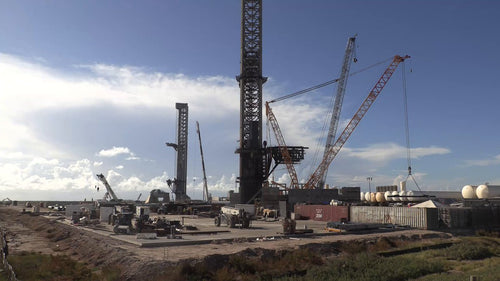
SpaceX has quietly been building out a constellation of programs that share more than just a naming convention. Starfall, Stargaze, and Starshield each target a distinct gap in the modern space economy — and together they suggest SpaceX is positioning itself as the infrastructure layer for everything that happens in orbit, not just transportation to get there.

1. Starfall — A Dedicated Capsule for Microgravity Research
Starfall is SpaceX's new uncrewed cargo capsule designed specifically for point-to-point delivery and return of payloads from orbit. Its primary market is microgravity research and in-space manufacturing — industries that have long struggled to get affordable, reliable access to the orbital environment and back.
According to FAA filings and environmental approvals issued in May 2026, the first Starfall demonstration mission launched on a Falcon 9 on June 23, 2026. The capsule is a disk-shaped vehicle — 3.1 meters in diameter and just 0.75 meters tall — with an empty mass of around 2,100 kg and a payload capacity of up to 1,000 kg. It relies on nitrogen cold-gas thrusters for attitude control during descent and a parachute-assisted splashdown for recovery, with initial test targets set approximately 1,300 km west of the U.S. Pacific coast. Notably, it can be carried to orbit by either Falcon 9 or Starship, giving it flexibility as SpaceX's launch cadence scales.
The design draws on SpaceX's deep experience with Dragon capsule reentry and Starship heat shield technologies, but Starfall is purpose-built for cargo return rather than crew transport — a leaner, lower-cost vehicle for the growing commercial microgravity market.
2. Stargaze — Space Situational Awareness at Unprecedented Scale
Stargaze is SpaceX's answer to one of the most pressing problems in modern spaceflight: knowing where everything in orbit actually is, in real time. Officially unveiled on February 18, 2026, it's a Space Situational Awareness (SSA) system built on top of the Starlink constellation itself.
The numbers are striking. Stargaze leverages nearly 30,000 star trackers already installed across the Starlink satellite fleet, detecting approximately 30 million object transits daily. According to SpaceX, that represents a several-order-of-magnitude improvement in detection capability over conventional ground-based radar systems. Conjunction screening — the process of calculating whether two objects are on a collision course — is delivered within minutes, compared to the industry-standard turnaround of several hours.
As LEO becomes increasingly congested, the ability to generate accurate, near-real-time orbit estimates for debris and active satellites is no longer a nice-to-have. Stargaze turns Starlink's scale from a liability (critics have long cited the constellation's contribution to orbital congestion) into an active safety asset for the broader spaceflight community.
3. Starshield — Secure Satellite Infrastructure for Specialized Applications
Starshield is the least publicly detailed of the three programs, but its positioning is clear: a hardened, secure satellite network built for applications that require a higher level of communications security than standard Starlink provides. The program is designed for specific use cases — government and defense customers are the most commonly cited — where standard commercial satellite services don't meet operational requirements.
Starshield builds on Starlink's existing low-Earth orbit infrastructure but adds security-focused architecture on top. SpaceX has described it as a separate service layer rather than a separate constellation, meaning it can scale with Starlink's continued growth while maintaining the access controls and encryption standards its target customers require.
Taken together, the three programs reveal a deliberate strategy. Starfall handles the physical logistics of getting payloads to and from orbit. Stargaze manages the safety and awareness layer that makes dense orbital operations sustainable. Starshield locks down the communications infrastructure for customers who need it. SpaceX isn't just launching rockets — it's building the operating system for low Earth orbit.
Sources & reporting notes
The links below identify the material source records used for this report.
- @SawyerMerritt on X (2026-06-23T17:59:25.000Z) — Direct source
Source links are preserved as published or accessed. See our editorial standards and corrections policy.
The BASENOR Editorial Desk covers Tesla, SpaceX, and related technology, curating reporting from primary sources — official accounts, regulatory filings, and software release data. Every article passes source-record and fact-checking review before publication. About the newsroom.
This report was curated by the BASENOR Editorial Desk from the sources listed above. Read our editorial standards or email editorial@basenor.com to report an error.