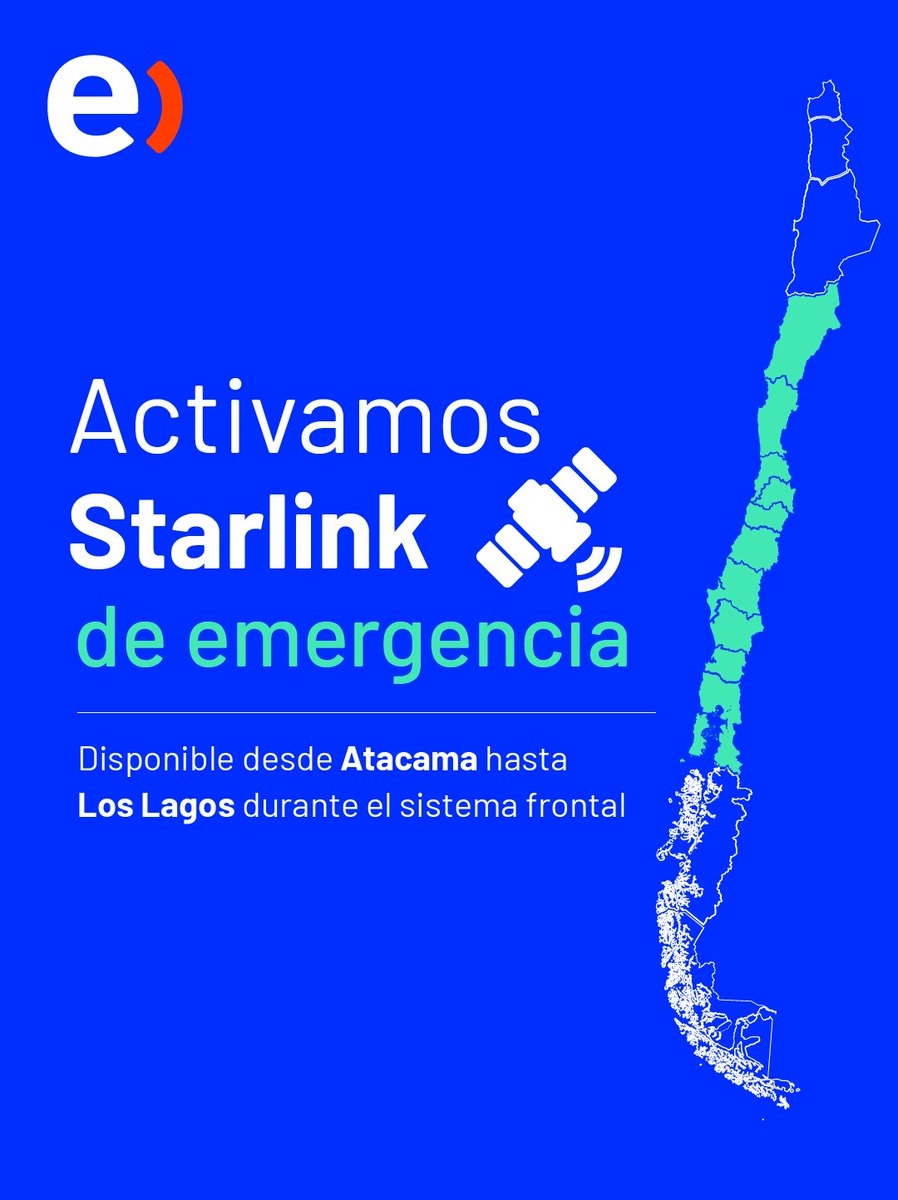
When a severe winter storm knocked out communications across parts of Chile this week, Starlink didn't wait for conditions to improve. The satellite network activated emergency connectivity for customers of Entel, Chile's leading telecom provider, giving storm-affected residents access to SMS messaging via satellite — no ground infrastructure required.

A Partnership Built for Exactly This Moment
The activation isn't improvised. Chile became the first country in Latin America to enable Starlink's Direct to Cell (D2D) technology back in November 2025, and the Entel–SpaceX commercial agreement was designed from the start with emergency resilience in mind. The idea: a conventional smartphone, with no special hardware, can reach a Starlink satellite when terrestrial towers go dark.
In practice, that means Entel subscribers in storm-affected areas can send and receive SMS messages to and from any carrier — a critical lifeline when roads are impassable and cell towers are down. According to Starlink's own documentation, messages may take a few minutes to transmit given the nature of low-Earth orbit satellite routing, and the current phase does not support photo, video, or audio messaging via apps like WhatsApp. Plain text SMS is the priority, and in a disaster scenario, that's often exactly what's needed.
How the Infrastructure Holds Up Under Pressure
Starlink's network is engineered to stay functional when ground-based systems fail. Its laser-linked satellite mesh can reroute traffic around downed ground stations, and the company has established protocols for rapid hardware deployment and proactive service credits for customers in affected regions.
The Entel relationship goes beyond software. In August 2025, the two companies — alongside Chilean NGO Desafío Levantemos Chile — launched the country's first mobile emergency operations center (EOC): a 4x4 vehicle equipped with a fixed Starlink antenna, Wi-Fi, voice call capability, mobile phone charging stations, and external screens for coordination. That kind of pre-positioned infrastructure means emergency responders aren't starting from zero when a storm hits.
The Bigger Picture for Satellite-to-Cell
Chile's storm response is a real-world stress test for a technology that's still rolling out globally. The Direct to Cell model — satellites communicating directly with unmodified smartphones — has been one of the most closely watched developments in the telecom industry, precisely because it doesn't require carriers to upgrade handsets or install new towers in remote terrain.
For a country like Chile, where geography ranges from the Atacama Desert to Patagonian fjords, the implications are significant. Starlink has also been providing broadband connectivity to helicopter operations in Chile's southern mountain ranges since at least mid-2026, according to available reports — a sign that the network's Chilean footprint extends well beyond urban coverage zones.
The July 2026 storm activation is the most direct demonstration yet that the Entel partnership functions as advertised under real emergency conditions. Whether SMS-only capability is sufficient for the full scope of disaster response — or whether voice and data need to follow quickly — will likely shape how other Latin American carriers approach similar agreements going forward.
Sources & reporting notes
The links below identify the material source records used for this report.
- @Starlink on X (2026-07-19T01:17:53.000Z) — Direct source
Source links are preserved as published or accessed. See our editorial standards and corrections policy.
The BASENOR Editorial Desk covers Tesla, SpaceX, and related technology, curating reporting from primary sources — official accounts, regulatory filings, and software release data. Every article passes source-record and fact-checking review before publication. About the newsroom.
This report was curated by the BASENOR Editorial Desk from the sources listed above. Read our editorial standards or email editorial@basenor.com to report an error.