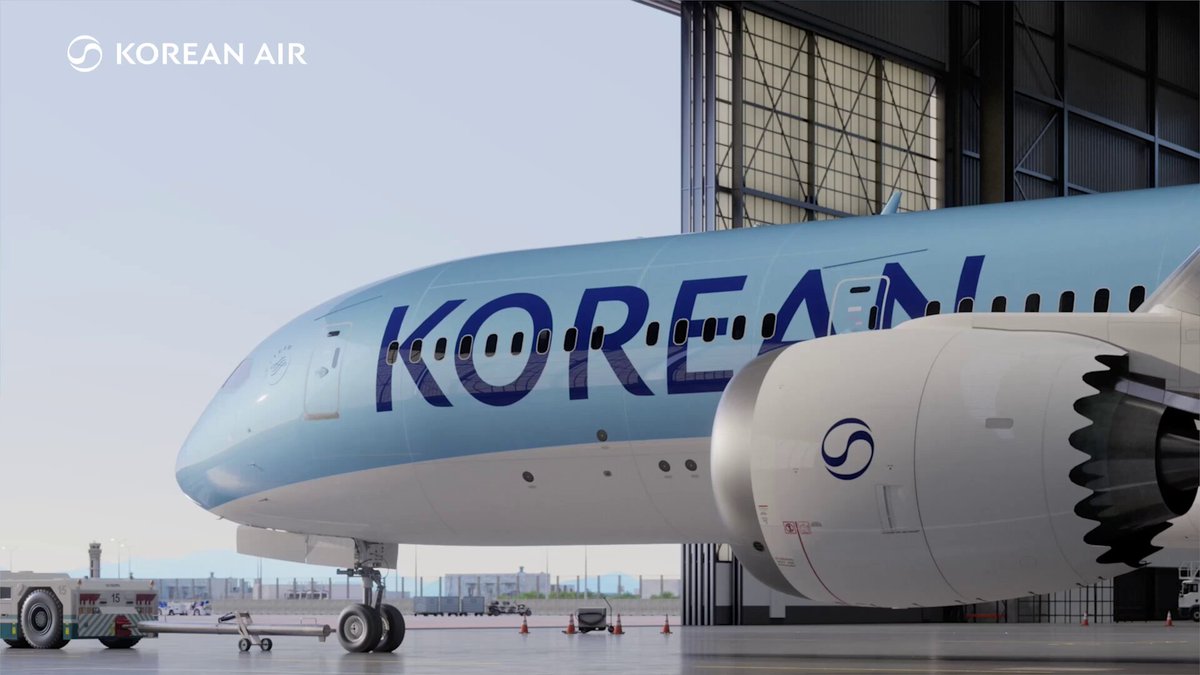
Starlink Aviation has officially crossed into East Asia. Korean Air activated the service on September 15, 2026, making it the first full-service airline in the region to offer SpaceX's satellite-based in-flight Wi-Fi — and the rollout is bigger than the headline suggests.

1. Four Aircraft Are Live Right Now
The service launched on four newly retrofitted widebody jets: three Airbus A350-900s and one Boeing 777-300ER. These aren't future plans — they're flying today. Retrofitting widebody long-haul aircraft is a significant hardware undertaking, so starting with four frames gives Korean Air a real-world operational baseline before expanding to the rest of the fleet.
2. Asiana Airlines Is Also Part of the Deal
The announcement goes beyond Korean Air alone. Asiana Airlines — currently in the process of merging with Korean Air — is simultaneously rolling out Starlink on ten aircraft: nine Airbus A350-900s and one A330-300. That brings the combined day-one fleet to 14 Starlink-equipped aircraft, according to aviation industry reporting. The timing of both carriers launching together is almost certainly coordinated ahead of their pending consolidation.

3. The Wi-Fi Is Free for Every Passenger
There's no paywall, no premium tier, no per-device fee. According to reporting from multiple aviation outlets, Starlink connectivity is provided free of charge to all passengers across all cabin classes. That's a meaningful differentiator — most legacy in-flight Wi-Fi systems either charge by the hour or gate the faster speeds behind a subscription. Free access across economy and business alike removes the friction that has historically kept in-flight internet usage low.
4. Connecting Is Straightforward
Passengers connect by switching their device to airplane mode, joining the in-cabin Wi-Fi network, and then entering their passenger name and seat number from their boarding pass to authenticate. No app download, no account creation. The boarding pass verification step is a standard practice that ties usage to a confirmed passenger, which also helps the airline manage network load across a full widebody cabin.
5. Most of Both Fleets Should Be Equipped by End of 2027
Korean Air and Asiana Airlines have both committed to progressively expanding Starlink across most of their in-service fleets by the end of 2027, according to aviation industry sources. That's an aggressive timeline given the hardware installation required on each airframe, but it signals genuine institutional commitment rather than a limited pilot program. For Starlink Aviation, landing a major flag carrier — and its merger partner simultaneously — is a significant foothold in a market where in-flight connectivity has historically lagged behind North America and Europe.
The East Asia expansion adds a strategically important region to Starlink Aviation's airline roster. Whether the free-to-passenger model holds as fleets scale up will be worth watching — but for anyone flying Korean Air or Asiana on an equipped aircraft today, the experience is available immediately. Check your flight's aircraft type before boarding; the A350-900 and 777-300ER frames are the ones to look for right now.
Sources & reporting notes
The links below identify the material source records used for this report.
- @Starlink on X (2026-09-15T00:12:59.000Z) — Direct source
- @SawyerMerritt on X (2026-09-15T00:26:00.000Z) — Direct source
Source links are preserved as published or accessed. See our editorial standards and corrections policy.
The BASENOR Editorial Desk covers Tesla, SpaceX, and related technology, curating reporting from primary sources — official accounts, regulatory filings, and software release data. Every article passes source-record and fact-checking review before publication. About the newsroom.
This report was curated by the BASENOR Editorial Desk from the sources listed above. Read our editorial standards or email editorial@basenor.com to report an error.