Elon Musk confirmed Monday that SpaceX will begin deploying its next-generation Starlink V3 constellation this month, marking the most significant capacity upgrade in the network's history. The new satellites are engineered to ultimately deliver more than 100 times the total bandwidth of the current 11,000-satellite fleet — a step-change that hinges entirely on Starship's ability to reach orbit with a payload bay full of the massive new spacecraft.
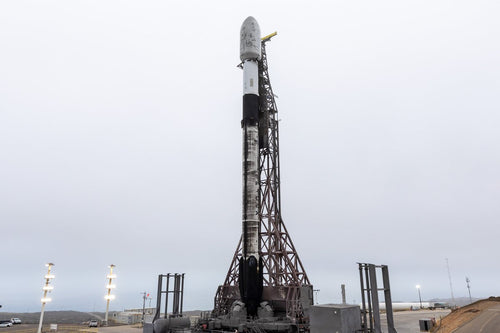
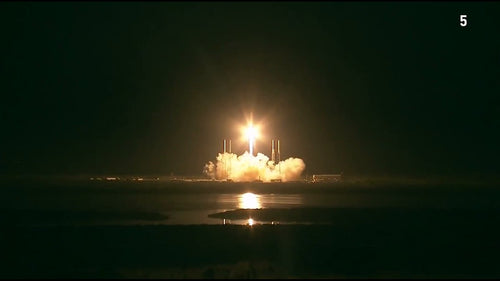
The announcement compresses a timeline that industry watchers had expected to slip into 2027. According to space.com, the first operational V3 satellites are targeted for deployment on Starship Flight 14, currently scheduled no earlier than September 22, 2026.

What V3 Actually Changes
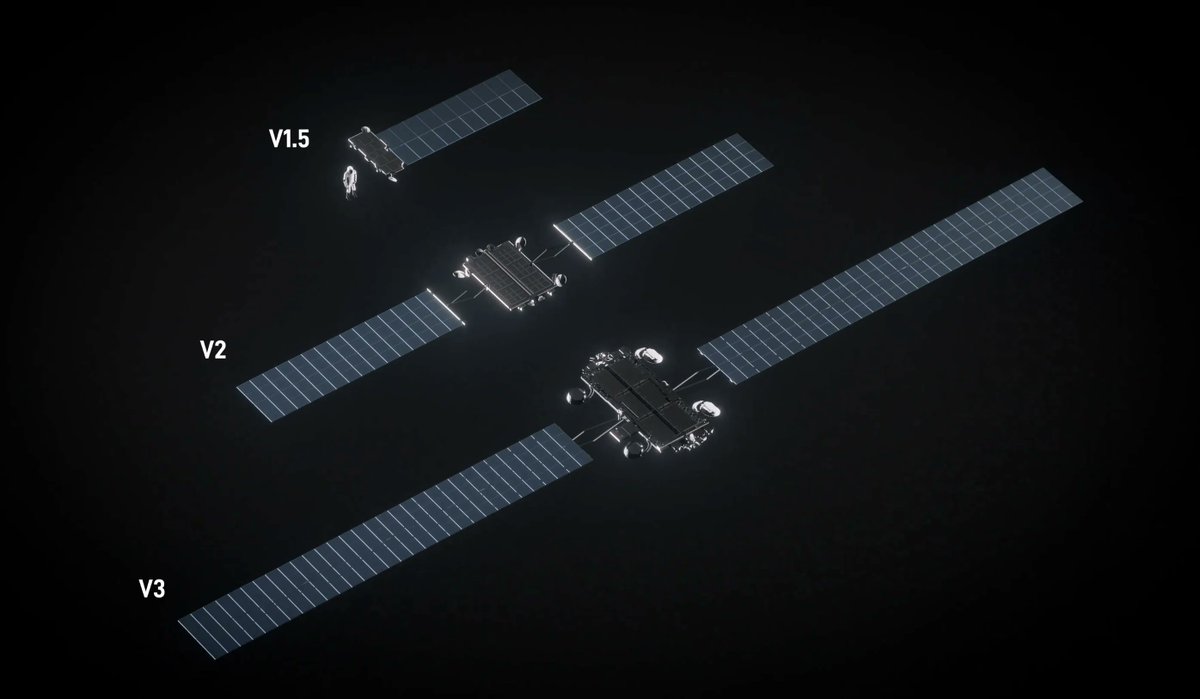
Starlink V3 is not an incremental refresh. Each satellite is designed to deliver roughly 1 Tbps (1,024 Gbps) of downlink capacity and 160 Gbps of uplink, according to specifications published by SpaceX and reported by PCMag. That works out to an approximately 10x jump in downlink per satellite and a 22x to 24x increase in uplink compared to the V2 Mini units that currently make up the operational fleet.
The 100x total-network figure Musk referenced isn't just per-satellite math — it reflects the combined effect of higher-capacity spacecraft, larger constellation size over time, and the physical size of V3 units, which are too big for Falcon 9 and can only be launched by Starship. That constraint is why the V3 rollout timeline is effectively locked to Starship's operational cadence.
Key Figures
| Metric | Current (V2 Mini) | V3 |
|---|---|---|
| Per-satellite downlink | ~100 Gbps | 1,024 Gbps (1 Tbps) |
| Per-satellite uplink | ~7 Gbps | 160 Gbps |
| Current constellation size | ~11,000 satellites | Deployment begins Sept 2026 |
| Launch vehicle | Falcon 9 | Starship (exclusive) |
| Total network bandwidth gain | — | >100x at maturity |
How We Got Here
SpaceX has been staging toward V3 deployment for more than a year. Suborbital tests in July 2026 successfully released V3 satellites during Starship flights, but those spacecraft were designed to de-orbit quickly and served as pathfinders for the deployment hardware rather than operational units, according to reporting from space.com and multiple industry trackers.
Flight 14 is expected to be the first mission to place V3 satellites into a stable orbit for sustained operation. That transition — from test article to revenue-generating asset — is the pivot point Musk's announcement is signaling. If Flight 14 succeeds, SpaceX will begin the multi-year process of overlaying V3 capacity on top of the existing V2 Mini fleet rather than replacing it wholesale.
Why 100x Bandwidth Matters
The current Starlink network serves roughly 6 million subscribers globally across residential, maritime, aviation, and enterprise segments. Congestion has become an increasingly visible issue in dense markets, particularly in the continental US and parts of Europe, where per-user speeds have compressed as subscriber growth outpaced capacity additions.
A 100x total-bandwidth uplift, delivered gradually over the V3 deployment window, does several things at once. It clears headroom for continued subscriber growth without service degradation. It makes gigabit-tier residential plans economically viable in regions that currently top out at a few hundred megabits. And it opens meaningful capacity for direct-to-cell service, which SpaceX has been rolling out in partnership with T-Mobile and other carriers, and which competes for spectrum and bandwidth with the standard consumer service.
For enterprise and government customers — a segment SpaceX has been aggressively expanding into — the V3 upgrade also raises the ceiling on maximum guaranteed throughput, which matters for use cases like military communications, offshore energy platforms, and airline connectivity.
The Starship Dependency
There's no V3 rollout without a working Starship. Each V3 satellite is physically too large to fit inside a Falcon 9 fairing, meaning Starship's launch cadence is a hard ceiling on how fast the new constellation can be built. SpaceX has been steadily increasing Starship flight frequency through 2026, but the vehicle is still in the phase where each flight is a major event rather than routine.
Musk's decision to publicly commit to a September deployment start puts pressure on the Flight 14 schedule. A slip past September would mean the announcement's timing was aspirational, which SpaceX has done before but which carries reputational cost when it becomes a pattern.
What to Watch Next
- Flight 14 launch date: Currently NET September 22, 2026. Any slip pushes the operational deployment claim into October.
- First orbital V3 deployment sequence: Whether the Pez-style dispenser works cleanly at operational scale, not just in suborbital tests.
- Subscriber-facing speed changes: Watch for gradual upward movement in real-world speed tests over the next 6–12 months as V3 capacity comes online.
- Direct-to-cell service expansion: V3 capacity should accelerate the rollout of premium tiers with T-Mobile and other carrier partners.
For Tesla owners running SpaceX coverage through Starlink at home, in vehicles, or on RVs, the V3 rollout is a slow-burn upgrade rather than an overnight change. Capacity will build gradually as satellites reach orbit, are commissioned, and enter service. But the direction of travel is now confirmed — the ceiling on what Starlink can deliver just got dramatically higher, and the first hardware to unlock it is scheduled to fly within days.
🚀 Following the Starship program? See every test flight, official outcome and the next launch window in our SpaceX Starship Tracker.
Sources & reporting notes
The links below identify the material source records used for this report.
- @elonmusk on X (2026-09-15T18:50:34.000Z) — Direct source
Source links are preserved as published or accessed. See our editorial standards and corrections policy.
The BASENOR Editorial Desk covers Tesla, SpaceX, and related technology, curating reporting from primary sources — official accounts, regulatory filings, and software release data. Every article passes source-record and fact-checking review before publication. About the newsroom.
This report was curated by the BASENOR Editorial Desk from the sources listed above. Read our editorial standards or email editorial@basenor.com to report an error.