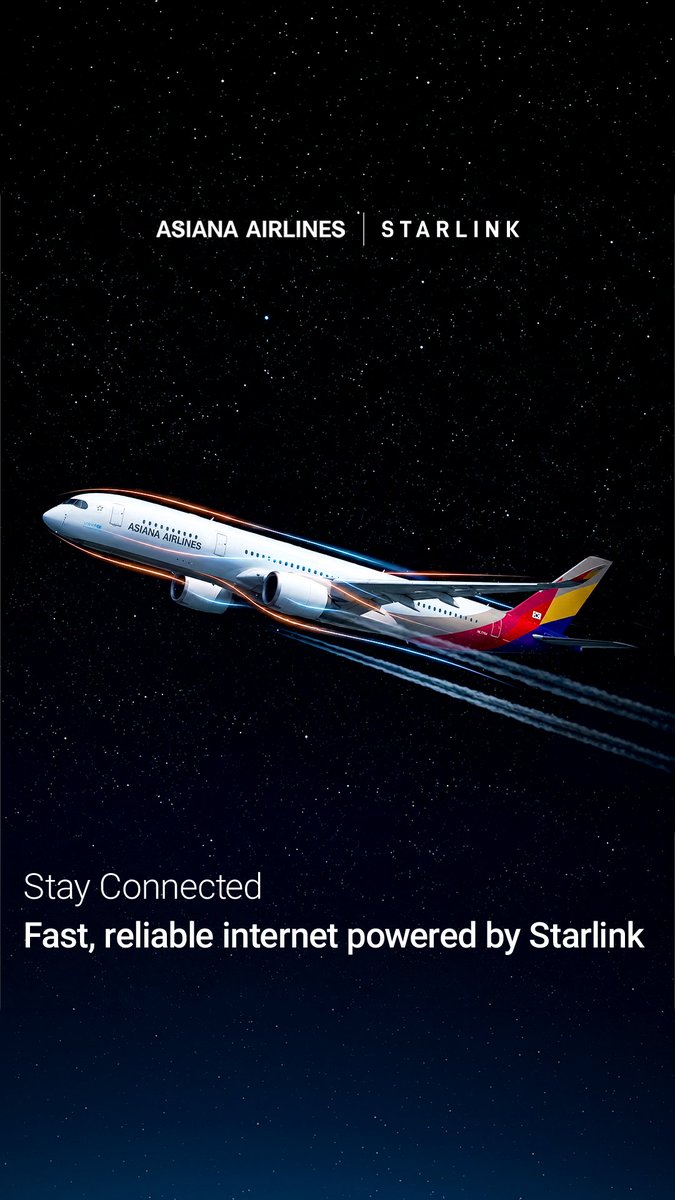
Starlink has officially gone live on Asiana Airlines, marking a notable expansion of SpaceX's satellite internet service into East Asian commercial aviation. As of September 15, 2026, passengers on select Asiana flights can connect to high-speed satellite Wi-Fi at no charge — a meaningful shift in what travelers on long-haul routes out of South Korea can expect from their in-flight experience.

A Regional First With Real Scale Behind It
This isn't just another airline adding Wi-Fi. According to reporting from Aviation Week and flyasiana.com, this rollout represents the first time a full-service carrier in East Asia has adopted Starlink's satellite internet system — a distinction that carries weight given how competitive the region's aviation market is and how long legacy in-flight connectivity providers have dominated it.
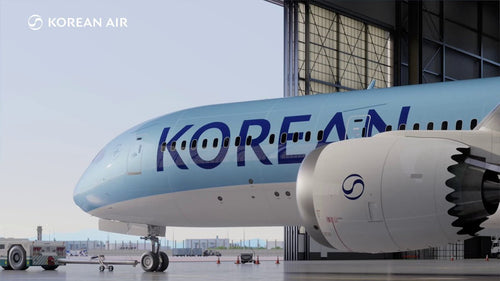
The scope of the launch is also broader than the Asiana announcement alone suggests. Korean Air — which is in the process of merging with Asiana into a unified carrier expected to complete by December 2026 — is simultaneously rolling out Starlink on its own aircraft. Combined, the two airlines launched with 14 Starlink-equipped planes on day one: nine Asiana A350-900s, one Asiana A330-300, three Korean Air A350-900s, and one Korean Air Boeing 777-300ER. Both carriers plan to expand the service to the majority of their operating fleets by the end of 2027.
The Numbers Behind the Launch
| Detail | Asiana Airlines | Korean Air |
|---|---|---|
| Day-one aircraft | 10 (9× A350-900, 1× A330-300) | 4 (3× A350-900, 1× B777-300ER) |
| Cost to passengers | Free, all cabin classes | Free, all cabin classes |
| Fleet expansion target | Majority of fleet by end of 2027 | Majority of fleet by end of 2027 |
| Primary routes served | Americas, Europe, Southeast Asia (medium- and long-haul); some shorter routes | |
| Merger timeline | Unified Korean Air expected December 2026 | |
How It Actually Works Onboard
According to Asiana's published guidance, the connection process is straightforward: switch your device to Airplane Mode, enable Wi-Fi, select the airline's dedicated network (wifi.flyasiana.com), agree to the in-flight etiquette terms, and watch a brief required advertisement. No app download or account registration is needed — passengers enter their name and seat number and they're online. The service runs gate to gate, though availability may be restricted over certain countries due to local regulatory requirements.
Starlink's satellite architecture means speeds are described as comparable to ground-based broadband — sufficient for streaming, gaming, cloud collaboration tools, and general browsing. That said, the airlines have put guardrails in place: voice and video calls, live streaming, and unauthorized filming are prohibited to preserve cabin comfort. Earphone use is mandatory.
Why This Matters Beyond the Announcement
Starlink has been expanding its aviation partnerships steadily, but breaking into East Asia's full-service carrier segment is a different kind of milestone. The region's major carriers have historically relied on legacy satellite connectivity providers — slower, more expensive, and often paywalled. Offering Starlink free across all cabin classes, from economy to business, removes the friction that typically keeps most passengers offline. That's a competitive pressure point that other carriers in the region will have to respond to.
The timing also aligns with the Korean Air–Asiana merger, which means Starlink is effectively being written into the connectivity strategy of what will become one of Asia's largest combined carriers. If the 2027 fleet-wide rollout proceeds on schedule, Starlink will be the default in-flight internet provider for a significant share of transpacific and Europe-bound traffic out of Seoul. For SpaceX's aviation segment, that's a foothold worth watching. Follow our SpaceX coverage for updates as the rollout progresses.
Sources & reporting notes
The links below identify the material source records used for this report.
- @Starlink on X (2026-09-15T02:25:27.000Z) — Direct source
Source links are preserved as published or accessed. See our editorial standards and corrections policy.
The BASENOR Editorial Desk covers Tesla, SpaceX, and related technology, curating reporting from primary sources — official accounts, regulatory filings, and software release data. Every article passes source-record and fact-checking review before publication. About the newsroom.
This report was curated by the BASENOR Editorial Desk from the sources listed above. Read our editorial standards or email editorial@basenor.com to report an error.