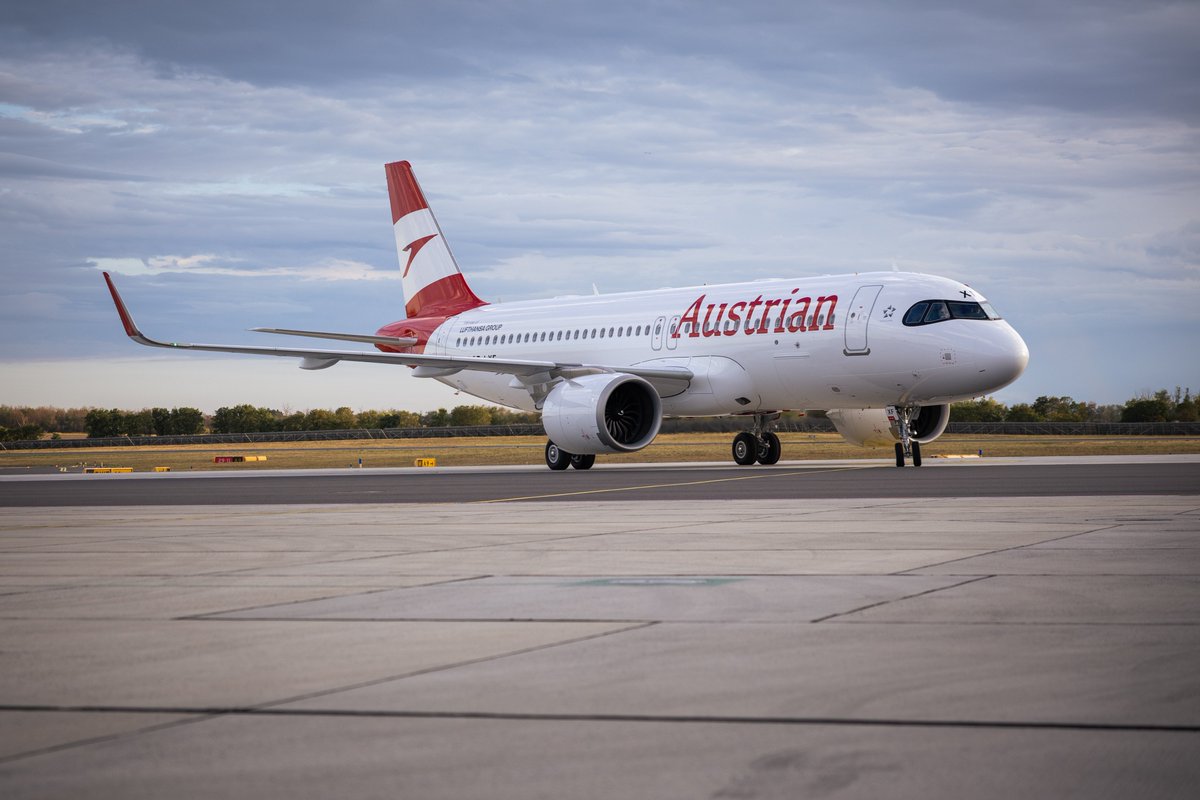
Starlink Aviation has gone live on Austrian Airlines, with the first Starlink-equipped flight departing Vienna for Porto on September 7, 2026. The activation marks another step in a group-wide rollout that will eventually touch roughly 850 aircraft across the Lufthansa Group — and it sets a new benchmark for what passengers can expect from in-flight connectivity.

How the Lufthansa Group Rollout Unfolded
The Lufthansa Group announced its Starlink partnership in January 2026, with installations beginning across the fleet in the second half of the year. The first commercial Lufthansa Group flight to carry Starlink was a Lufthansa Airbus A320neo (registration D-AINM) operating flight LH234 from Frankfurt to Rome on August 19, 2026. Austrian Airlines followed less than three weeks later, with an A320neo (OE-LXF) making the Vienna–Porto run the inaugural Starlink-equipped service for the Austrian carrier.
The sequencing matters: Lufthansa Group is not retrofitting its entire fleet at once. Austrian Airlines has set a near-term target of equipping 20 aircraft by the end of the 2026/27 winter schedule, with the A320 family and Boeing 787 Dreamliner fleets both in scope. Group-wide completion is targeted for 2029, according to Lufthansa Group.
The Numbers Behind the Connection
| Metric | Figure |
|---|---|
| Typical download speed | 100–300 Mbps |
| Peak speed (test flights) | 450+ Mbps |
| Latency | Under 99 ms |
| Cost to passengers | Free for Miles & More / Travel ID members |
| Lufthansa Group fleet target | ~850 aircraft |
| Austrian Airlines target (winter 26/27) | 20 aircraft |
| Full group rollout completion | 2029 |

Why This Partnership Is Worth Watching
In-flight Wi-Fi has historically been the aviation industry's most complained-about amenity — slow, expensive, and unreliable enough that most business travelers simply stopped trying. Starlink's low-Earth orbit constellation changes the physics of the problem. Unlike traditional geostationary satellite systems that sit 35,000 km above the equator and introduce 600+ ms of latency, Starlink's LEO satellites orbit at roughly 550 km, cutting round-trip signal time dramatically. The sub-99 ms latency figure reported on Austrian Airlines flights puts real-time video calls and cloud-based work within reach — not just optimistic marketing copy.
The pricing model is equally significant. By making the service free for Miles & More members and passengers with a Travel ID account — across all travel classes — Austrian Airlines and Lufthansa Group are treating connectivity as a baseline expectation rather than a premium upsell. That's a structural shift in how European carriers position the product, and it puts pressure on competitors still charging per-session fees for inferior connections.
For SpaceX, the Lufthansa Group contract represents one of the most visible enterprise deployments of Starlink Aviation to date. An 850-aircraft commitment from a major global airline group is a meaningful proof point for the business aviation segment, which Starlink has been expanding aggressively alongside its maritime and residential products. Follow our SpaceX coverage for updates as the group-wide rollout progresses toward its 2029 target.
Sources & reporting notes
The links below identify the material source records used for this report.
- @Starlink on X (2026-09-07T18:58:21.000Z) — Direct source
Source links are preserved as published or accessed. See our editorial standards and corrections policy.
The BASENOR Editorial Desk covers Tesla, SpaceX, and related technology, curating reporting from primary sources — official accounts, regulatory filings, and software release data. Every article passes source-record and fact-checking review before publication. About the newsroom.
This report was curated by the BASENOR Editorial Desk from the sources listed above. Read our editorial standards or email editorial@basenor.com to report an error.