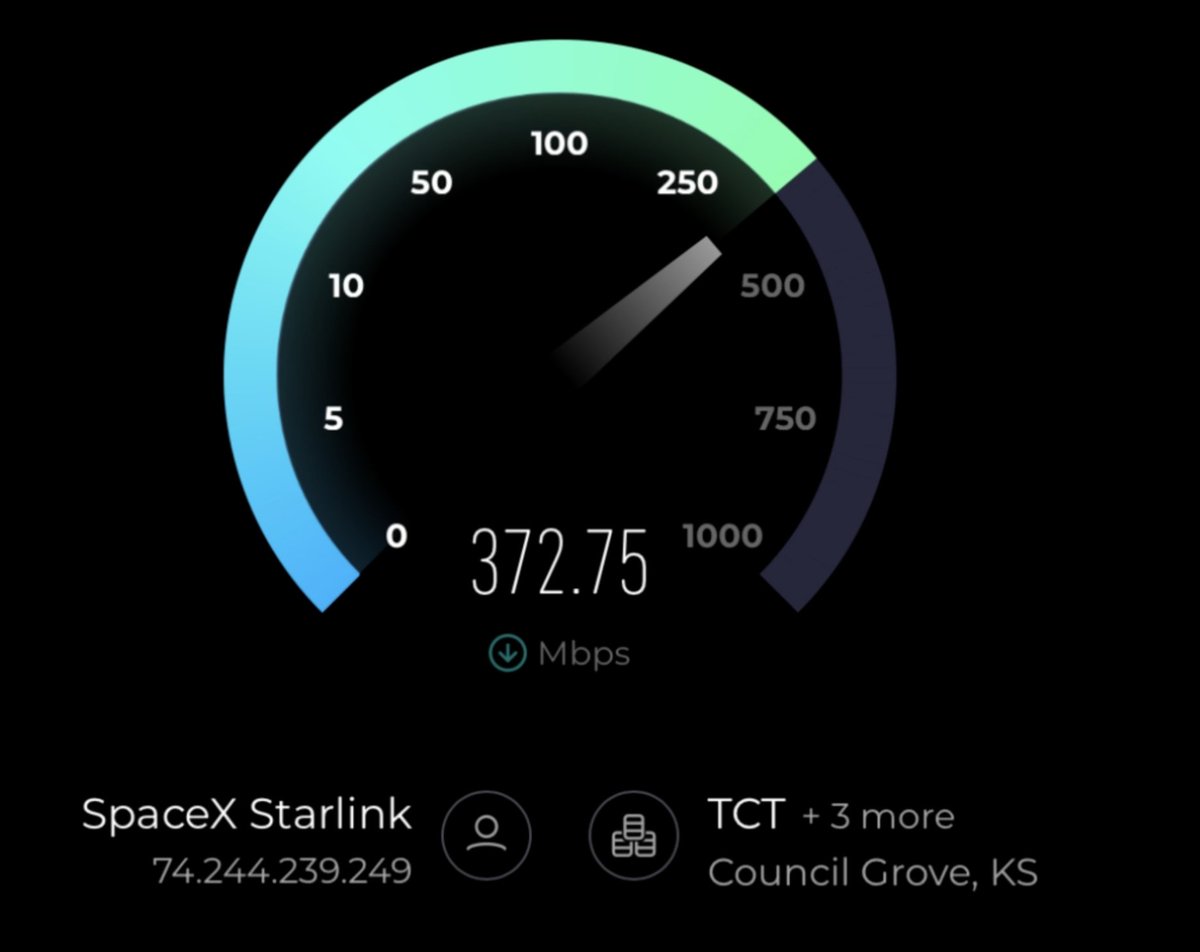
In-flight Wi-Fi has been a punchline for years — slow, unreliable, and barely good enough for email. Starlink Aviation is changing that fast. Tech reporter Sawyer Merritt shared a first-hand account of hitting 370+ Mbps on a United Airlines flight this week, and the numbers behind the experience are worth unpacking properly.

1. 370+ Mbps — at cruise altitude
Merritt clocked reliable speeds above 370 Mbps while his United Airlines plane cruised at 576 mph and 35,000 feet. For context, that is faster than the home broadband connection most Americans have. According to background research, a separate test in June 2026 recorded a peak of 370 Mbps and an average of roughly 253 Mbps with 49ms latency — consistent with what Merritt experienced. United itself advertises expected speeds of 40–200 Mbps on Starlink-equipped aircraft, meaning real-world performance is already running ahead of the airline's own published figures.
2. 215x faster than non-Starlink in-flight Wi-Fi
Merritt had flown on a non-Starlink flight immediately before this one, giving him a direct back-to-back comparison. His verdict: Starlink was approximately 215 times faster. That is not a marginal upgrade — it is a category change. Legacy in-flight Wi-Fi systems typically rely on older satellite or air-to-ground networks that deliver single-digit or low double-digit Mbps on a good day, often shared across hundreds of passengers.
3. Starlink's ceiling is far higher than 370 Mbps
What Merritt experienced is not even close to Starlink Aviation's theoretical ceiling. According to Starlink's own pricing pages, the Aviation Global Unlimited plan — which requires the Performance Antenna — advertises speeds up to 1 Gbps. The Regional Unlimited plan tops out at 500 Mbps. The 370 Mbps reading reflects real-world conditions on a commercial aircraft mid-flight, not a controlled benchmark, which makes it more impressive, not less.
4. United Airlines is mid-rollout, with 300+ regional jets already equipped
United is not running a small pilot program. According to industry reports, more than 300 regional jets were already Starlink-equipped as of mid-2026, with a target of over 800 aircraft by the end of the year and full fleet completion expected by late 2027. Globally, more than 1,400 commercial planes across all airlines had Starlink hardware installed as of early August 2026. If you are flying United in the second half of 2026, there is a reasonable chance your plane already has it — or will soon.
5. The hardware and plan costs explain why it is an airline-tier product
Starlink Aviation is not a consumer add-on. Installing the system on a business jet runs approximately $200,000 in hardware alone — up from $145,000 previously. The commercial Aviation Global Unlimited plan is priced at $20,000 per month, with the Regional Unlimited tier at $12,500 per month. These are airline and corporate operator costs, not passenger-facing fees. For travelers, the experience shows up as a Wi-Fi option on the booking or boarding process, with pricing set by the individual carrier. United has been offering it as a complimentary benefit for MileagePlus members on equipped aircraft.
The gap between Starlink-equipped flights and everything else is now wide enough that passengers will start actively seeking it out when booking. Whether airlines treat that as a competitive differentiator — or eventually a baseline expectation — may be the more interesting question for the next few years of aviation. For now, 370 Mbps at 35,000 feet is a data point that is hard to argue with.
Sources & reporting notes
The links below identify the material source records used for this report.
- @SawyerMerritt on X (2026-08-14T00:49:06.000Z) — Direct source
Source links are preserved as published or accessed. See our editorial standards and corrections policy.
The BASENOR Editorial Desk covers Tesla, SpaceX, and related technology, curating reporting from primary sources — official accounts, regulatory filings, and software release data. Every article passes source-record and fact-checking review before publication. About the newsroom.
This report was curated by the BASENOR Editorial Desk from the sources listed above. Read our editorial standards or email editorial@basenor.com to report an error.