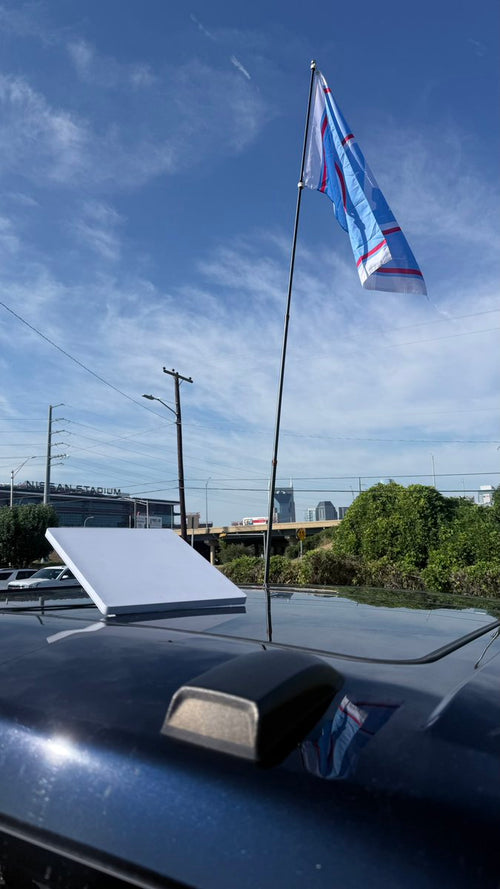
Elon Musk highlighted Starlink's growing presence in Bolivia on September 14, sharing footage of the service reaching rural communities in a country where traditional internet infrastructure has long left millions behind. The post is brief, but the story behind it isn't — Bolivia has become one of Starlink's more ambitious emerging-market deployments of 2026.

How Bolivia Got Here
Starlink's path into Bolivia wasn't straightforward. The country had previously restricted foreign satellite internet providers from operating commercially — a policy that kept Starlink out even as neighboring markets opened up. That changed in late 2025, when President Rodrigo Paz signed Supreme Decree 5509, explicitly authorizing global satellite internet operators to do business within Bolivia's borders. The government framed internet access as a basic service, particularly for rural schools and health centers where fiber and cellular infrastructure simply doesn't reach.
Commercial service launched on February 2, 2026. By mid-May — roughly three months in — Starlink had accumulated approximately 40,000 active connections in the country, according to available market data. For context, that's a faster early adoption curve than many Latin American markets saw at comparable stages.
The Numbers Behind the Rollout
| Metric | Figure |
|---|---|
| Commercial launch date | February 2, 2026 |
| Active connections (mid-May 2026) | ~40,000 |
| Residential plan starting price | BOB 460/month |
| Download speeds | 135–310 Mbps |
| School antennas planned | 5,000+ |
| Students and teachers connected (as of June 5, 2026) | 1,000+ across 14 schools |
| Initial focus departments | La Paz, Cochabamba, Santa Cruz |
The Connected Classroom Program
The most concrete expression of Starlink's rural push is Bolivia's government-backed "Connected Classroom" initiative. The plan calls for more than 5,000 Starlink antennas to be installed across unconnected rural and semi-urban schools nationwide, with state-owned telecom operator Entel overseeing the rollout. As of early June, 14 schools had already come online, connecting over 1,000 students and teachers in the process. The government's stated target is nationwide school coverage by the end of 2026.
Entel is also in negotiations to become a Starlink reseller — a partnership model SpaceX has used effectively in other markets to accelerate distribution without building a direct retail presence from scratch. If that deal closes, it would give Starlink access to Entel's existing customer base and distribution network across the country.
Why This Market Matters
Bolivia is landlocked, mountainous, and has one of the lowest fixed broadband penetration rates in South America. Those are exactly the conditions where low-earth orbit satellite internet has a structural advantage over ground-based alternatives — no trenching, no towers, no last-mile problem. The 135–310 Mbps speed range Starlink is delivering in-country is also a significant step up from what most rural Bolivians have had access to historically.
Musk's post doesn't announce a new product or a policy change — it's a signal that Bolivia is becoming a reference case for how Starlink enters a government-regulated emerging market: regulatory unlock, rapid consumer adoption, and then a structured public-sector program that embeds the service into national infrastructure. Whether the 5,000-school target gets hit by year-end will be the real test of that model's execution speed.
For Starlink's broader Latin American footprint, Bolivia joins a growing list of countries where the service has moved from novelty to infrastructure. The question now is whether Entel's reseller negotiations conclude in time to accelerate the final push into the country's most remote departments before the 2026 deadline.
Sources & reporting notes
The links below identify the material source records used for this report.
- @elonmusk on X (2026-09-14T11:30:04.000Z) — Direct source
Source links are preserved as published or accessed. See our editorial standards and corrections policy.
The BASENOR Editorial Desk covers Tesla, SpaceX, and related technology, curating reporting from primary sources — official accounts, regulatory filings, and software release data. Every article passes source-record and fact-checking review before publication. About the newsroom.
This report was curated by the BASENOR Editorial Desk from the sources listed above. Read our editorial standards or email editorial@basenor.com to report an error.