Starlink Hits 10 Million Users: What This Means for Tesla Owners
⚡ 30-Second Brief
The News: Starlink officially crossed 10 million active customers across 160 countries and territories, confirmed by SpaceX leadership including Elon Musk and President Gwynne Shotwell.
Why It Matters: SpaceX's satellite internet success directly influences Tesla's connectivity roadmap—from in-car streaming to FSD data transmission and future Robotaxi networks requiring reliable global coverage.
Source: @Starlink, @elonmusk, @Gwynne_Shotwell

📊 Key Figures
| Metric | Figure | Context |
|---|---|---|
| Active Customers | 10,000,000+ | Up from 8M in Nov 2025, 9M in late Dec 2025 |
| Geographic Coverage | 160 countries/territories | Expanded from ~150 countries previously reported |
| Daily New Customers | 20,000+ | According to verified reports from early Feb 2026 |
| Year-Over-Year Growth | 2x | From ~5M users in early 2025 to 10M in Feb 2026 |

🔭 The BASENOR Take
📅 Timeline: Immediate milestone announcement coordinated across official SpaceX/Starlink channels and leadership within minutes of each other—classic SpaceX celebration pattern.
⚡ Impact Level: HIGH — This validates Starlink's viability as infrastructure for Tesla's autonomous future and global connectivity ambitions.
🎯 Confidence: CONFIRMED — Multiple official sources including CEO, President, and corporate channels.
Analysis:
The 10 million user milestone represents more than just subscriber growth—it's proof of concept for satellite-based global connectivity at scale. For Tesla owners, this matters because:
- FSD Data Infrastructure: Full Self-Driving requires continuous cloud connectivity for map updates, fleet learning, and safety monitoring. Starlink's proven ability to serve 10M+ users globally demonstrates the infrastructure exists to support millions of autonomous vehicles.
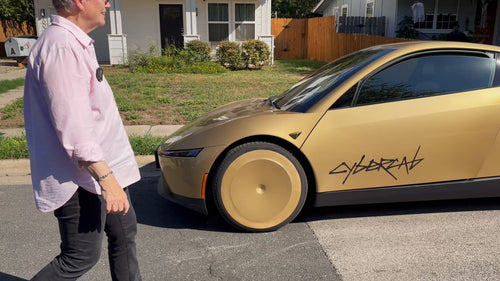
- Cybercab & Robotaxi Networks: Tesla's planned autonomous taxi service needs reliable connectivity in every market—urban, suburban, and rural. Starlink's 160-country footprint provides that foundation.
- In-Car Entertainment Evolution: With Starlink's bandwidth proven at scale, the path clears for 4K streaming, cloud gaming, and real-time video calls in Tesla vehicles—features Musk has hinted at previously.
- Manufacturing & Service Coordination: Tesla Gigafactories and Service Centers in remote locations benefit from Starlink's reliability, enabling better coordination and faster software deployment.

The Growth Trajectory That Changes Everything
The velocity of Starlink's expansion tells the real story. According to verified reports, the service doubled its user base in less than a year—jumping from approximately 5 million customers in early 2025 to 10 million in February 2026. Even more striking: Starlink added its last million users in roughly six weeks, growing from 9 million in late December 2025 to crossing the 10 million threshold this week.
This acceleration pattern mirrors Tesla's own production scaling curves—slow initial ramp, then exponential growth as manufacturing and logistics mature. SpaceX reportedly reached a production milestone in June 2025 by manufacturing its 10 millionth Starlink terminal, with the second 5 million units produced in just 11 months compared to nearly four years for the first 5 million.
For context, current reports indicate Starlink is onboarding more than 20,000 new customers daily. At that rate, the service could approach 15 million users by year-end 2026, creating a connectivity network larger than many traditional ISPs—but with truly global reach.
What This Means for Your Tesla
While Tesla vehicles don't currently offer Starlink connectivity as a standard feature, the infrastructure SpaceX is building has direct implications for your ownership experience:
Short-term (2026-2027): Expect pilot programs testing Starlink connectivity in Tesla vehicles, likely starting with the Cybercab autonomous platform where constant connectivity is mission-critical. Current Tesla Premium Connectivity relies on cellular networks, which have gaps in coverage—especially in rural areas and between urban centers.
Medium-term (2027-2028): As Starlink's user base and satellite constellation continue expanding, integration into consumer Tesla models becomes economically viable. This could manifest as an optional connectivity tier offering higher bandwidth for streaming, gaming, and work-from-car scenarios during charging sessions.
Long-term (2028+): A fully autonomous Tesla fleet operating as Robotaxis requires the kind of ubiquitous, low-latency connectivity that only satellite networks can provide globally. Starlink's 10 million user milestone proves the business model works at scale—removing a major question mark from Tesla's autonomy roadmap.
📰 Deep Dive
The coordinated announcement across multiple SpaceX leadership accounts—Starlink's official channel, Elon Musk, Gwynne Shotwell, and senior executives—reflects the internal significance of this milestone. It's not just a vanity metric; it's validation of a decade-long bet that satellite internet could compete with terrestrial networks.
What makes this achievement particularly relevant to Tesla owners is the shared DNA between both companies. SpaceX's Starlink division and Tesla both operate under Elon Musk's "first principles" philosophy: identify the fundamental constraints, then engineer around them. For Starlink, the constraint was launch cost—solved by reusable Falcon 9 rockets. For Tesla, it was battery cost—solved by vertical integration and Gigafactory scale.
Now both technologies are converging. Tesla's autonomous driving ambitions require global connectivity infrastructure that doesn't exist through traditional cellular networks alone. Rural highways, mountain passes, international routes—these are exactly the coverage gaps Starlink fills. The 160-country footprint announced in today's milestone matches or exceeds Tesla's own vehicle sales territories, creating natural alignment.
The timing also aligns with Tesla's accelerating FSD development. As Full Self-Driving moves toward unsupervised autonomy in 2026-2027, the need for redundant, always-available connectivity becomes non-negotiable. You can't have a Robotaxi lose connection in the middle of a fare. Starlink's proven ability to serve 10 million simultaneous users—many in remote or underserved areas—demonstrates the technical foundation exists to support Tesla's next chapter.
For the 500,000+ Tesla owners in the BASENOR community, this milestone is a signal: the infrastructure for truly global, always-connected autonomous driving is no longer theoretical. It's live, it's scaling, and it's proven.
🚕 Following the Robotaxi rollout? See every operating city, launch date and announced market in our Tesla Robotaxi Tracker.
Related Gear
Gear up your Tesla with tested, custom-fit BASENOR accessories — shop Tesla accessories →
Sources & reporting notes
The links below identify the material source records used for this report.
- @elonmusk on X (2026-02-13T23:18:30.000Z) — Direct source
- @Starlink on X (2026-02-13T23:04:30.000Z) — Direct source
- @Gwynne_Shotwell on X (2026-02-13T23:26:16.000Z) — Direct source
- @michaelnicollsx on X (2026-02-13T23:08:32.000Z) — Direct source
Source links are preserved as published or accessed. See our editorial standards and corrections policy.
The BASENOR Editorial Desk covers Tesla, SpaceX, and related technology, curating reporting from primary sources — official accounts, regulatory filings, and software release data. Every article passes source-record and fact-checking review before publication. About the newsroom.
This report was curated by the BASENOR Editorial Desk from the sources listed above. Read our editorial standards or email editorial@basenor.com to report an error.