
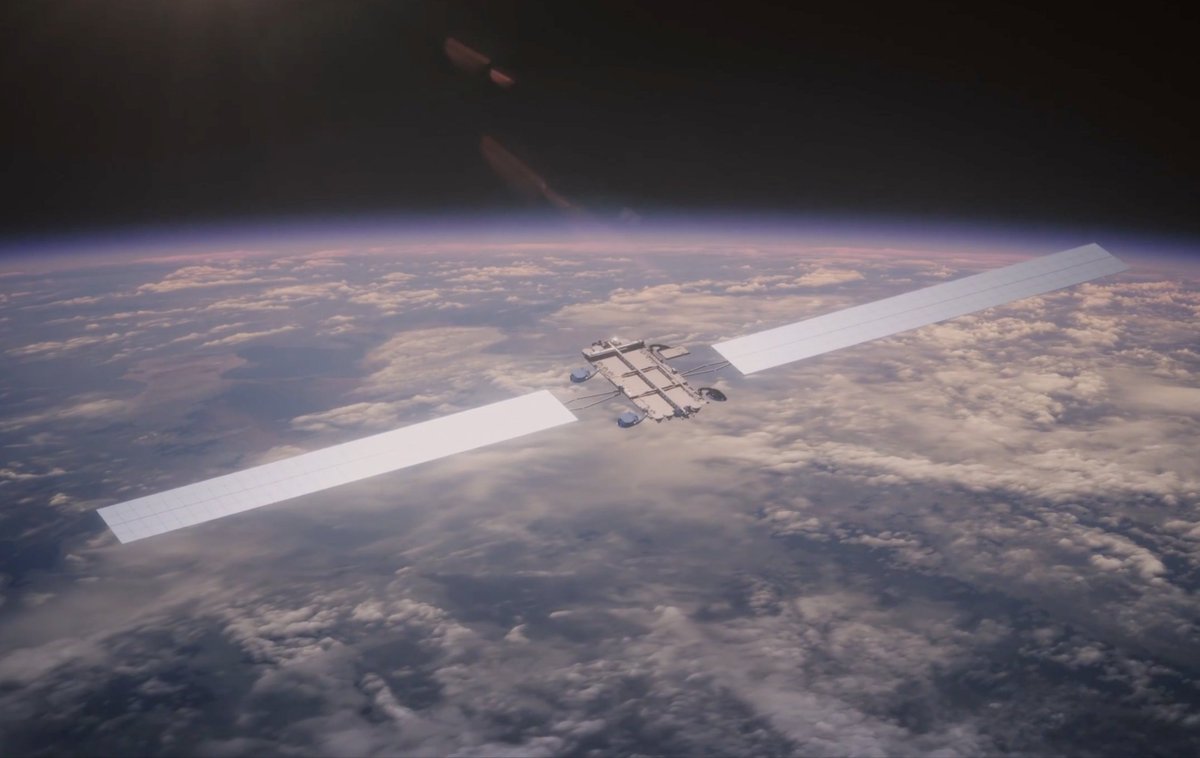
Elon Musk said Tuesday that SpaceX's next-generation Starlink Mobile direct-to-cell satellites will deliver more than 100 times the bandwidth of the first-generation system currently in orbit. The claim, posted to X on October 7, lands one day after the Federal Communications Commission cleared SpaceX to launch 15,000 of the new V2 spacecraft — a regulatory green light that reframes Starlink Mobile from a backup texting service into a credible rival to traditional cellular carriers.
For Tesla owners, the implication is direct: the connectivity layer that already stitches together vehicle telemetry, Supercharger routing, and in-car streaming is about to get a satellite backbone that works with standard phones, no specialized hardware required.

What Musk Actually Said
Musk's post was short but specific: V2 satellites will enable "more than 100 times the bandwidth of our current V1 system." That figure aligns with technical descriptions SpaceX has shared across 2026, which frame the generational leap as roughly 20x throughput per individual satellite combined with a much larger overall constellation — compounding into the 100x total system capacity Musk is referencing.
According to coverage from PCMag and Notebookcheck, the V2 spacecraft are physically larger than V1 units, carry custom SpaceX-designed silicon, and use advanced phased array antennas capable of forming thousands of simultaneous spatial beams. In practical terms, that means the constellation can slice coverage into far more individual cells, each serving its own set of users at higher data rates — the satellite equivalent of densifying a cell network with more towers.
Key Figures
| Metric | V1 (Current) | V2 (Next-Gen) |
|---|---|---|
| System bandwidth | Baseline | 100x+ |
| Per-satellite throughput | Baseline | ~20x |
| Estimated user speed | ~4 Mbps | Up to 150 Mbps |
| Service type | SMS, limited data | Full 5G voice, video, browsing |
| Launch vehicle | Falcon 9 | Starship |
According to PCMag, the V2 generation is designed to push peak user speeds up to roughly 150 Mbps — a figure that would place satellite-to-phone performance in the same conversation as mid-band terrestrial 5G, rather than the SMS-and-emergency-messaging tier that V1 established.
Why the FCC Decision Matters
The 100x bandwidth claim would be theoretical without the regulatory piece that fell into place on October 6. The FCC approved SpaceX's application to launch and operate 15,000 next-generation Starlink Mobile satellites, authorized to orbit as low as 326 kilometers. More consequentially, the agency granted a waiver that lets SpaceX offer wireless service directly to consumers without first signing a spectrum-leasing agreement with a terrestrial mobile operator.
That waiver is the hinge. Under the previous framework, Starlink's direct-to-cell service functioned as a supplement to partners like T-Mobile, which lent SpaceX spectrum in exchange for coverage extension. The new authorization opens a path for SpaceX to compete head-on with carriers rather than hitch onto them — a structural shift that explains why Musk is comfortable publicly pre-selling the V2 performance envelope.
How We Got Here
SpaceX rebranded its direct-to-cell product as "Starlink Mobile" in March 2026, signaling that the service was moving from engineering demo to consumer product. The V1 constellation, launched aboard Falcon 9, proved the core technical thesis: an unmodified LTE phone can connect to a low-Earth-orbit satellite as if it were a distant cell tower. But V1's bandwidth ceiling kept the service narrow, mostly useful for text messaging and emergency connectivity in dead zones.
The V2 satellites are heavier and larger — too much so for Falcon 9 at scale — which ties the full constellation buildout to Starship cadence. That coupling is why the system's rollout timeline is less a function of satellite production and more a function of how quickly Starship transitions to routine payload operations.
What It Means for Tesla Owners
Tesla vehicles already lean on connectivity for navigation, Supercharger routing, streaming, and over-the-air software delivery. A Starlink Mobile service that works with ordinary phones at 5G-class speeds changes the surrounding environment in a few concrete ways:
- Remote-area usability. Owners road-tripping through connectivity gaps — rural highways, national parks, mountain passes — would retain data access for the Tesla app, remote climate control, and sentry notifications even where terrestrial carriers drop out.
- Backup for in-car features. The vehicle's own LTE modem is independent of a passenger's phone, but features that rely on tethering or hotspot fallbacks become more reliable when the phone itself has satellite coverage.
- Carrier competition. If SpaceX begins offering standalone Starlink Mobile plans without a terrestrial partner, pricing pressure on the US wireless market could shift — relevant to any Tesla owner paying for Premium Connectivity through a bundled carrier plan.
None of this requires new hardware in the car. The relevant upgrade happens in the sky and on the handset side.
What to Watch Next
Three signals will determine how fast the 100x number translates into real-world coverage:
- Starship payload cadence. The V2 satellites depend on Starship launches. Watch for the first operational Starlink Mobile V2 deployment mission.
- Carrier partnership status. Will T-Mobile remain the US anchor partner, or will SpaceX begin selling direct consumer plans under the waiver?
- Beta rollouts. V1's text-only service rolled out in staged beta waves. Expect V2 voice and data to follow a similar pattern, likely starting with existing Starlink Mobile users.
The 100x figure is a system-capacity claim, not a guaranteed per-user speed — real performance will depend on how many satellites are in view, how many users share a beam, and how quickly SpaceX fills out the 15,000-satellite authorization. But the regulatory and technical pieces are now aligned in a way they weren't 48 hours ago, and that's the meaningful shift.
🚀 Following the Starship program? See every test flight, official outcome and the next launch window in our SpaceX Starship Tracker.
Related Gear
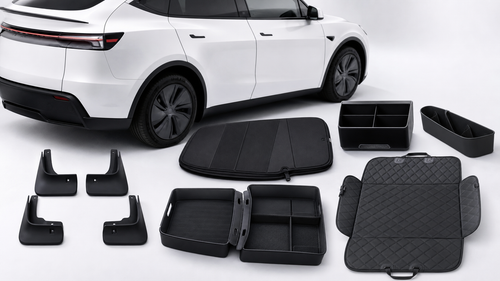
Gear up your Tesla with tested, custom-fit BASENOR accessories — shop Tesla accessories →
Related coverage
Sources & reporting notes
The links below identify the material source records used for this report.
- @elonmusk on X (2026-10-07T15:21:31.000Z) — Direct source
Source links are preserved as published or accessed. See our editorial standards and corrections policy.
The BASENOR Editorial Desk covers Tesla, SpaceX, and related technology, curating reporting from primary sources — official accounts, regulatory filings, and software release data. Every article passes source-record and fact-checking review before publication. About the newsroom.
This report was curated by the BASENOR Editorial Desk from the sources listed above. Read our editorial standards or email editorial@basenor.com to report an error.