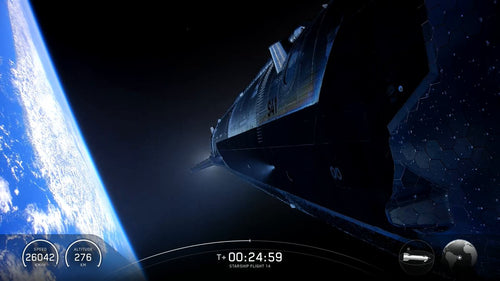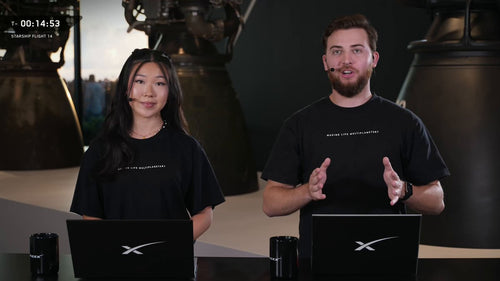
Starlink says the next generation of its constellation is finally in orbit — and it's a step change, not an incremental upgrade. In a post on Sunday, the SpaceX-owned internet service announced that Starlink V3 satellites deployed on the latest Starship flight will bring an order of magnitude improvement in network capacity, allowing SpaceX to connect more users worldwide while lifting per-user speeds.
The announcement caps a milestone mission for Starship, which according to SpaceX carried out its first operational payload deployment on this flight after being cleared by the FAA on September 26. For Starlink customers — from rural households to Tesla owners using the in-car connectivity trial — a 10x capacity leap has direct implications for reliability, speed, and coverage.

What "Order of Magnitude" Actually Means
Starlink's phrasing is deliberate. An order of magnitude means roughly 10x — not 10% or 2x. Applied to the constellation's aggregate throughput, that scale of improvement reshapes what the network can offer. It's the difference between a network that occasionally throttles peak-hour users in congested cells and one that can absorb dense traffic while opening capacity for entirely new markets.
V3 satellites are physically larger and heavier than the V2 Mini birds that Falcon 9 has been lifting since 2023. Falcon 9's fairing simply couldn't accommodate the full V3 design. That's why Starship's arrival as an operational launch vehicle matters so much for Starlink's roadmap — the bigger rocket unlocks the bigger satellite, which in turn unlocks the capacity leap Starlink is now advertising.
Why This Launch Was the Bottleneck
According to SpaceX, this Starship flight represented the vehicle's first orbital mission with a real payload deploy. Prior test flights validated launch, staging, reentry, and catch attempts, but Starlink V3 was always the commercial payoff SpaceX was building toward. The FAA's September 26 approval cleared the final regulatory hurdle after prior delays.
Starship's payload capacity — roughly an order of magnitude larger than Falcon 9's — is what makes V3 economically viable. Instead of launching 20-plus V2 Mini satellites per Falcon 9, SpaceX can now lift a smaller number of far more powerful V3 units per Starship flight. Once the launch cadence ramps, the constellation's total capacity curve steepens dramatically.
What Users Should Expect
Starlink's own framing points to two customer-facing outcomes: more users and better service for existing users. In practice, that likely translates to:
- Higher peak speeds in cells that were previously congestion-limited, particularly in North America and Europe where subscriber density is highest.
- Expanded eligibility in regions where Starlink had capped new signups due to capacity constraints — a waitlist problem the company has publicly acknowledged in the past.
- Better performance for mobility products, including Starlink Roam, maritime, aviation, and the direct-to-cell service that shares constellation capacity.
- Lower latency variance as more capacity per cell reduces contention during peak hours.
None of this happens overnight. A single Starship flight of V3 satellites doesn't rewrite the network — it seeds it. The real user-visible improvement scales with how quickly SpaceX can turn Starship into a high-cadence launcher, something Elon Musk has said is the primary focus for 2026 and 2027.
The Bigger Picture for SpaceX
Starlink is now SpaceX's revenue engine, and the V3 upgrade directly supports the business case for Starship's expensive development program. Every capacity constraint the network hits — throttled cells, capped signups, competing mobility demand — is a revenue ceiling. Removing that ceiling by 10x is the sort of upgrade that justifies the billions SpaceX has poured into Starship over the past five years.
It also strengthens Starlink's competitive moat. Rivals building competing LEO constellations face a fundamental physics problem: without a Starship-class launcher of their own, they can't match the per-satellite capacity SpaceX is now deploying. That gap widens with every V3 mission.
What to Watch Next
Three signals will tell us whether the 10x claim translates into user-visible reality:
- Starship launch cadence. One V3 mission is a proof point. Ten in a year would be a network transformation.
- Waitlist reopenings. If Starlink starts accepting new subscribers in previously capped regions, that's the most concrete evidence capacity is expanding.
- Speed test data. Third-party benchmarks from Ookla and Cloudflare will show whether median and peak speeds tick upward in the coming quarters.
For now, Starlink has made a big promise on a big launch. The delivery timeline is measured in Starship flights, not press releases — but the bottleneck that has held the constellation back is finally starting to lift.
🚀 Following the Starship program? See every test flight, official outcome and the next launch window in our SpaceX Starship Tracker.
Sources & reporting notes
The links below identify the material source records used for this report.
- @Starlink on X (2026-09-28T12:36:45.000Z) — Direct source
Source links are preserved as published or accessed. See our editorial standards and corrections policy.
The BASENOR Editorial Desk covers Tesla, SpaceX, and related technology, curating reporting from primary sources — official accounts, regulatory filings, and software release data. Every article passes source-record and fact-checking review before publication. About the newsroom.
This report was curated by the BASENOR Editorial Desk from the sources listed above. Read our editorial standards or email editorial@basenor.com to report an error.