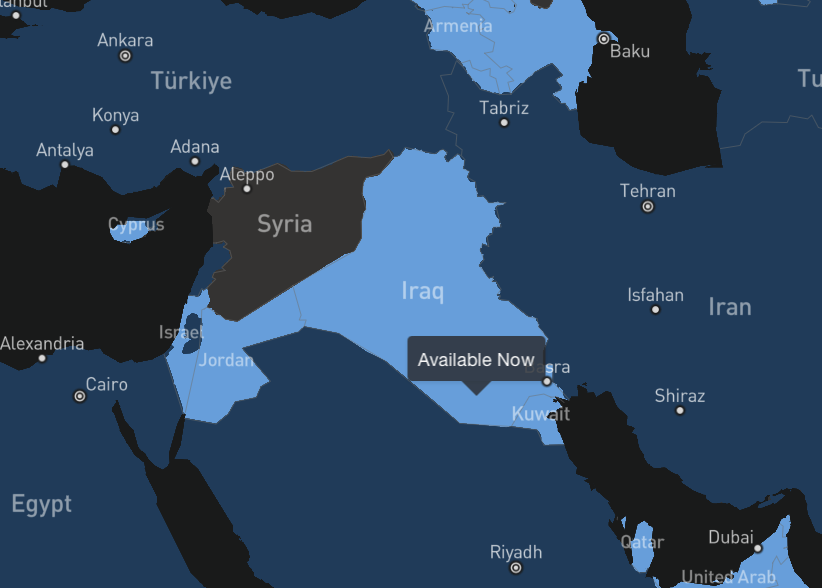
SpaceX's Starlink has officially gone live in Iraq, bringing satellite internet to a country where traditional broadband infrastructure has long struggled to reach rural and underserved communities. Residential plans are now listed starting at IQD 131,500 per month — roughly $100 USD — for a 100 Mbps tier. Here's what the launch actually means and what prospective subscribers should know.

How did Starlink get authorized to operate in Iraq?
Iraq's Communications and Media Commission (CMC) signed an official agreement with SpaceX granting Starlink a formal operating license. According to reporting from telecompaper.com and shafaq.com, the deal was announced by CMC head Baligh Abu Kalal around July 17–19, 2026. The licensing process followed the standard regulatory path SpaceX has used in other markets — securing government approval before activating service for end users.
What does the residential plan actually cost?
The entry-level residential plan is priced at IQD 131,500 per month, which converts to approximately $100 USD at current exchange rates, according to @SawyerMerritt. That gets subscribers a 100 Mbps connection. The CMC has stated it is actively working to keep subscription costs affordable for Iraqi consumers, though whether additional tiers or subsidized plans are forthcoming has not been officially confirmed.
Who is this service primarily aimed at?
The primary target is Iraqis in remote and underserved areas where fiber or fixed wireless infrastructure is either absent or unreliable. Iraq has significant rural population spread across terrain that makes traditional broadband deployment expensive and slow. Starlink's low Earth orbit (LEO) satellite network sidesteps that problem entirely — if you have a clear view of the sky and can afford the hardware and subscription, you can get a connection. Businesses operating in areas with poor connectivity are also an obvious target market.
Is the service fully live right now, or still rolling out?
The licensing agreement is signed and plans are listed, but the background research notes that the full operational rollout is still developing. Specific timelines for broad service commencement across all regions of Iraq have not been officially detailed. The fact that pricing is now publicly listed in Iraqi dinar suggests active availability, but prospective subscribers should verify coverage for their specific location directly through Starlink's availability checker before purchasing hardware.
What does this mean for Starlink's global footprint?
Iraq joins a growing list of Middle Eastern and Central Asian countries where Starlink has secured regulatory approval. Each new market entry follows a similar pattern: government licensing deal, public pricing announcement, then gradual hardware distribution. For SpaceX, Iraq represents both a connectivity mission and a commercial opportunity in a country of roughly 42 million people with historically patchy internet infrastructure. For our broader SpaceX coverage, this is part of a steady drumbeat of market expansions that collectively push Starlink closer to its goal of global coverage.
Do you need special hardware to subscribe in Iraq?
Yes — Starlink requires its proprietary dish and router, which must be purchased separately from the monthly subscription. Hardware pricing for Iraq has not been separately announced in the available sourcing, but in comparable markets the standard residential kit has typically been priced in the $300–$500 USD range. Buyers should check Starlink's Iraq-specific order page for confirmed local hardware pricing before committing.
The Iraq launch is unlikely to be the last expansion announcement in this region. With the CMC's public commitment to affordability and a formal licensing structure now in place, the more interesting question is how quickly hardware supply and distribution infrastructure can scale to match demand — particularly in the rural areas this service is designed to reach.
Sources & reporting notes
The links below identify the material source records used for this report.
- @SawyerMerritt on X (2026-07-28T22:12:02.000Z) — Direct source
Source links are preserved as published or accessed. See our editorial standards and corrections policy.
The BASENOR Editorial Desk covers Tesla, SpaceX, and related technology, curating reporting from primary sources — official accounts, regulatory filings, and software release data. Every article passes source-record and fact-checking review before publication. About the newsroom.
This report was curated by the BASENOR Editorial Desk from the sources listed above. Read our editorial standards or email editorial@basenor.com to report an error.